
The Birthright Citizenship Was Right, But Still Shocking
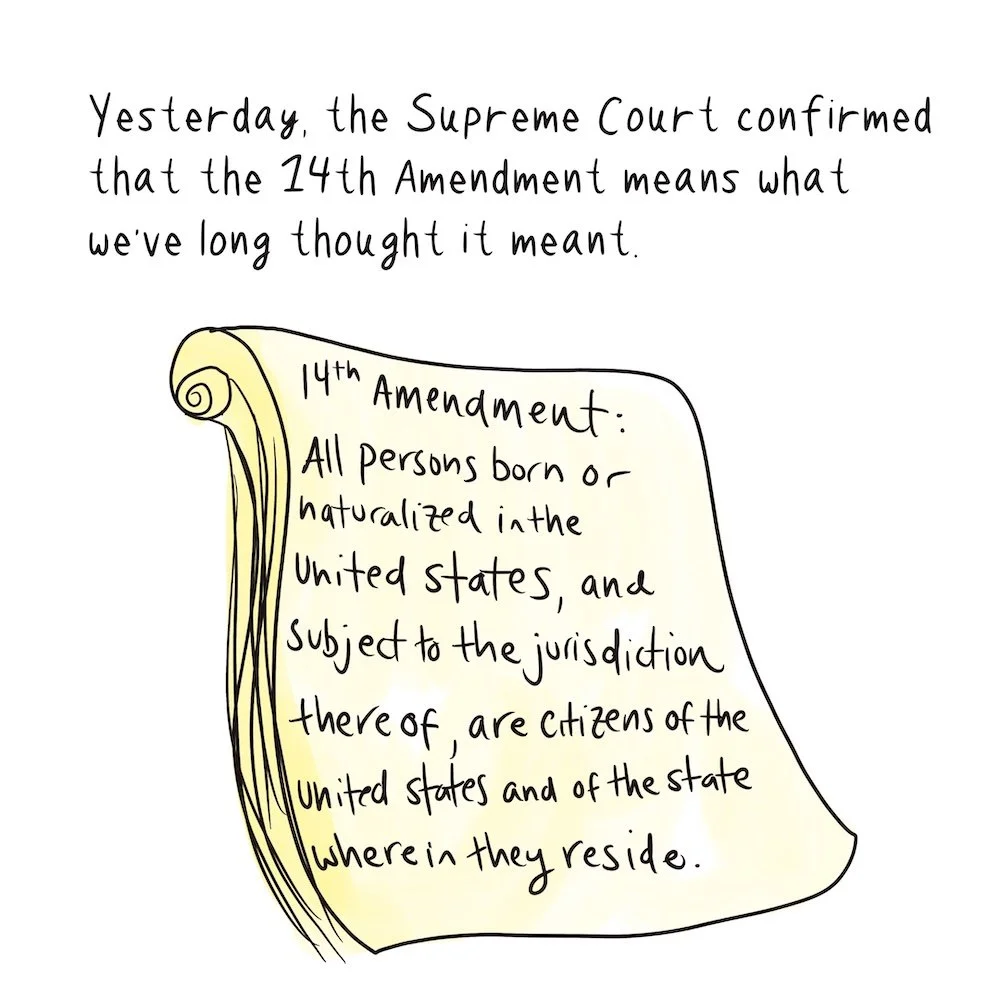
Yesterday, the Supreme Court confirmed that the 14th Amendment means what we’ve long thought it meant. (Image of the U.S. Constitution with the 14th Amendment text, “All persons born or naturalized in the United States, and subject to the jurisdiction thereof, are citizens of the United States and of the state wherein they reside.”)
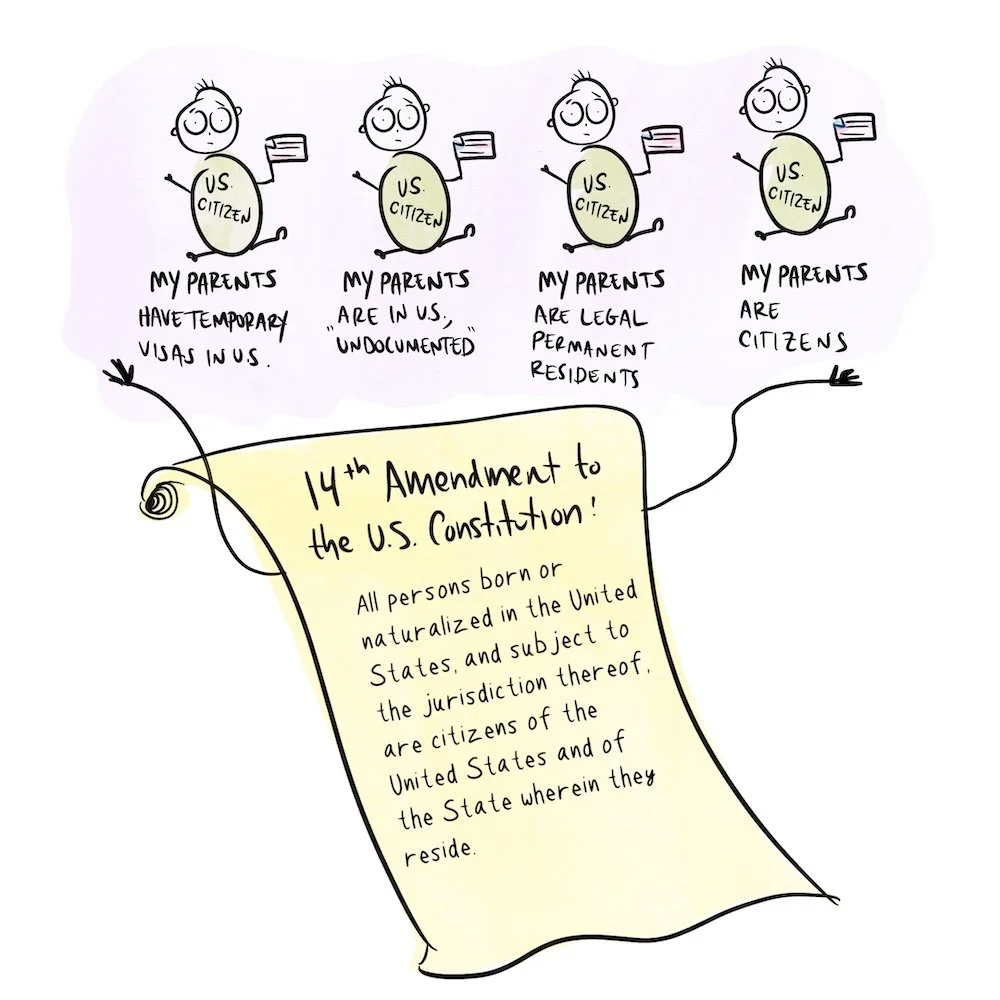
Drawing of the 14th Amendment with arms, holding up a bunch of U.S Citizen babies. Below each baby is a different citizenship status for their parents (temporary visas, “undocumented,” legal permanent residents, citizens).
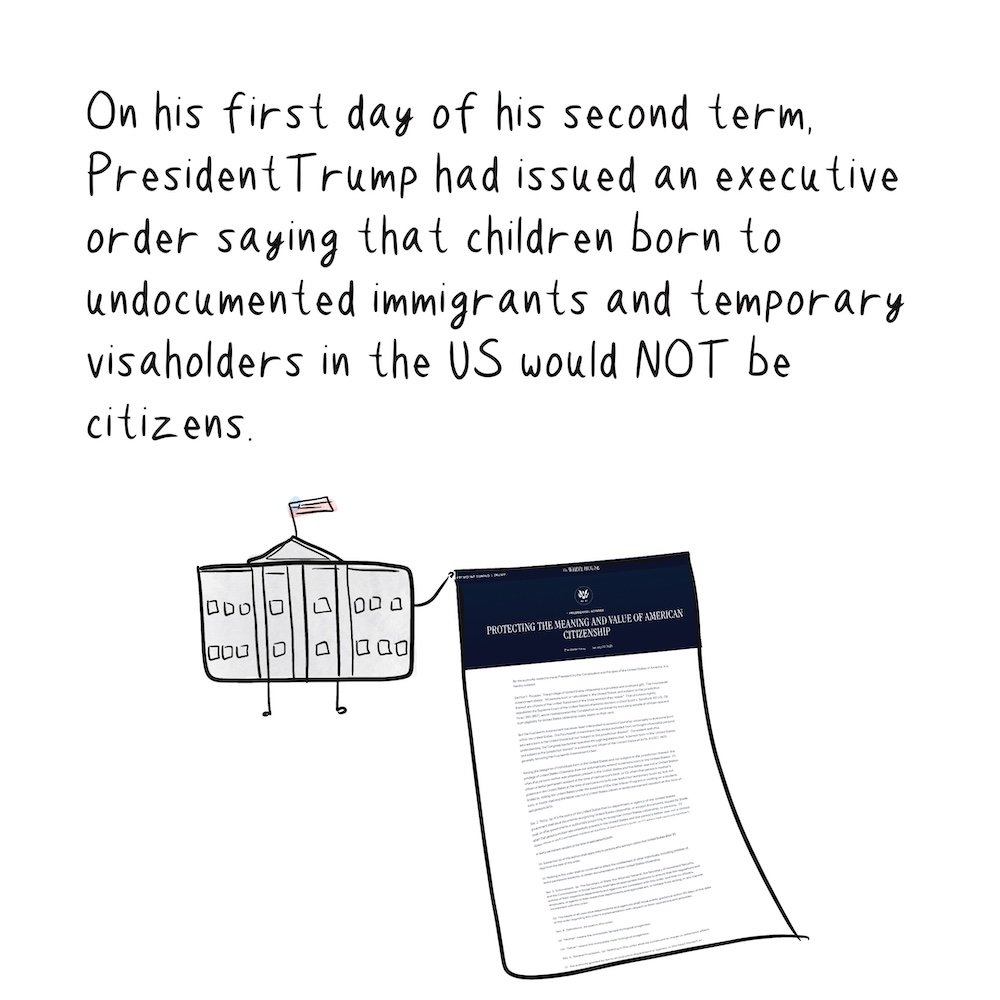
On his first day of his second term, President Trump had issued an executive order saying that children born to undocumented immigrants and temporary visaholders in the US would NOT be citizens. Drawing of the White House holding an executive order called “Protecting the Meaning and Value of American Citizenship.”
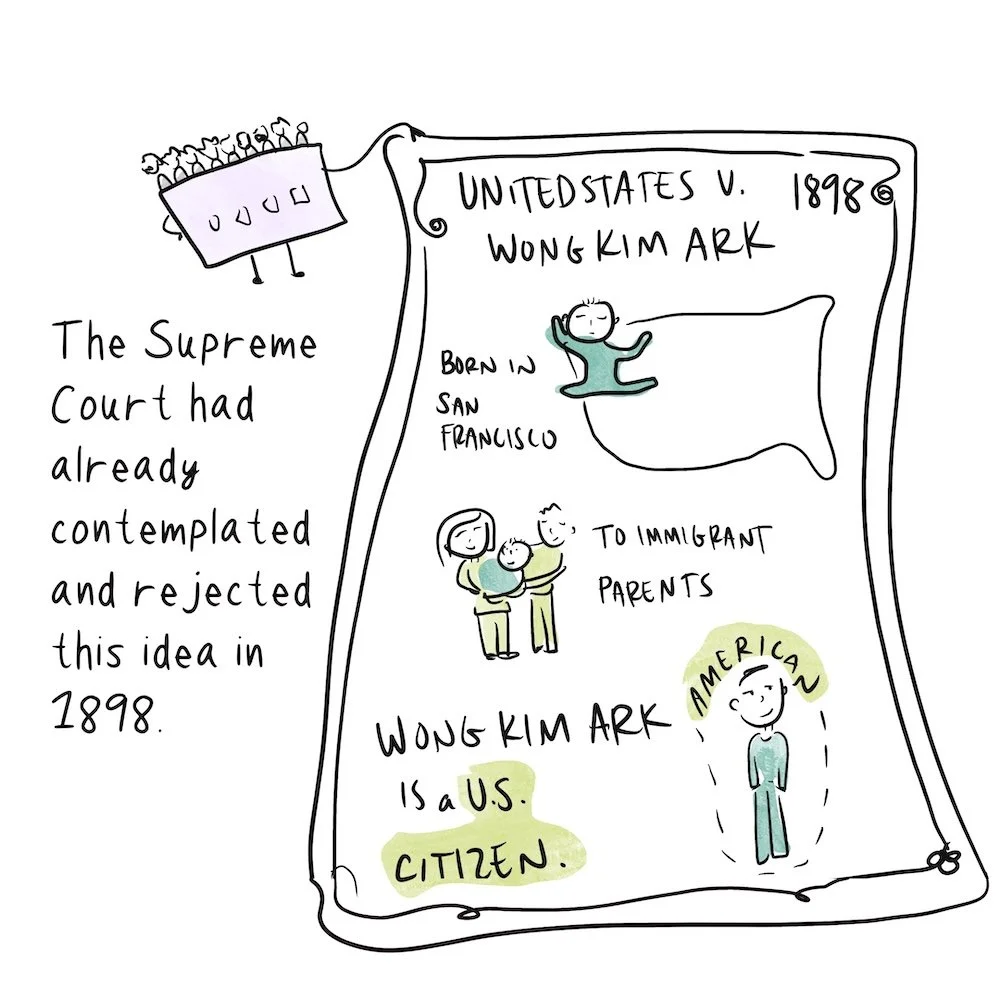
The Supreme Court had already contemplated and rejected this idea in 1898. Drawing of the Supreme Court from 1898 holding a document that shows a baby named Wong Kim Ark born in San Francisco, to immigrant parents, and the conclusion that Wong Kim Ark is a U.S. Citizen.
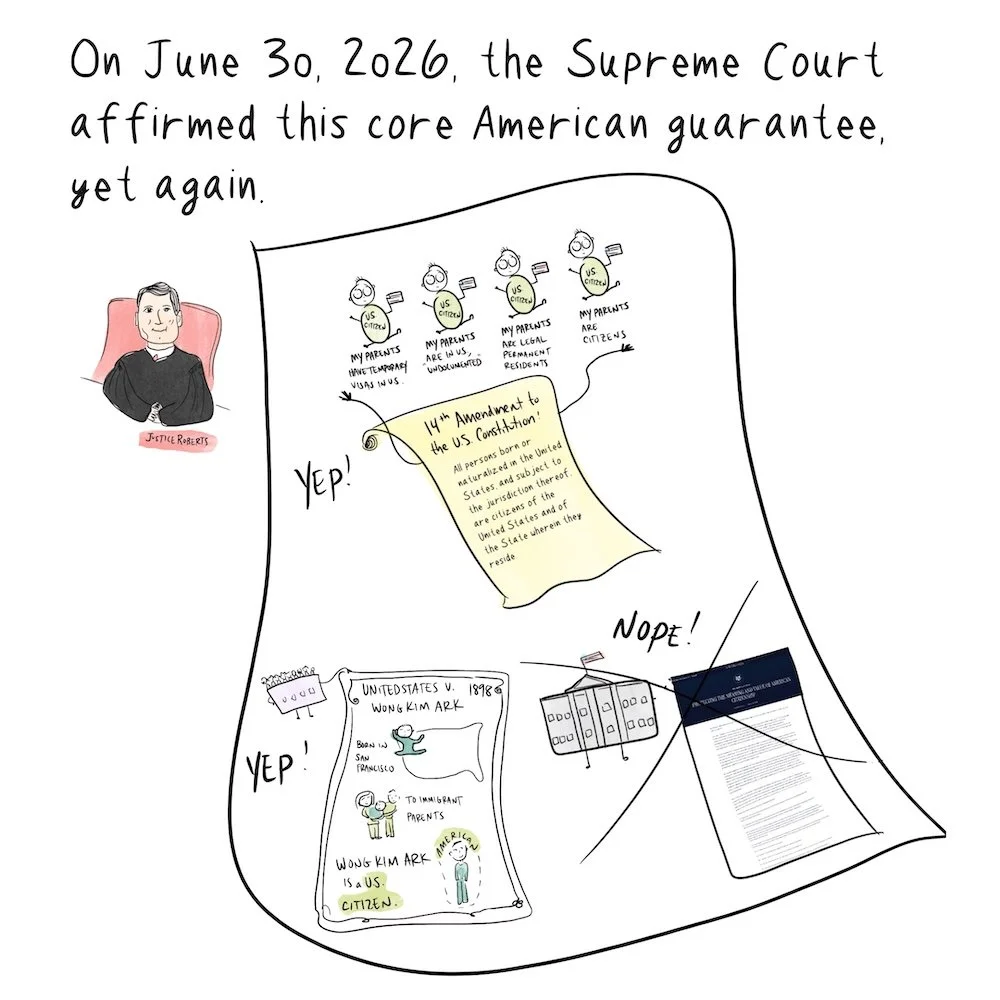
On June 30, 2026, the Supreme Court affirmed this core American guarantee, yet again. Drawing of Justice Roberts next to an opinion that shows drawings from earlier - the Constitution holding up a bunch of citizen babies, the Wong Kim Ark opinion with the word “yep” next to it, and the executive order from the White House, crossed out.
You might think that I would be elated that the Court got it right. I’m relieved that they didn’t just make a bunch of babies stateless. But once I saw all the opinions, I was shocked. Drawing of a bunch of babies falling through the air.
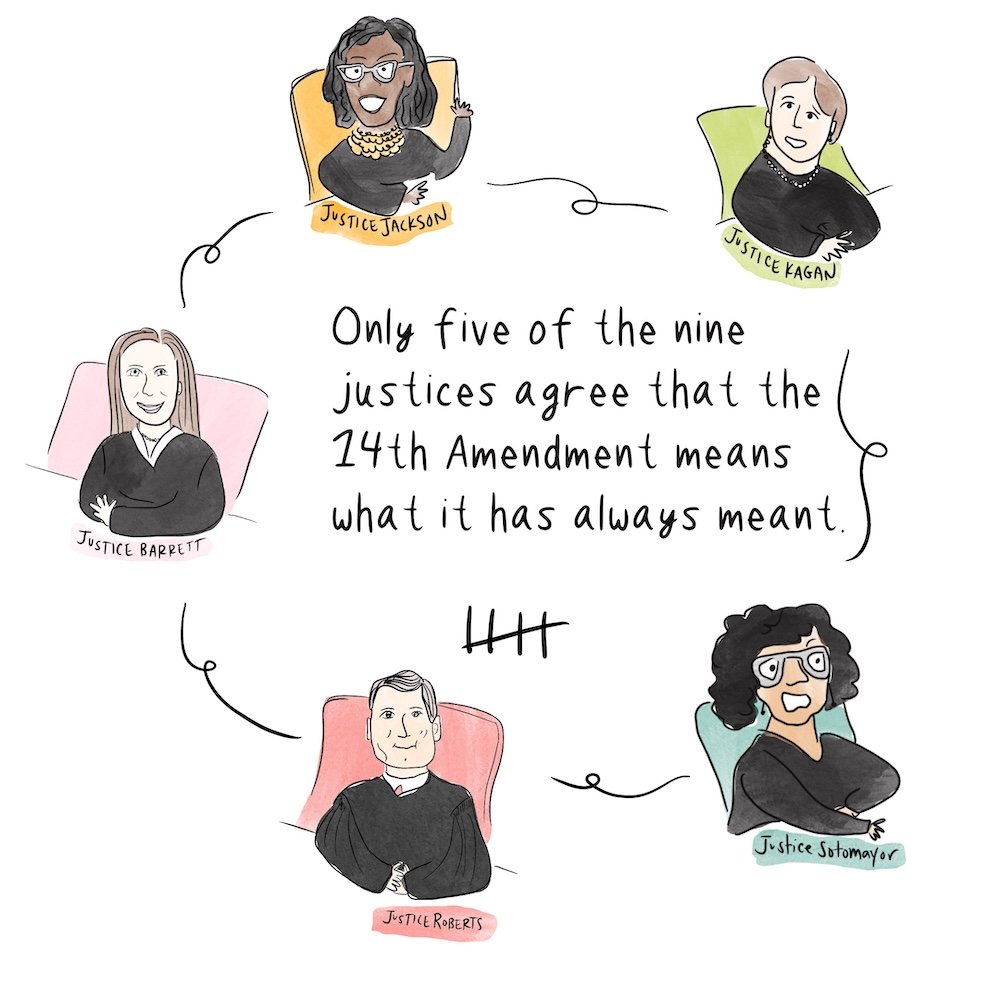
Only five of the nine justices agree that the 14th Amendment means what it has always meant. Drawing of Justices Jackson, Kagan, Barrett, Roberts, and Sotomayor in a circle around the text.

Only five?! (Text is illustrated and colorful.)
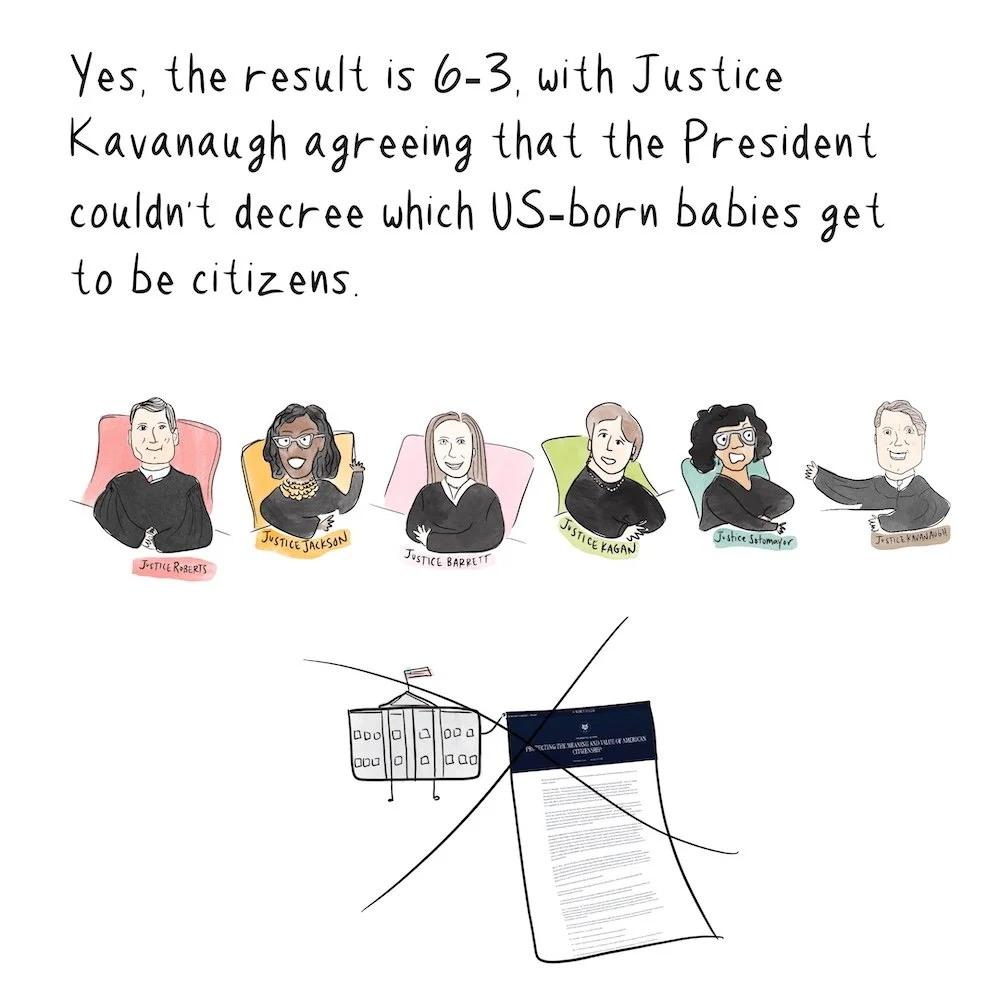
Yes, the result is 6-3, with Justice Kavanaugh agreeing that the President couldn’t decree which US-born babies get to be citizens. Drawing shows Justices Roberts, Jackson, Barrett, Kagan, Sotomayor, and Kavanaugh on top of the drawing of the White House holding the executive order.
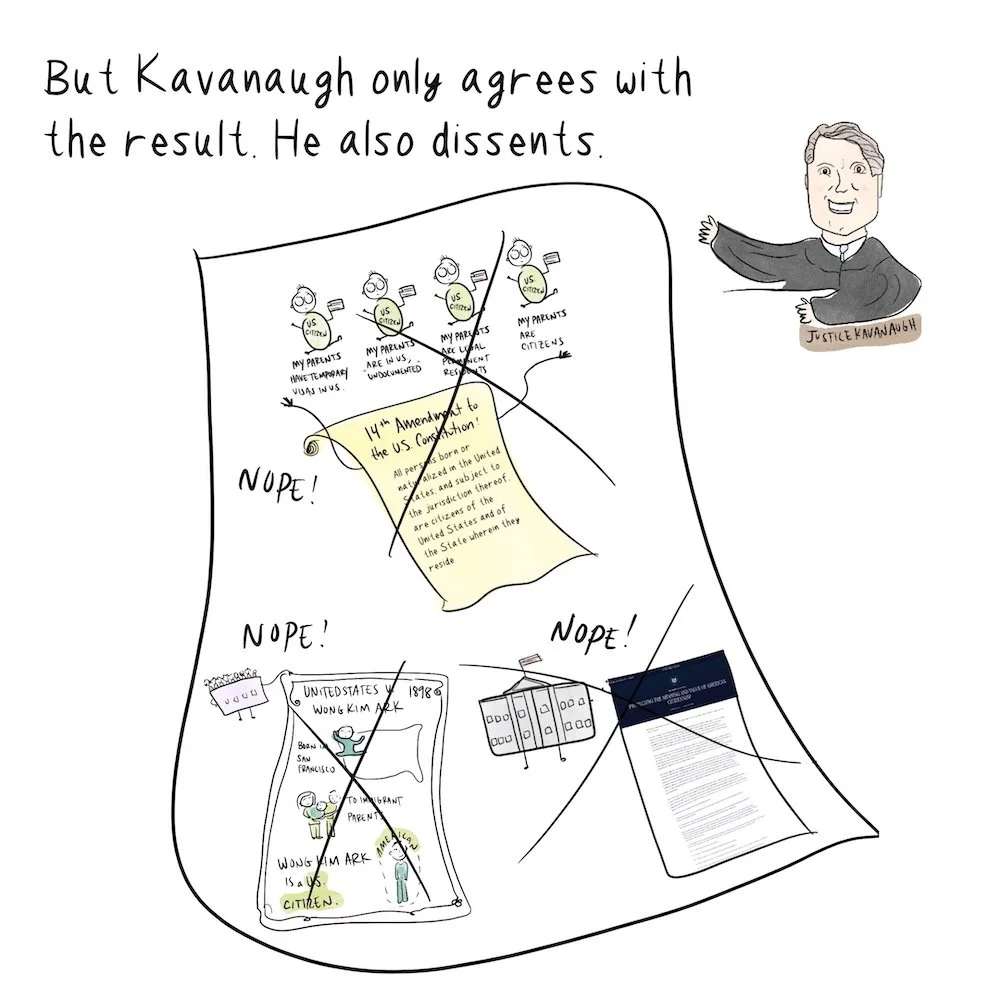
But Kavanaugh only agrees with the result. He also dissents. Drawing of Kavanaugh holding out a document that says “nope” next to the drawing of the Constitution holding up the citizen babies, “nope” next to the Wong Kim Ark decision from 1898, and “nope” next to the executive order.
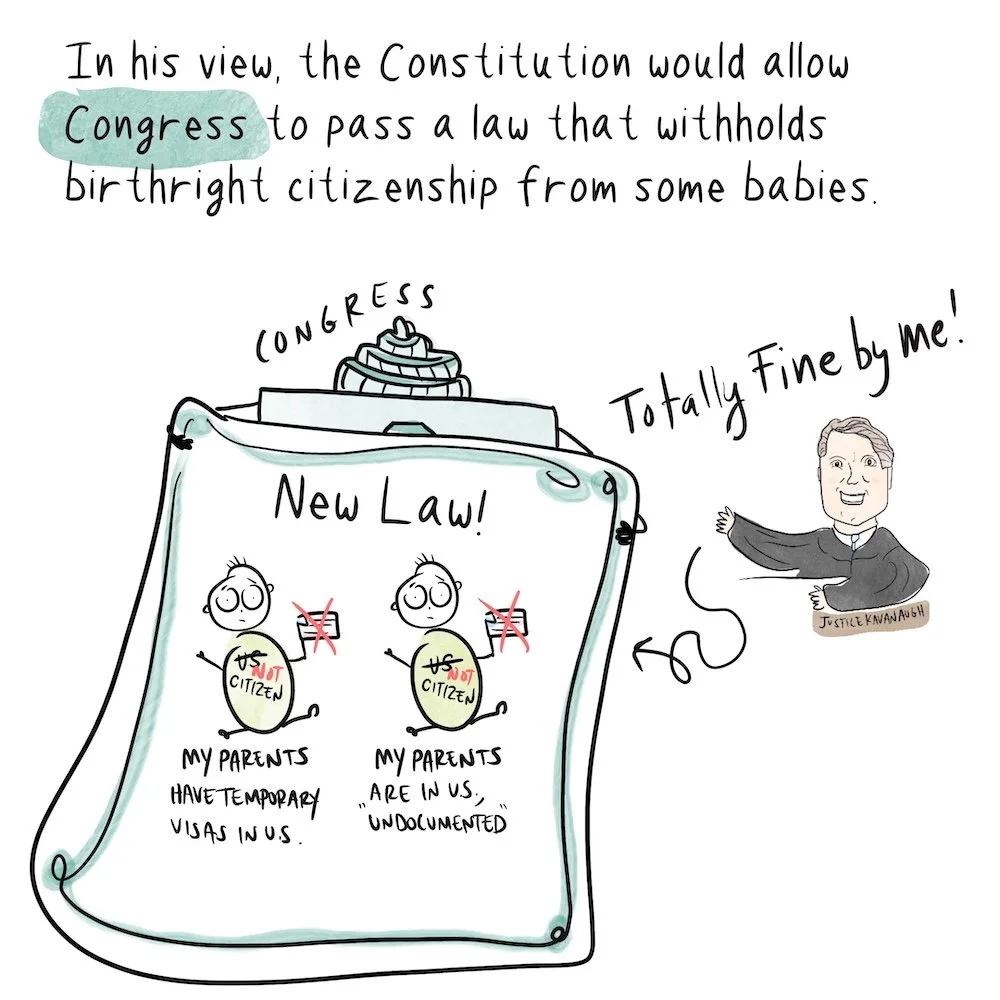
In his view, the Constitution would allow Congress to pass a law that withholds birthright citizenship from some babies. Drawing shows Kavanaugh saying “fine by me” and pointing to Congress holding a new law that would not give citizenship to babies whose parents are temporary visa holders or “undocumented” immigrants.
The implication of this and the other dissents is that four justices believe that even clear, commonly agreed-upon parts of the Constitution can just be effectively erased. (Scribbles are slightly erased.)
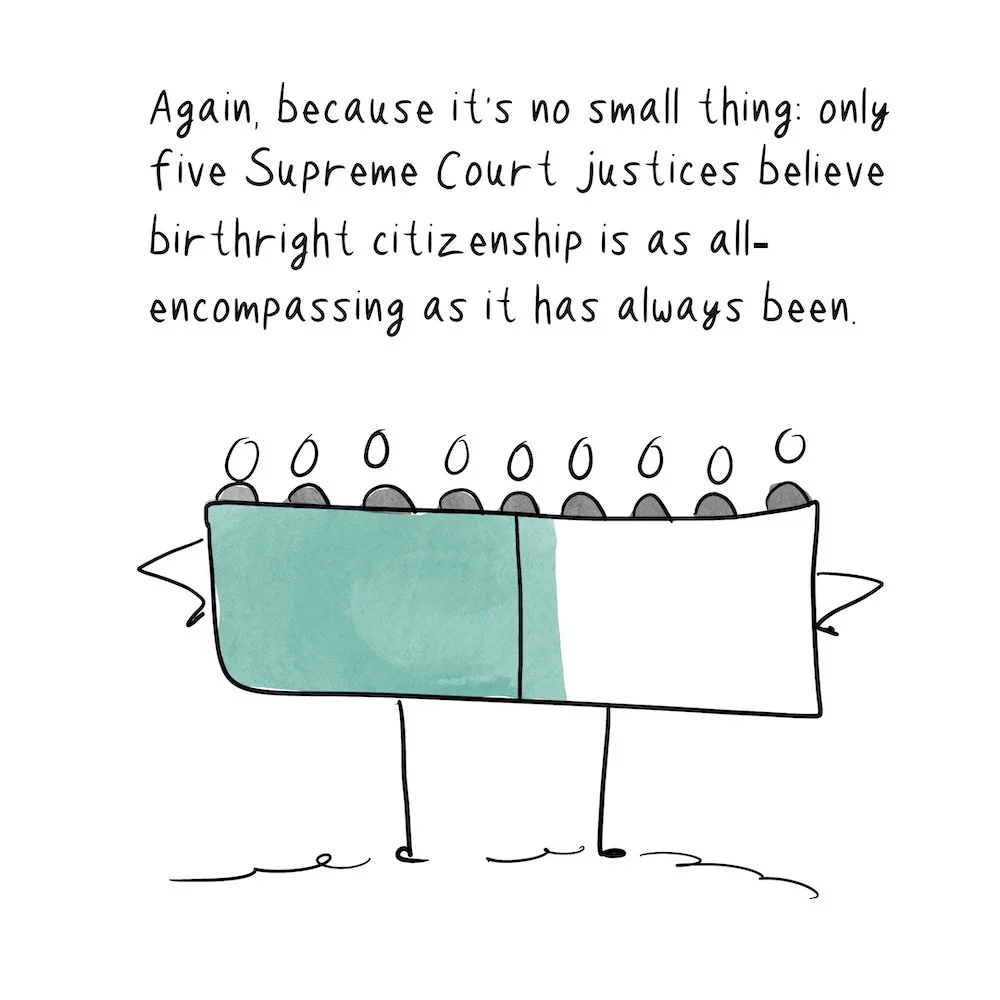
Again, because it’s no small thing: only five Supreme Court justices believe birthright citizenship is as all-encompassing as it has always been. (Drawing of a court, where you can see that only 5/9 of the bench is filled in, in turquoise.)
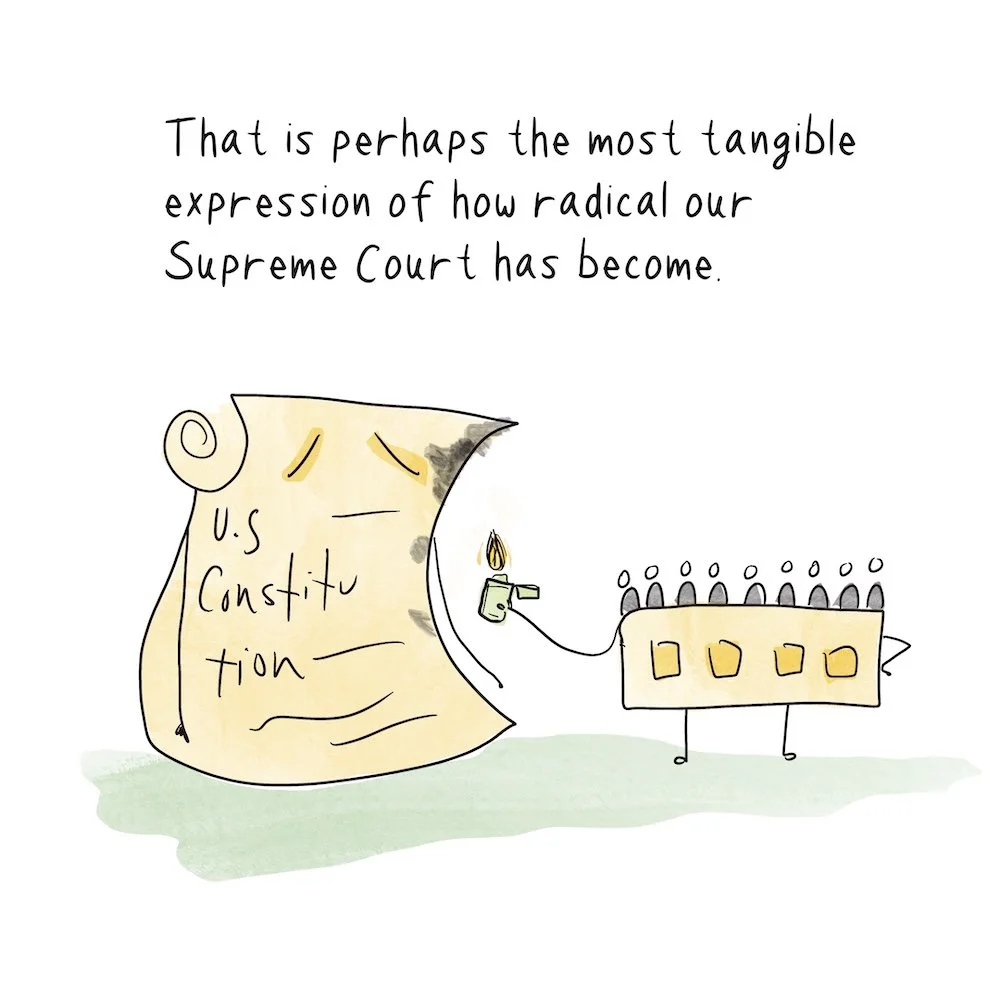
That is perhaps the most tangible expression of how radical our Supreme Court has become. (Drawing shows the Constitution looking sad while a Supreme Court holds up a lighter to it.)
Justice Jackson’s Concurrence Is the One to Read
I decided not to go into the dissents or even into the weeds of some of the arguments because it’s just not as important as the point above. But I do want to highlight Justice Jackson’s concurring opinion. When a justice “concurs” it means they agree with the majority, but they have something to add.
Justice Jackson writes a concurrence to show that the 13th, 14th, and 15th Amendments, which came after the Civil War and are sometimes called “the Reconstruction Amendments,” were designed to be anti-caste, anti-subordination, and race conscious.
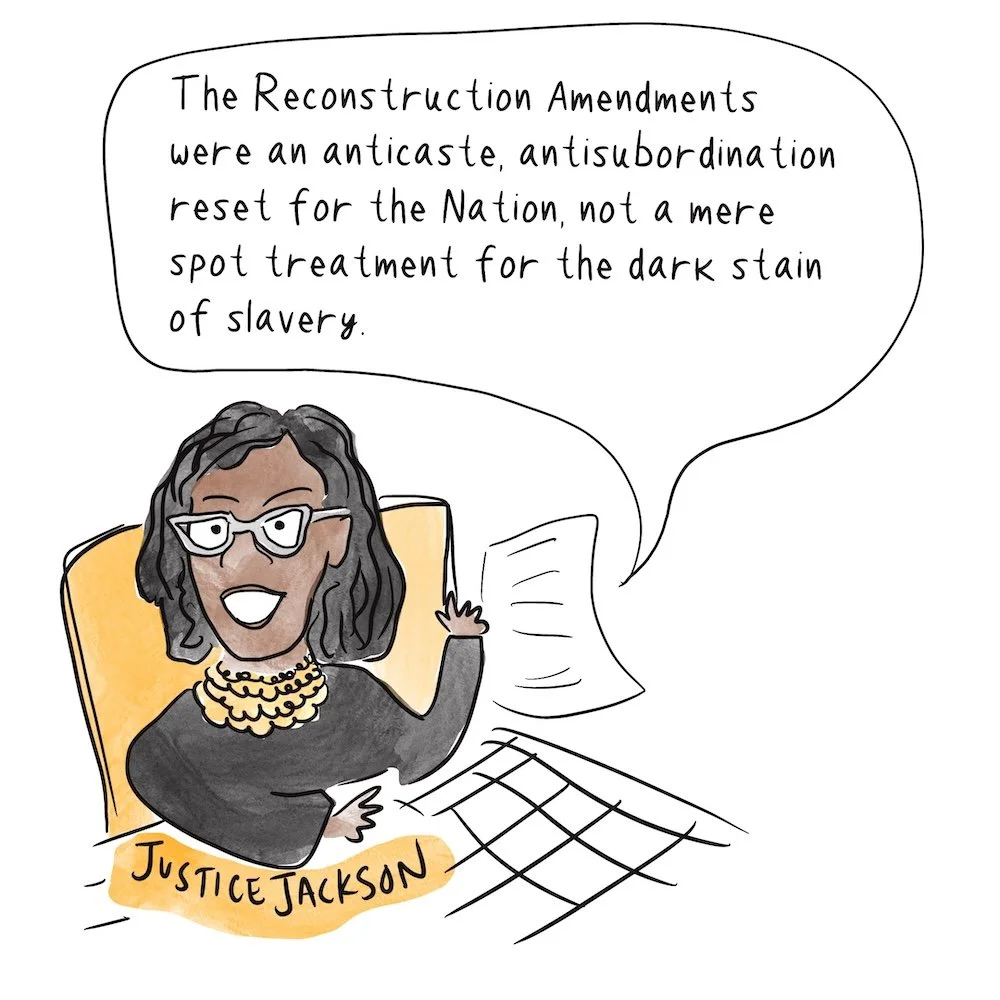
Justice Jackson writes, “The Reconstruction Amendments were an anticaste, antisubordination reset for the Nation, not a mere spot treatment for the dark stain of slavery.” (Drawing shows Justice Jackson saying these words.)
Only Justice Sotomayor signs on to part of this opinion, but it’s meaningful that Justice Jackson is getting this perspective of our history attached to a majority opinion. History and “what did the Founders think at the time” has become infused into the way many of the conservative justices interpret the Constitution (also known as originalism). She is playing that game by showing the history, beliefs, and set of Founders that led to these revolutionary additions to the Constitution.
She also responds directly to the statements her colleagues have been making in recent decisions about the Constitution being color-blind.
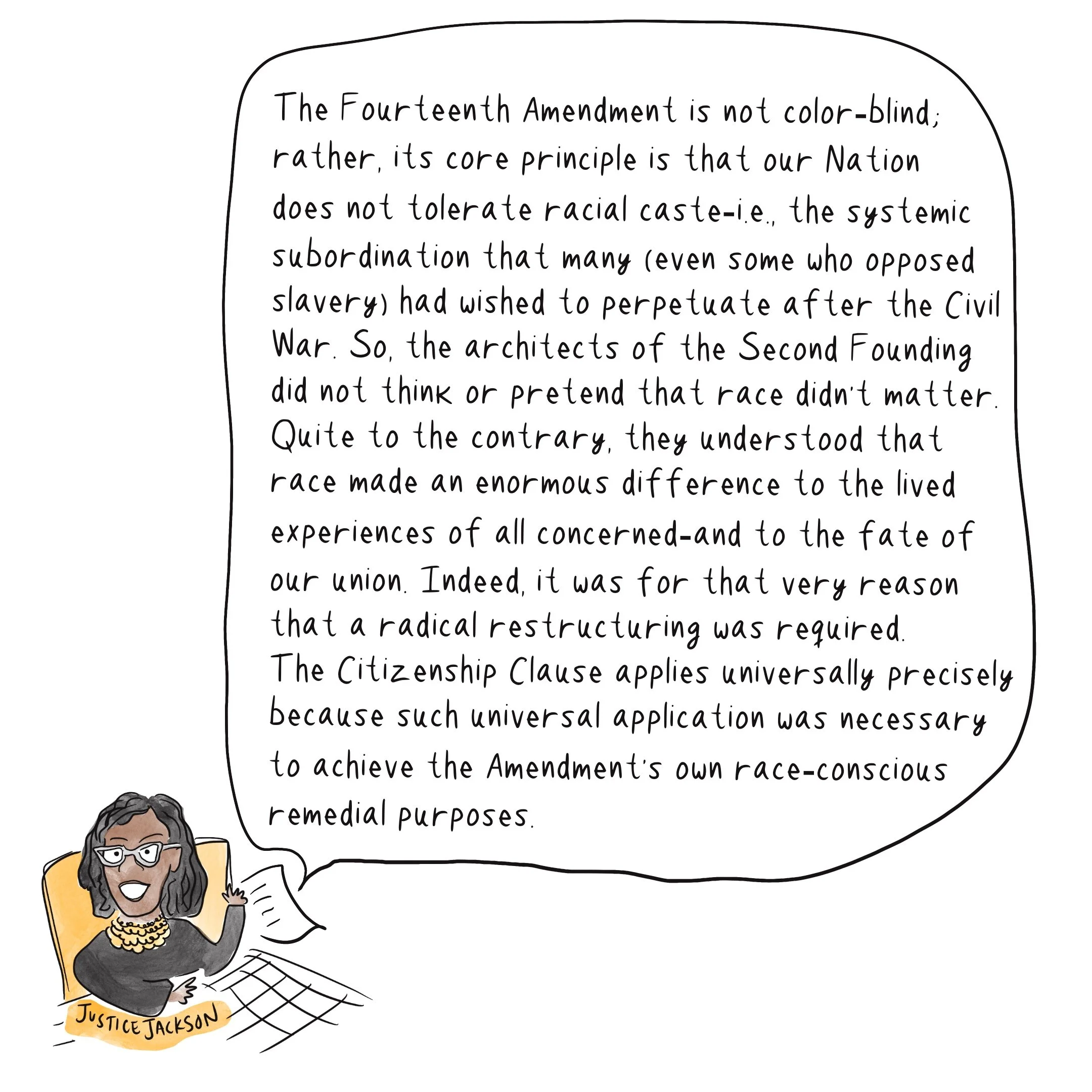
Justice Jackson drawing with her writing, “the Fourteenth Amendment is not color-blind; rather, its core principle is that our Nation does not tolerate racial caste—i.e., the systemic subordination that many (even some who opposed slavery) had wished to perpetuate after the Civil War.54 So, the architects of the Second Founding did not think or pretend that race didn’t matter. Quite to the contrary, they understood that race made an enormous difference to the lived experiences of all concerned—and to the fate of our union. Indeed, it is for that very reason that a radical restructuring was required.55 The Citizenship Clause applies universally precisely because such universal application was necessary to achieve the Amendment’s own race-conscious remedial purposes.” We see the text in a speech bubble, though this is the text of her concurrence.
She won’t change any of her colleagues’ minds with this writing, but it’s here for the rest of us and for the future.
Thank you for being here! Thank you for your feedback! Thank you for sharing these pieces with others! I appreciate it all, and I’m glad you’re engaging with the downer that is the Supreme Court.
While you’re down here with me, read a little bit about the possibility of term limits on the Supreme Court. Our law shouldn’t depend on when a few important people happen to retire or pass away. And if you’re still interested, here’s an illustrated explainer on How Term Limits Could Work.