
How Term Limits Could Work for the Supreme Court
The form of Court reform most compelling to me is to impose 18-year “term limits” on Supreme Court justices before shifting them to “senior justices” with a different set of responsibilities. In the last ten years, I have watched how two unexpected deaths of Supreme Court justices ushered in the current Supreme Court era, and I’d like our most contentious laws to be a little less dependent on the lives of nine particular people.
How would 18-year term limits work?
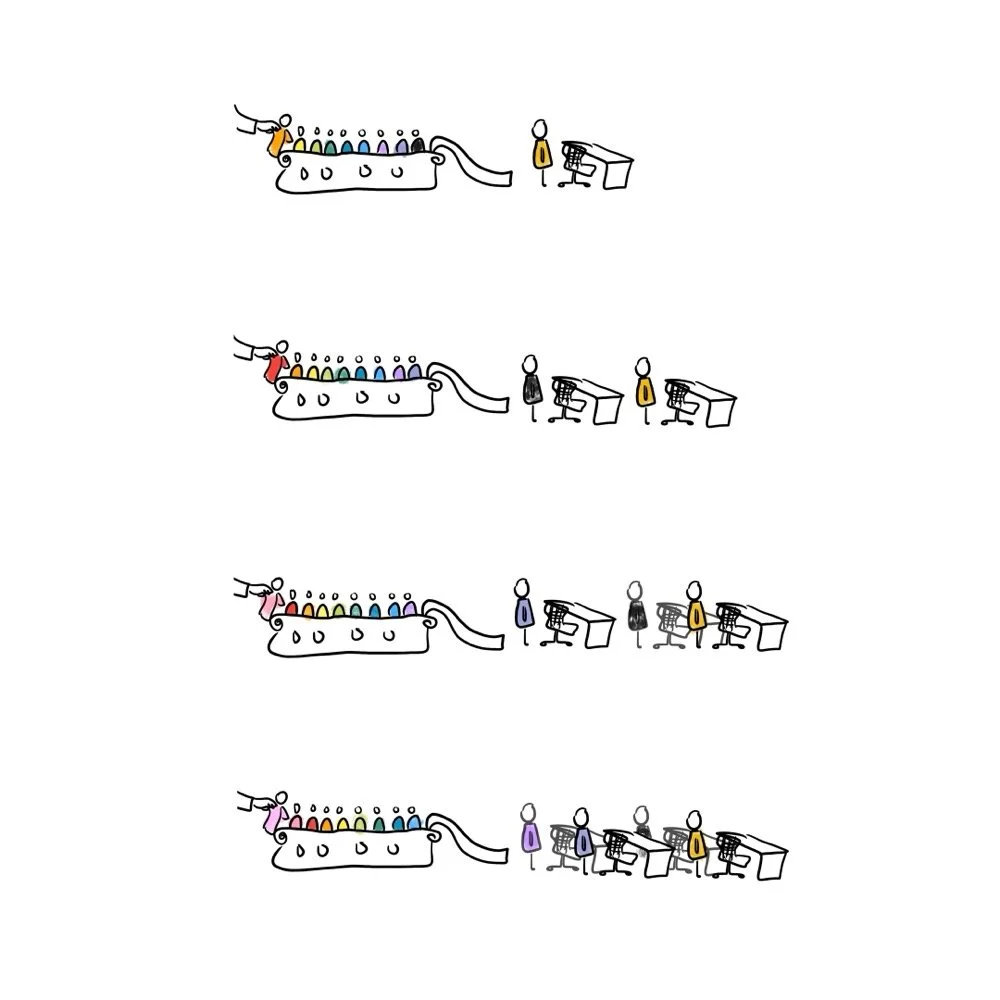
There are different proposals out there, but generally they are something like this:
(This is an illustrated post. Full text available at the end of the post. Descriptions of photos are in alt text.)
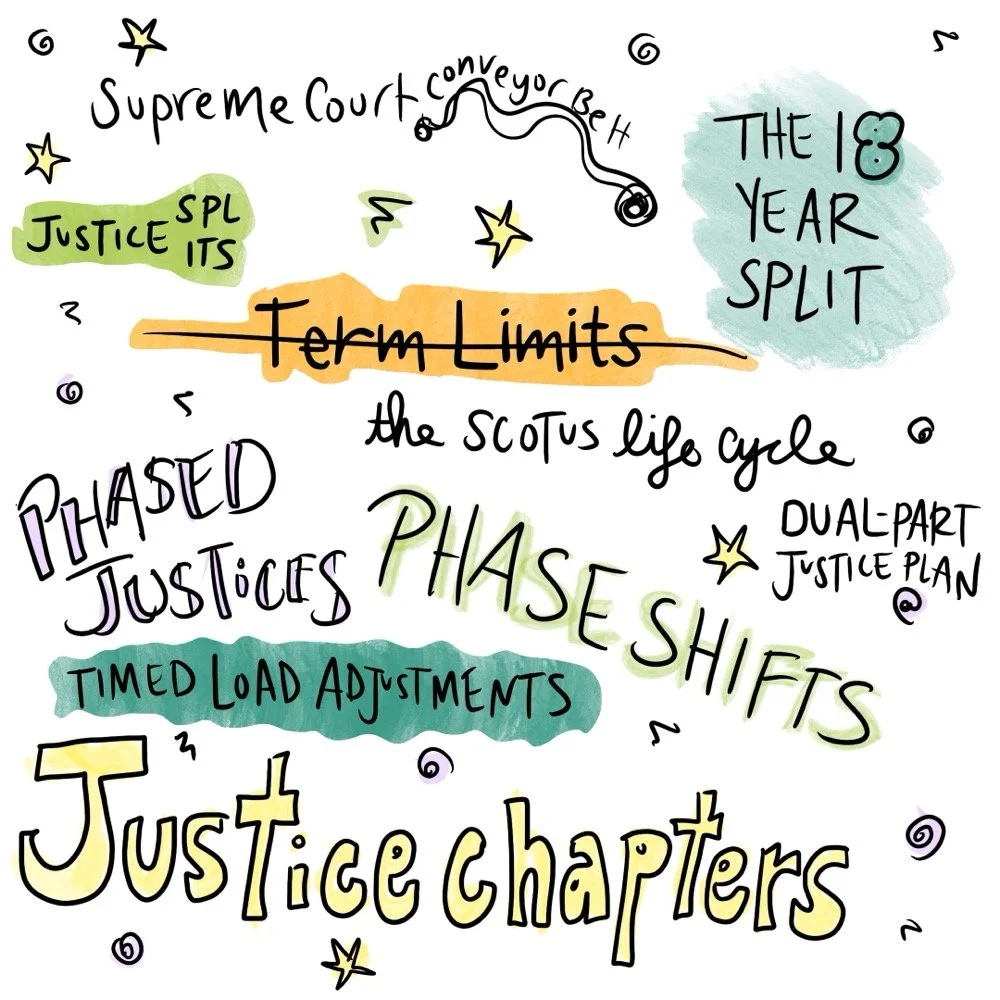
Instead of term limits, we might call it…
[For anyone who likes to get in the weeds, the Brennan Center has written a memo about how 18 year term limits are Constitutional. I have not addressed every point here.]
What questions do you have about term limits? What do you think of this idea compared to other reform ideas?
Where Can I Learn More About This?
Strict Scrutiny Podcast is talking Court reform this month. I imagine term limits will be one of the topics, though as of today, they haven’t gotten to it yet! (There are many ways to reform the Court…)
Eliazar Chacha, Alicia Bannon, and Stephen Spaulding of the Brennan Center released this legal analysis: Supreme Court Term Limits Are Constitutional.
Jesse Wegman (also of the Brennan Center) summarized the key points of the memo above in a recent Substack piece (below). He’s also been writing about this here and there for the last few months.
Major Questions with Jesse Wegman
You can see one of the bills proposed recently in the Senate to accomplish this. It’s a little different from more general ideas shared here, but it’s interesting to see what is actually getting out there in bill form.
The American Academy of Arts & Sciences, The Case for Supreme Court Term Limits. This report has a way they suggest adding to the Court and dealing with the phasing out of the current justices. This is the part of the term limits reform that I can’t envision…how the phasing in of the “role shift/term limit” will work…
A few years ago, a big group of scholars put together a report about Court Reform, but without actually giving recommendations (they weren’t asked to). It has some interesting Supreme Court history, where you can see the ways that Congress was messing with the Court a lot in the early years, in particular. The Presidential Commission on the Supreme Court of the United States, Final Report.
This post includes images with text on them. Here is a breakdown of the text inside the images.
How would 18-year term limits work?
There are different proposals out there, but generally they are something like this:
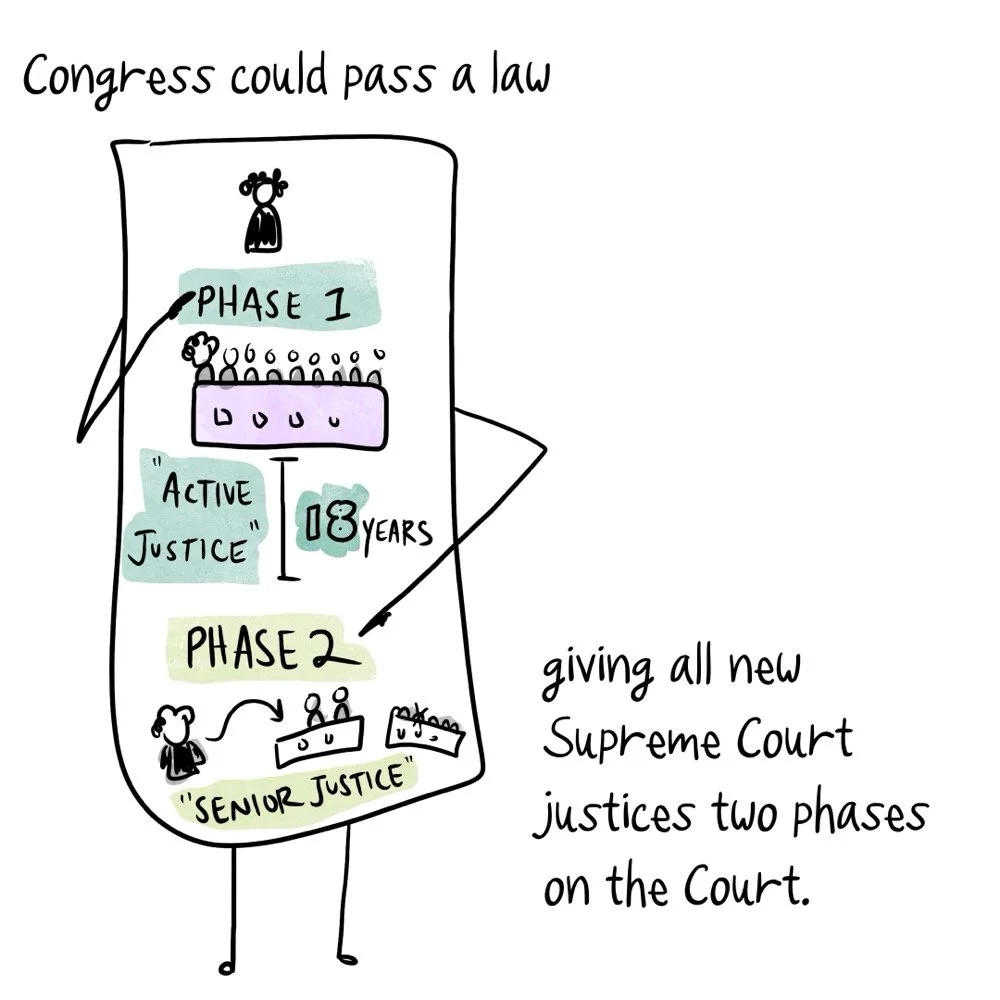
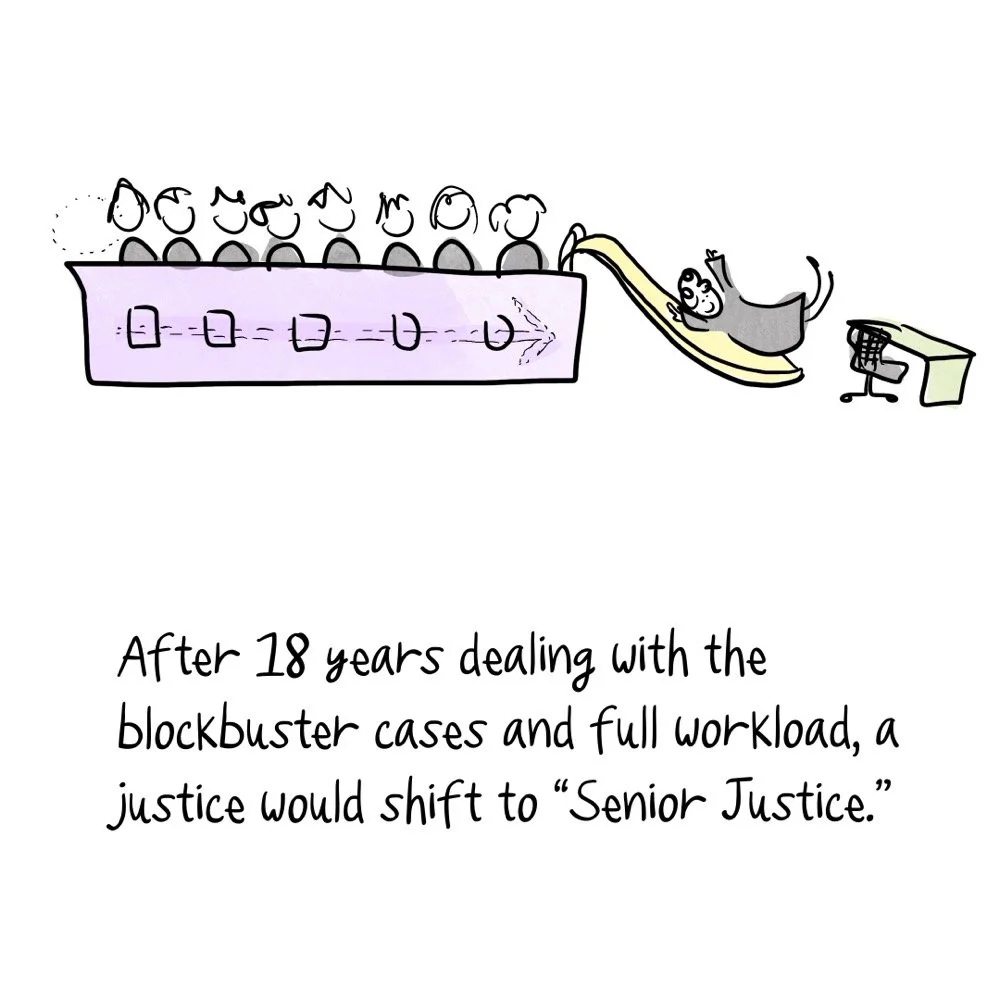
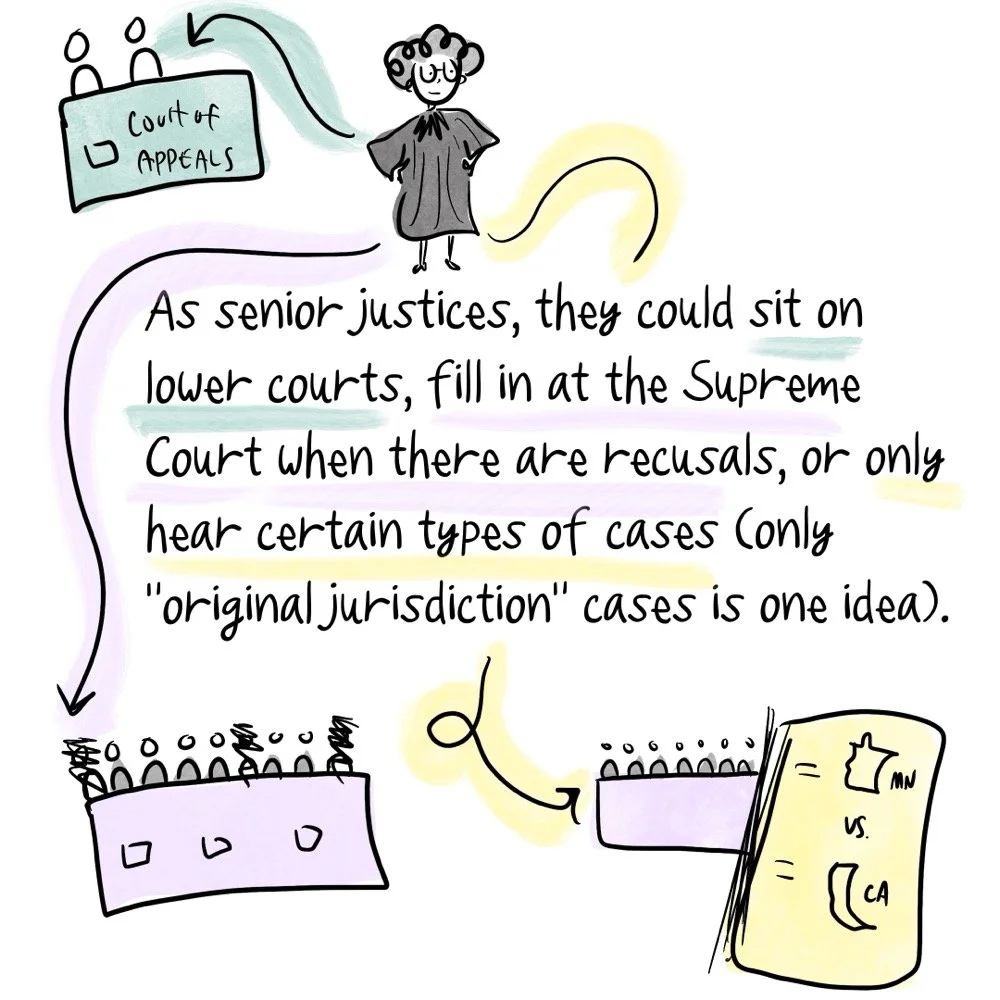
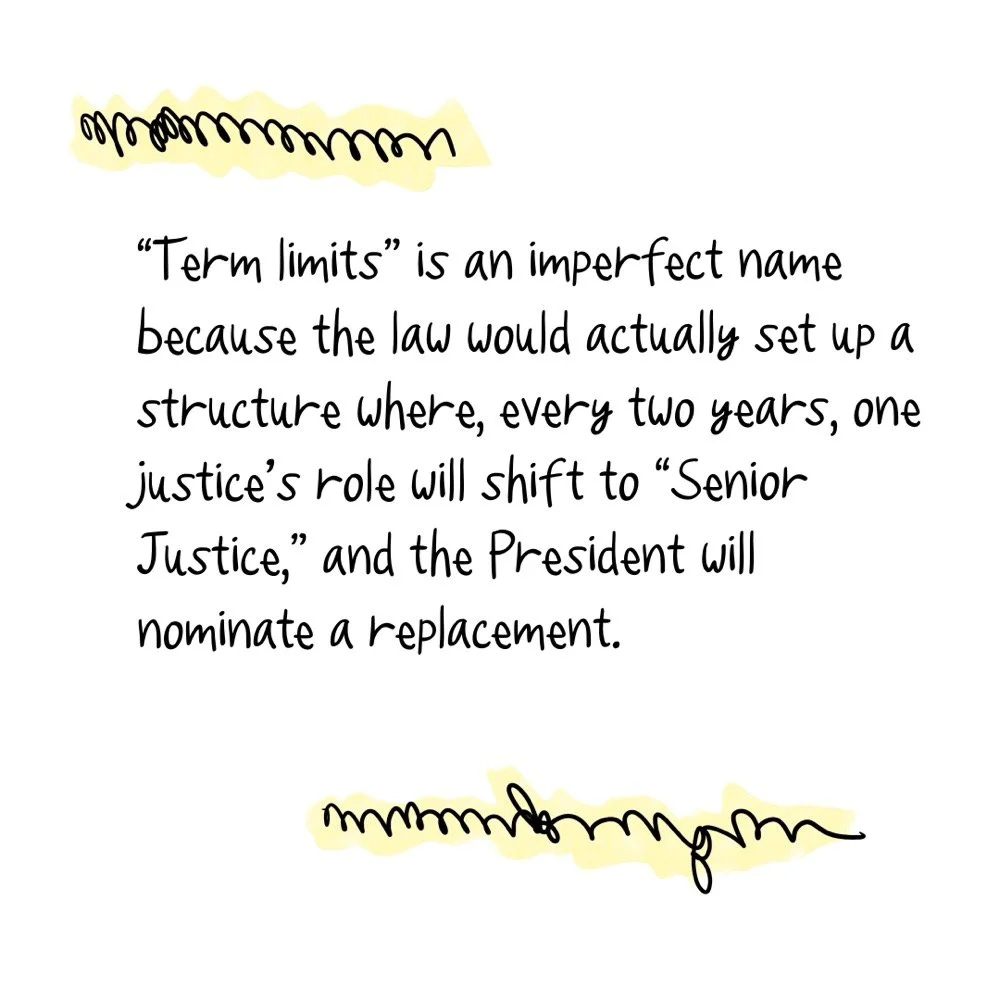
Congress could pass a law giving all new supreme court justices two phases on the Court. After 18 years dealing with the blockbuster cases and full workload, they would shift to “Senior Justices.” As senior justices, they could sit on lower courts, fill in at the Supreme Court when there are recusals, or only hear certain types of cases (only original jurisdiction cases is one idea).“Term limits” is an imperfect name because the law would simply set up a structure where, every two years, one justice’s role will shift to “Senior Justice,” and the President will nominate a replacement. We might call it: phased appointments, part 1 Justice, part 2 Justice, The first Chapter of a Supreme Court Justice, dual-phased justices, phase shifts, 18+,
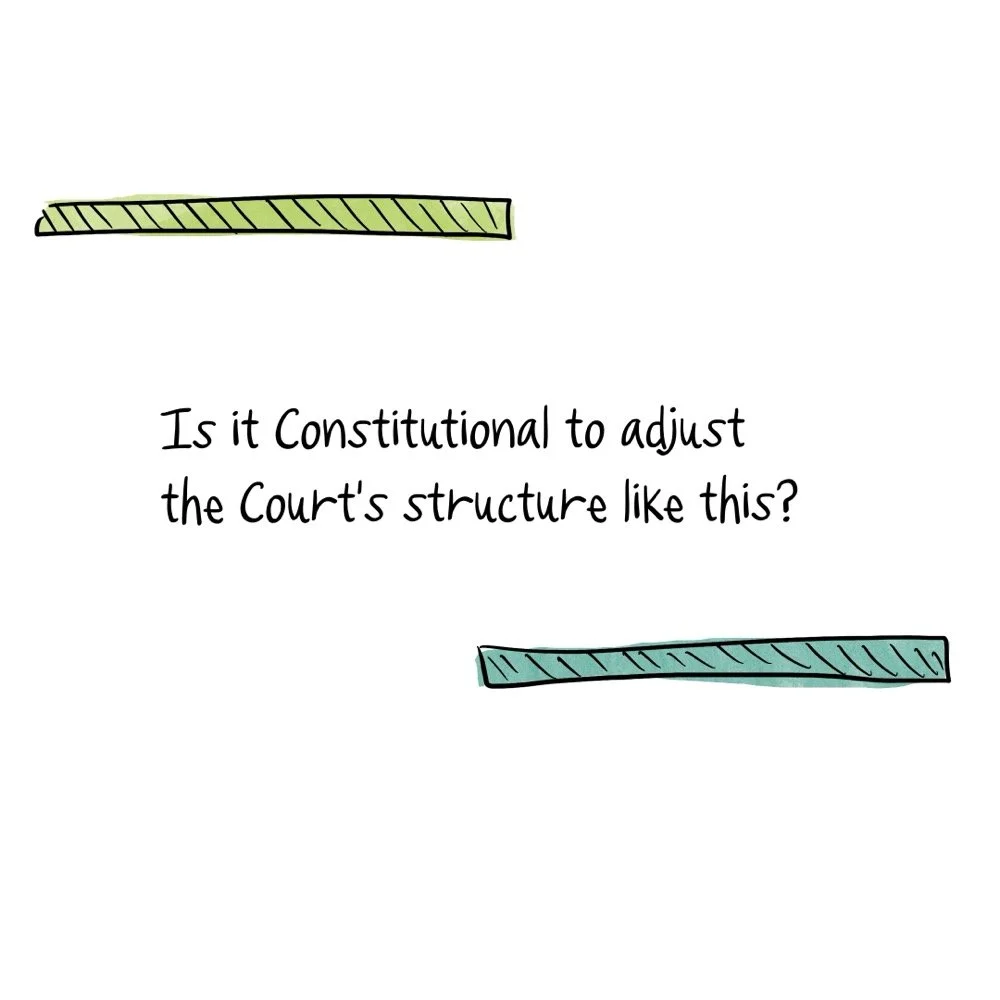
Is it Constitutional to adjust the court’s structure like this?
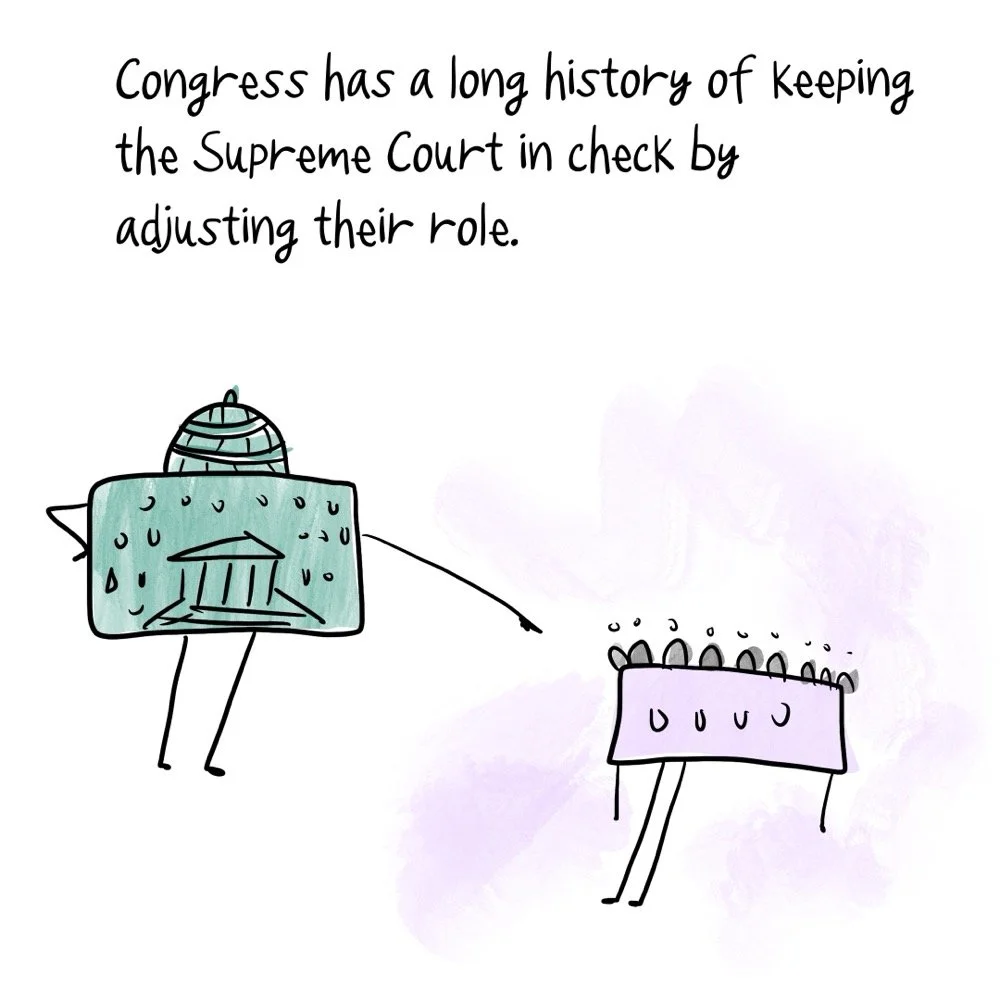
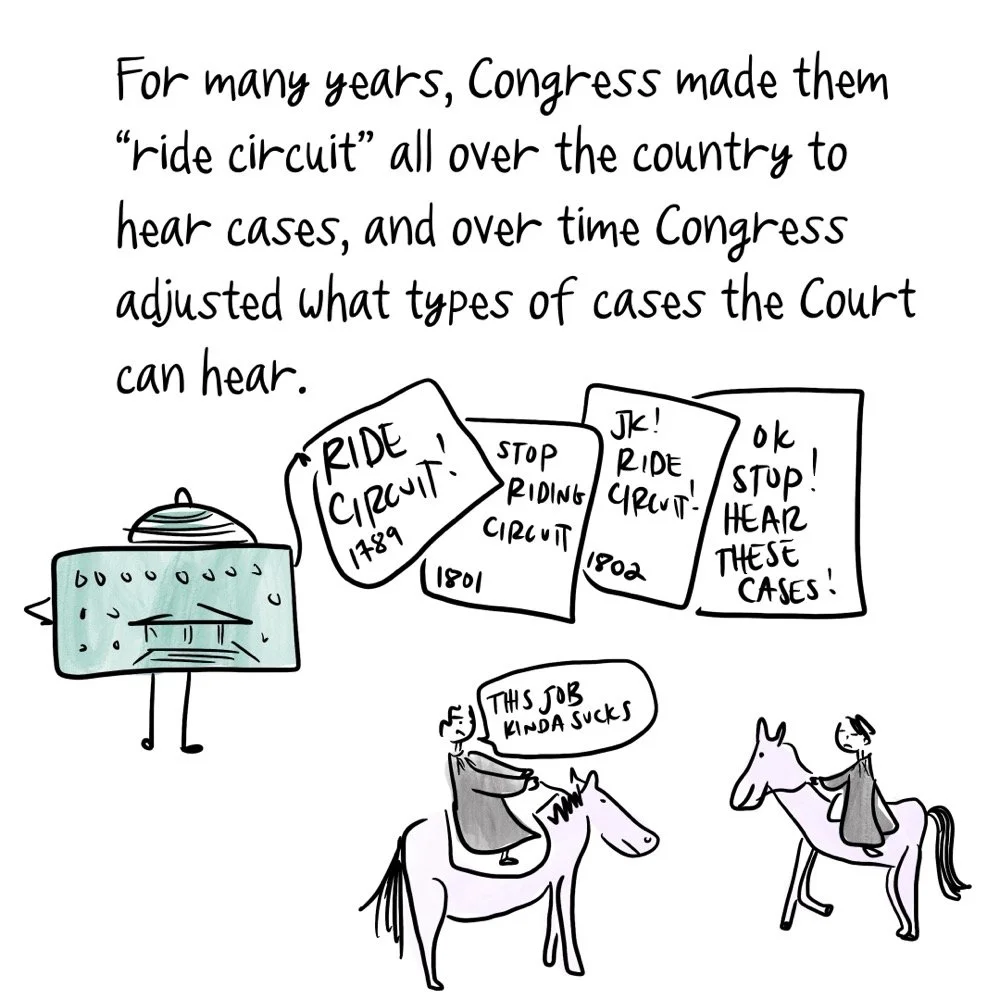
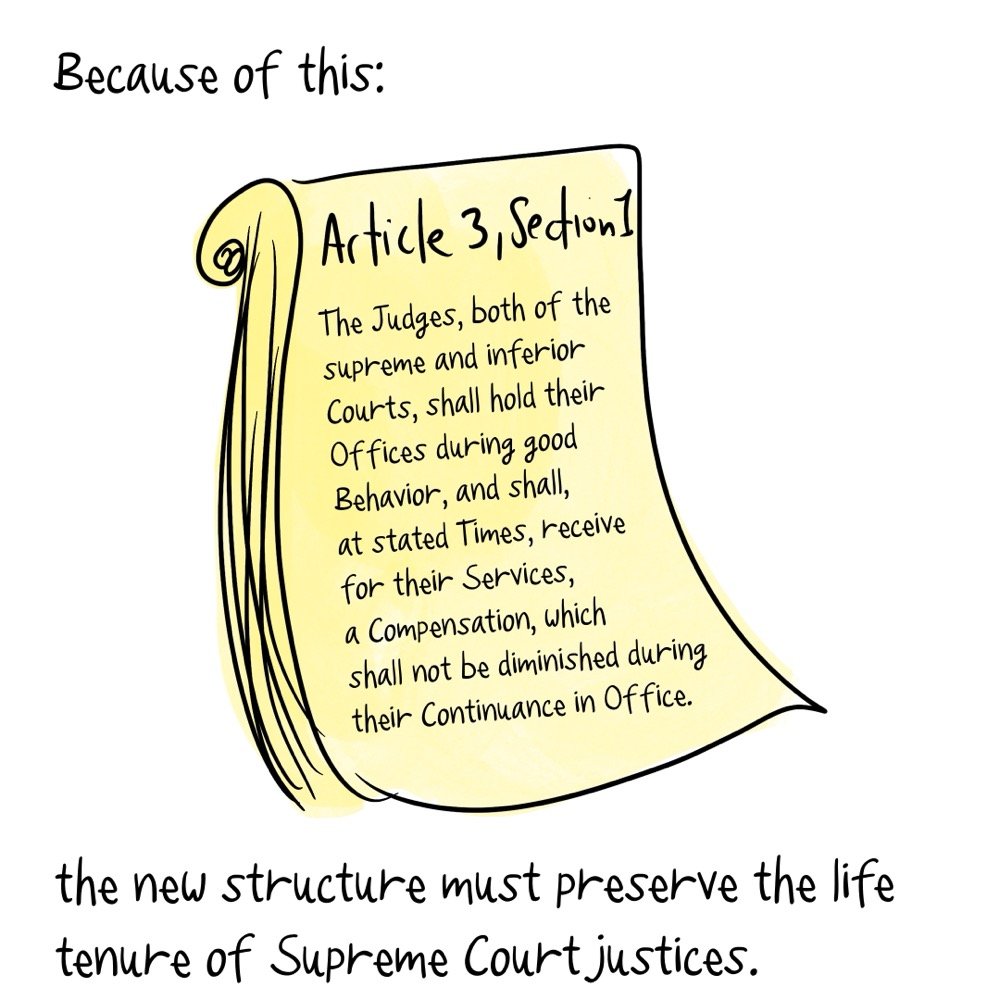
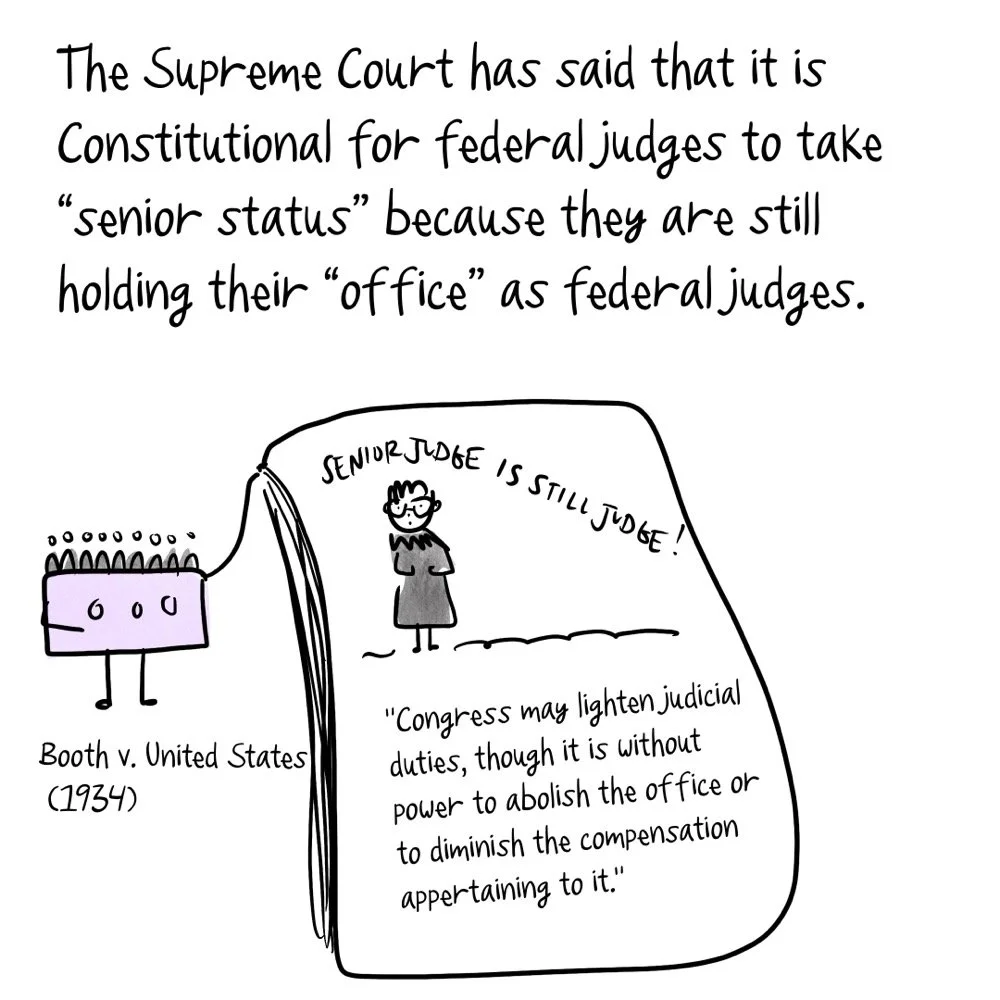
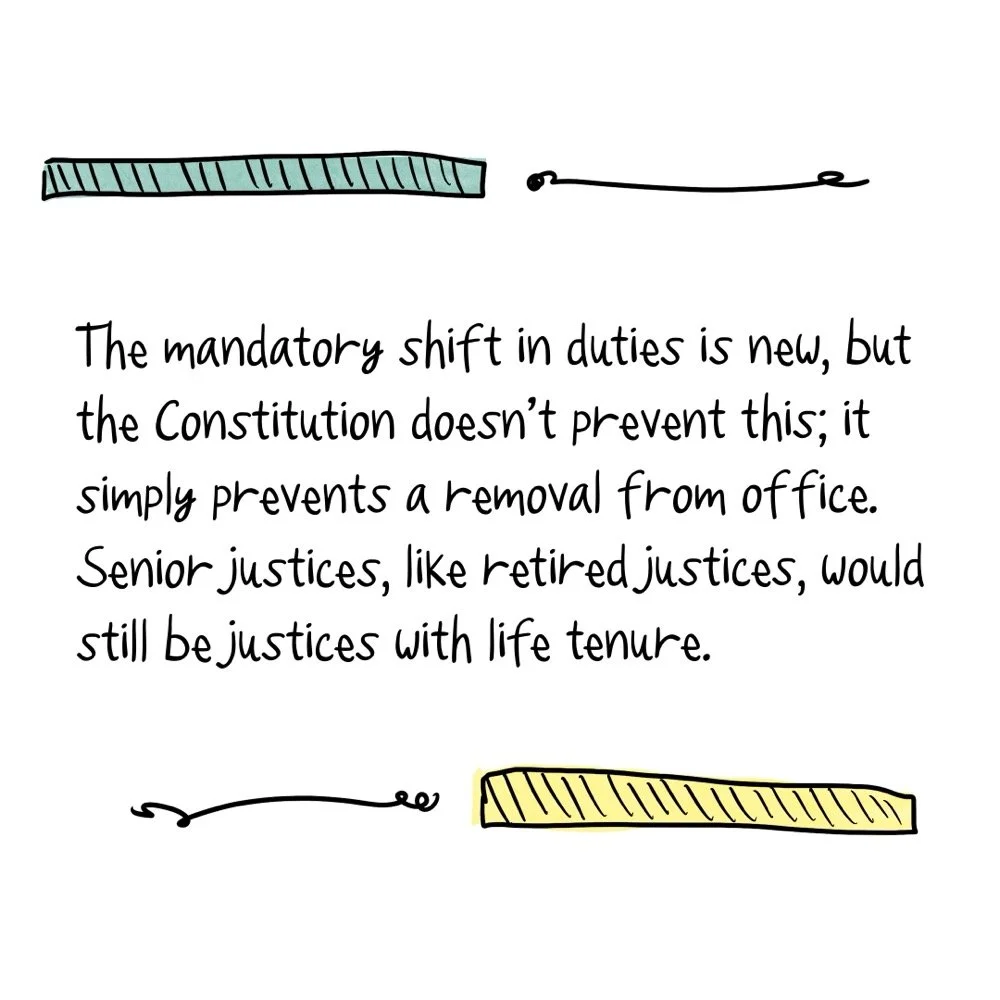
Yes, Congress has a long history of keeping the Supreme Court in check by adjusting their role. For many years, they made them “ride circuit” all over the country to hear cases, and over time they have adjusted what types of cases the Court can hear. The new structure just has to preserve the life tenure of Supreme Court justices because the Constitution says, “The Judges, both of the supreme and inferior Courts, shall hold their Offices during good Behaviour, and shall, at stated Times, receive for their Services, a Compensation, which shall not be diminished during their Continuance in Office.” (Article 3, Section 1, U.S. Constitution). The Supreme Court has said that it is Constitutional for federal judges to take “senior status” because they are still holding their “office” as federal judges in this way. See Booth V. United States 291 U.S. 351 (“Congress may lighten judicial duties, though it is without power to abolish the office or to diminish the compensation appertaining to it”).
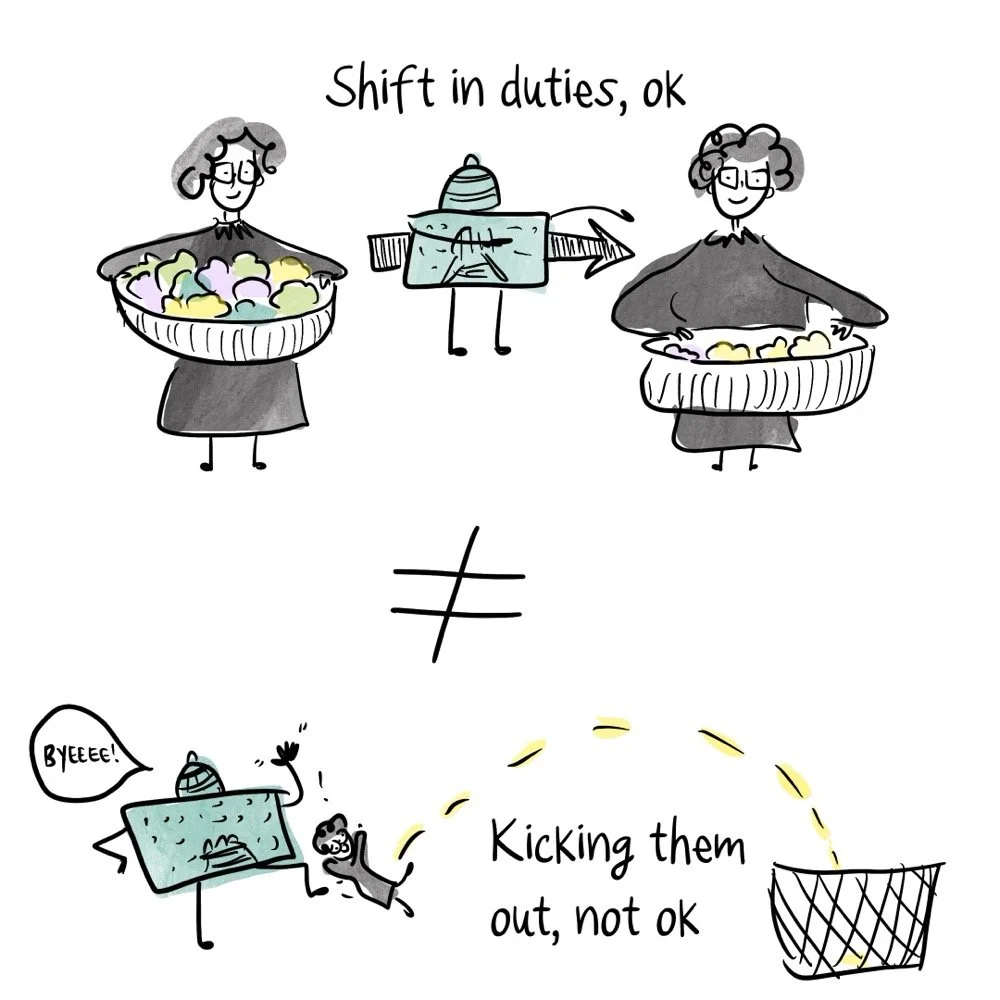
351. The mandatory shift in duties is new, but the Constitution doesn’t prevent this; it simply prevents a removal from office. Senior justices, like retired justices, would still be justices.
(Anyone who likes the status quo will argue against all of this, of course. But the arguments in favor are reasoned and logical. For anyone who likes to get in the weeds, the Brennan Center has gone into detail here.)
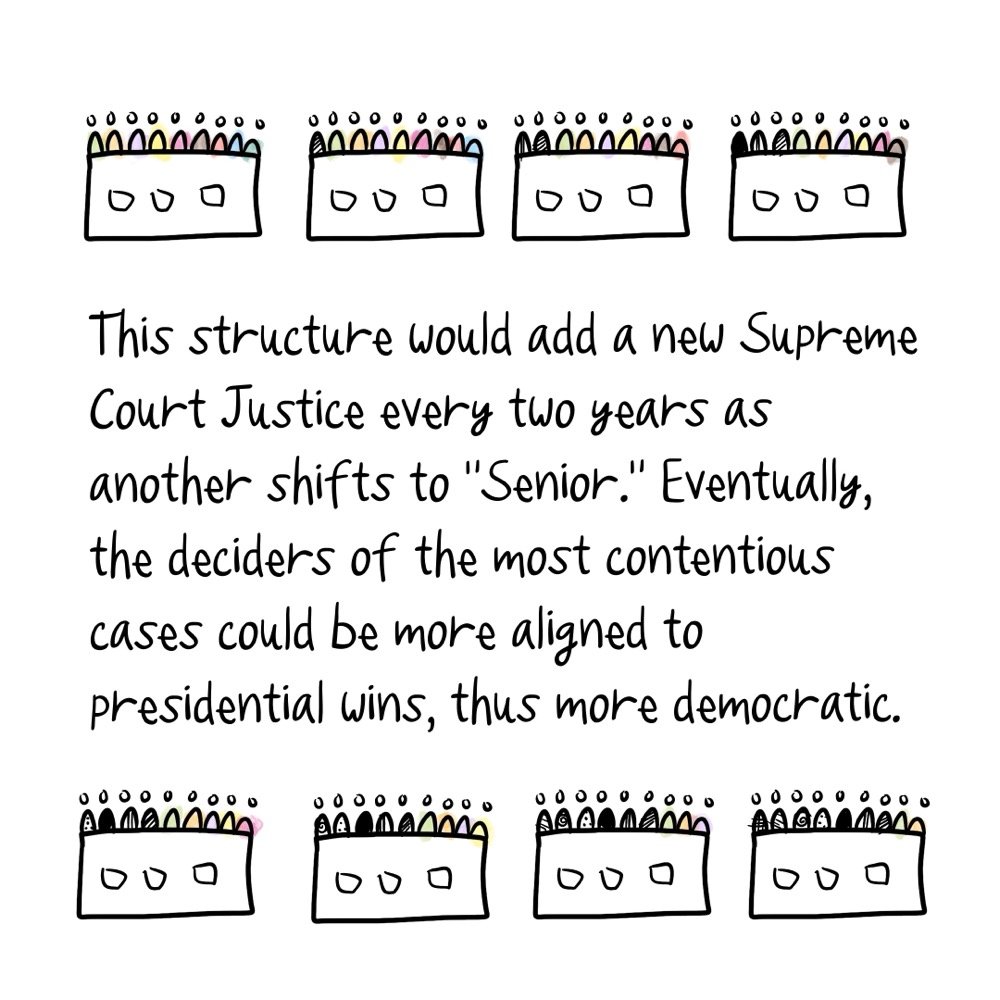
This new structure would add a new Supreme Court Justice every two years. It would take a while to ease into it fully, but over time the makeup of the Court could be more aligned with recent presidential wins.