
Did You Know That AI-Generated Work Is Not Copyrightable?
A book deal was canceled, Claude is introducing watermarks into its generated text, and a company that can apparently detect AI writing is getting lots of attention. Everyone’s talking about AI and writing.
Lawyers who embrace the technology point out that using AI to create written legal work helps them move faster and sometimes help a client who otherwise would have gotten no legal assistance. This makes some sense. But it still makes me squeamish because of how much I value human writing.
In publishing and visual art, it’s a different story. We love people’s creations because they are things that could only come from a particular person’s weird and quirky brain. We have a system for helping people get value out of their unique expressive contributions, which recognizes the took time and effort to build up skill and create. AI-generated work feels like a threat to those ideals. And this is without even diving into the fact that AI companies trained on vast amounts of creative, copyrighted works and are in court arguing that it was totally fine to do so.
The love of the craft isn’t the only reason to be concerned about using generative AI to create something you want to share as your very own. There is also a legal reason. In the U.S., only work made by a human can be copyrighted. If it can’t be copyrighted, then it’s part of the public domain and anyone can copy and use it.
What is copyright?
Copyright is like putting a protective label of originality on your work. Technically, copyright is automatic; your work is imbued with it the moment you create it. It’s mostly symbolic in that sense.
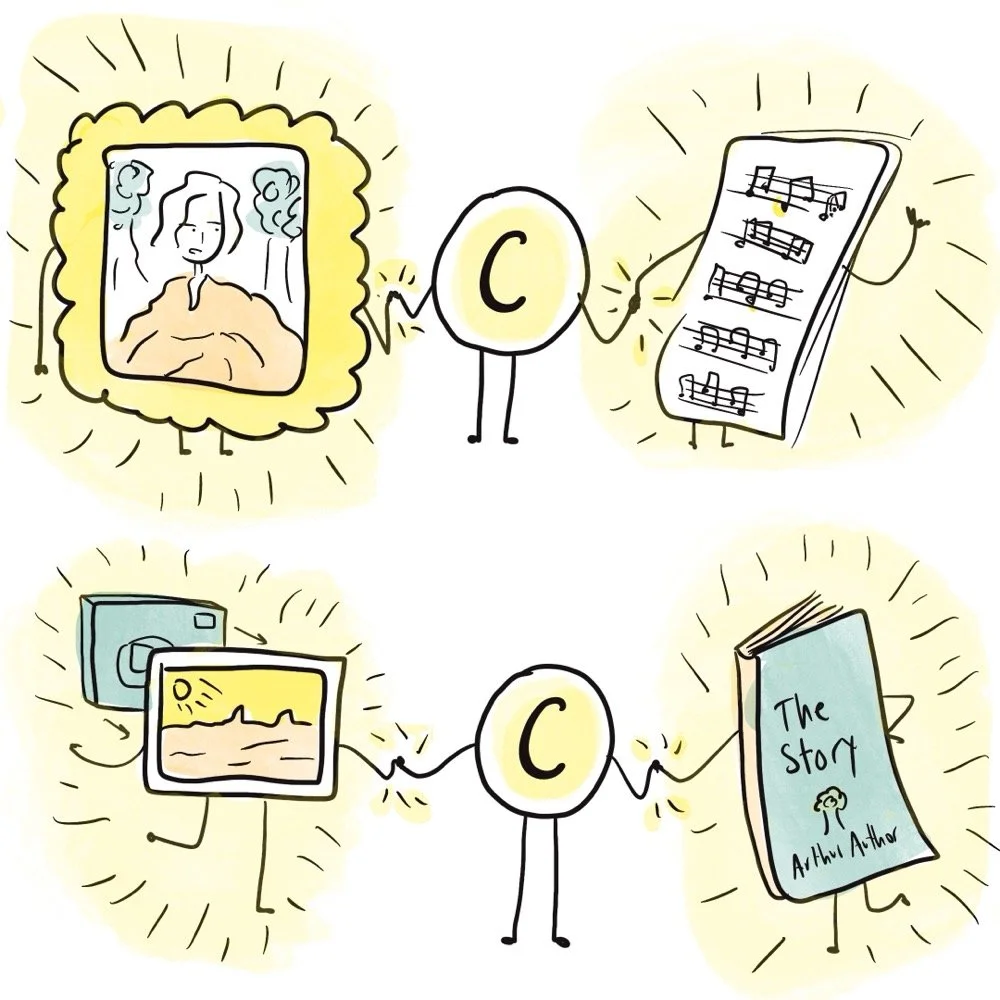
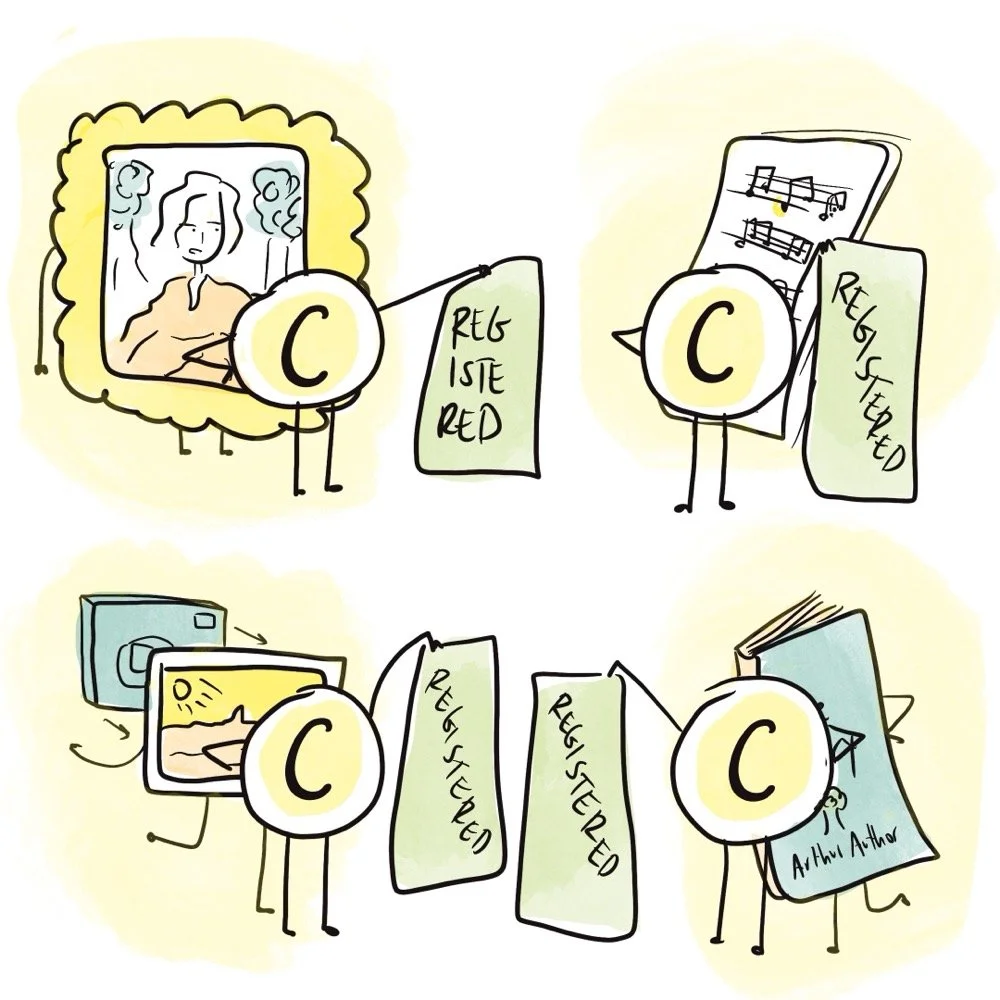
The real protection comes if you if you register your work with the U.S. Copyright Office. Registering allows you (and your attorneys) to get money if you sue someone for copying you and win. In legalese, we call the money you get “damages” and the money your lawyers get “attorney fees.” Without a registered copyright, you don’t have as much leverage to go after someone who copied your work.
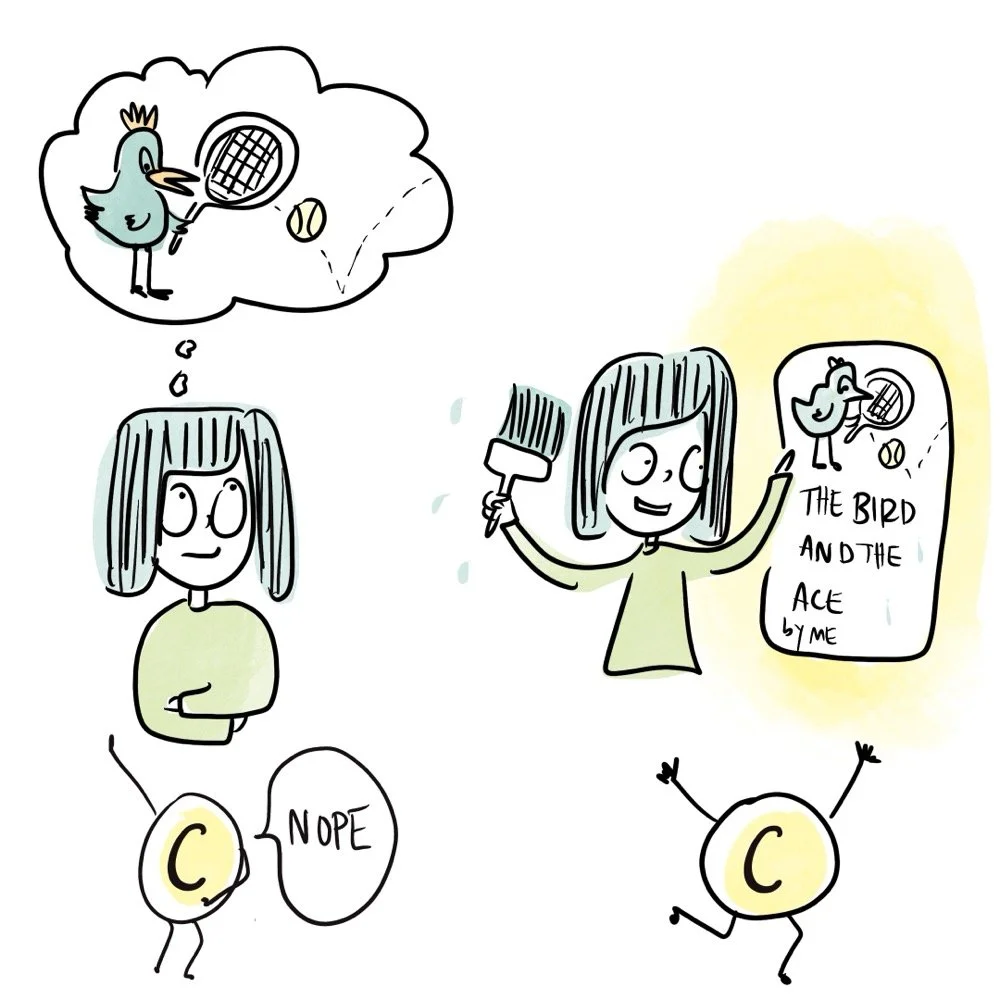
You can’t copyright an idea, but you can copyright human-made work that expresses an idea. It’s about the way that the idea is put into a form of expression, in a way only you-the-human can do.
When someone tried to get photos taken by monkeys copyrighted, they were turned down.
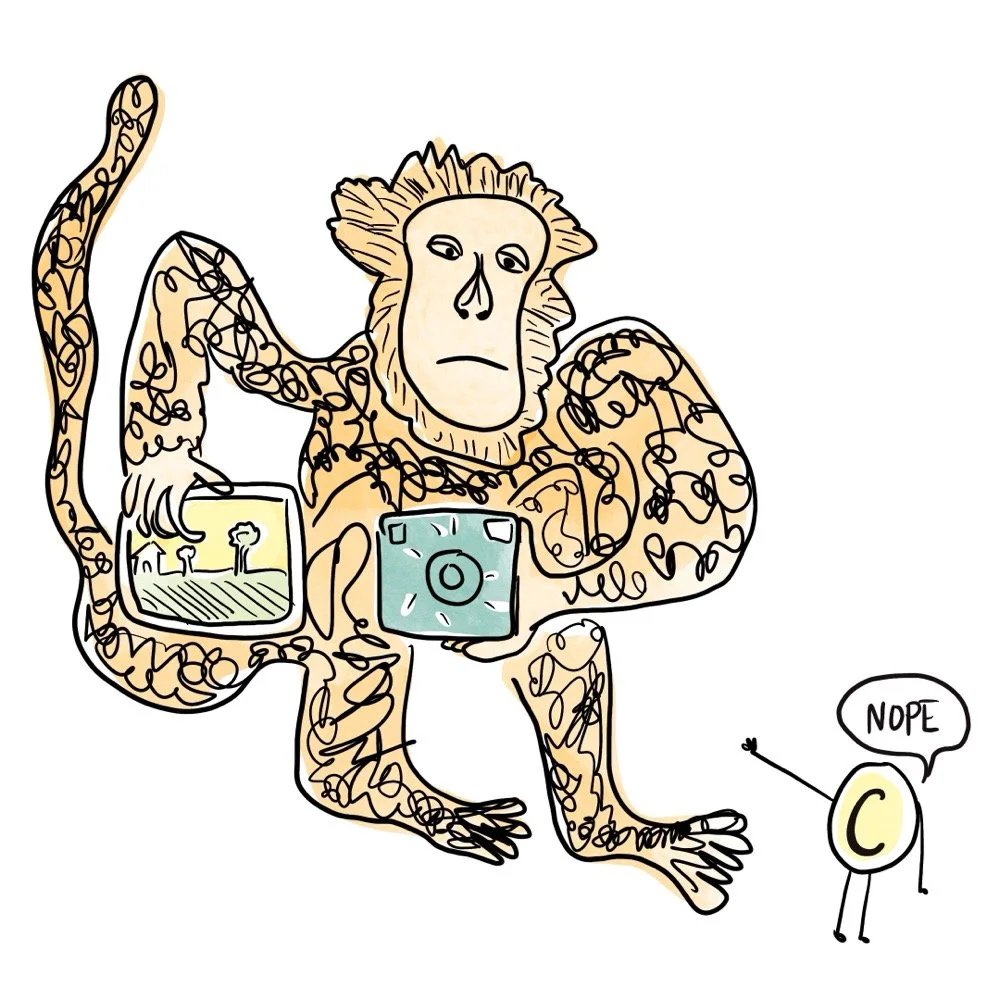
Monkey-made work cannot be copyrighted.
And when someone tried to copyright a piece of art that was entirely made with generative AI,
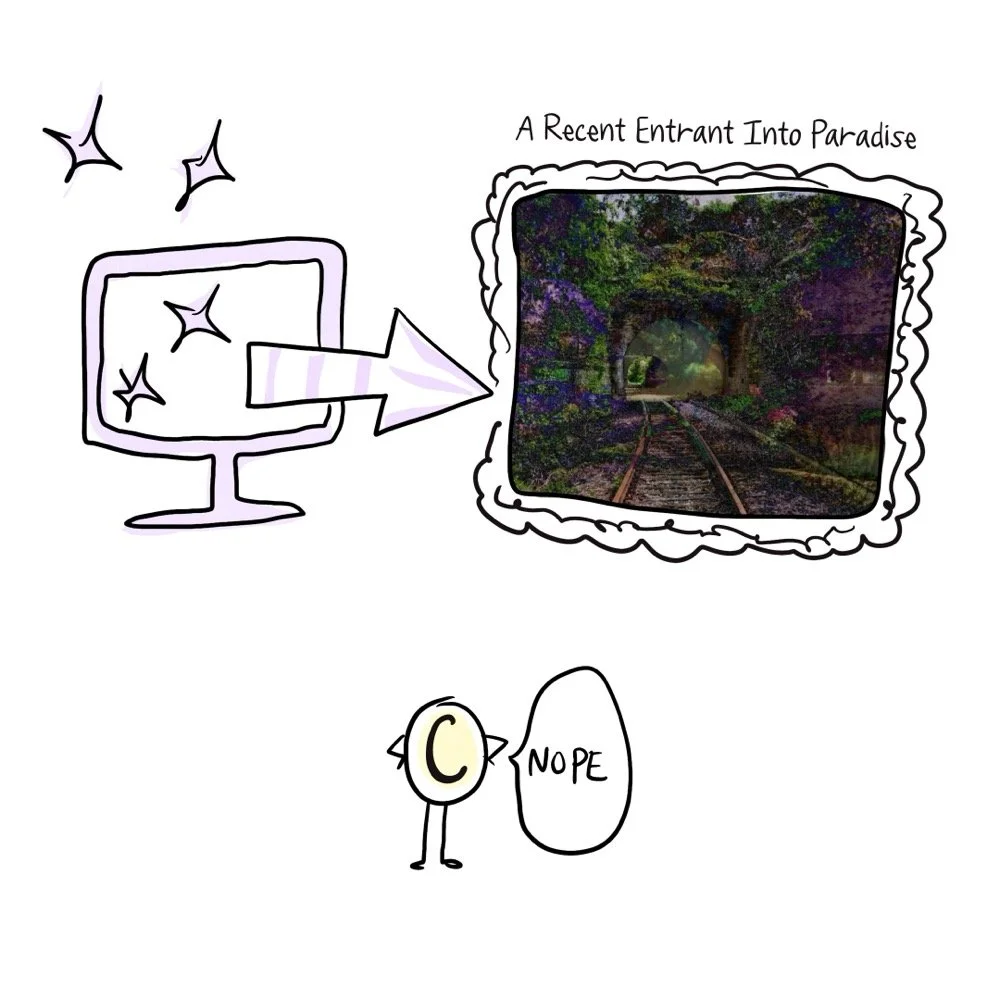
they were also turned down.
The Supreme Court recently refused to take the case about the AI-generated image above, so it’s pretty settled at this point that AI-generated work cannot be copyrighted. No one can have a monopoly on it, anyone can use it, it doesn’t really have value.
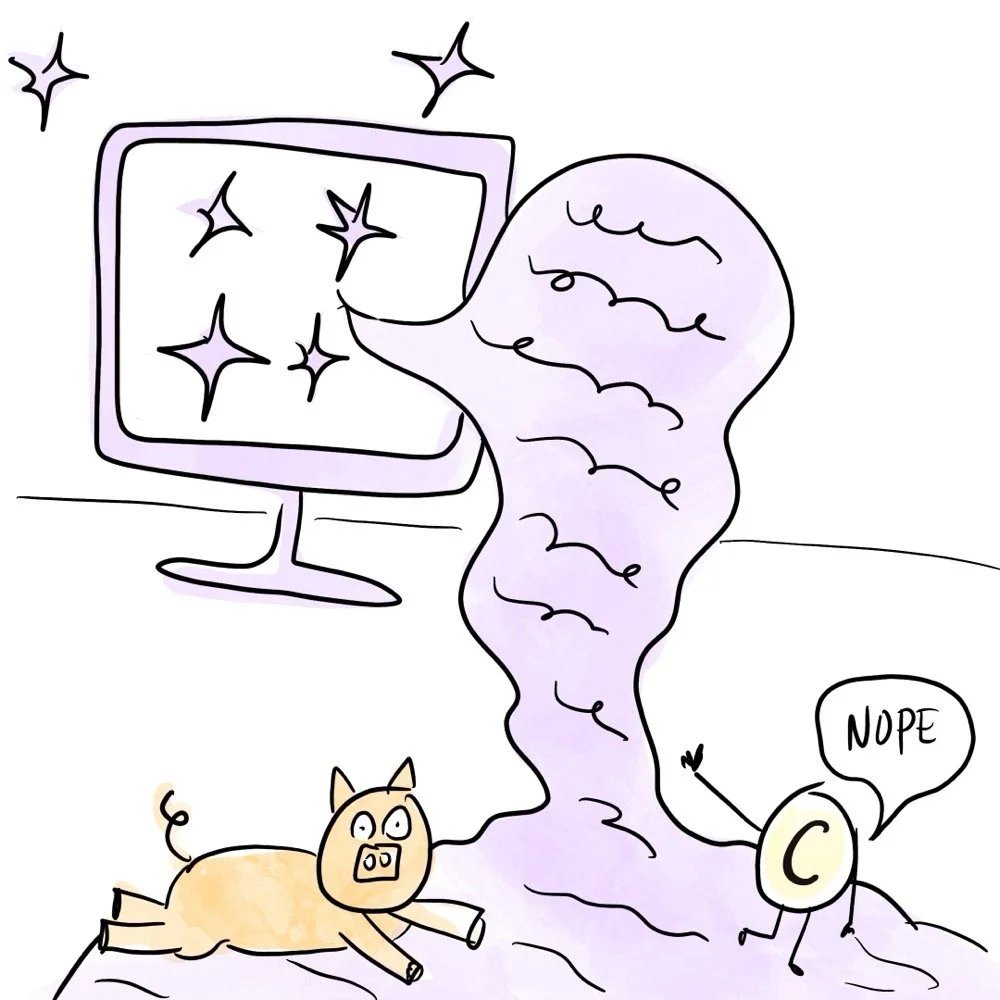
Whoever coined the term “slop” seems to have understood this!
What about work that is made “with” but not entirely by generative AI?
In these cases, copyright only goes to the human-made element, but the line-drawing here is still being ironed out.
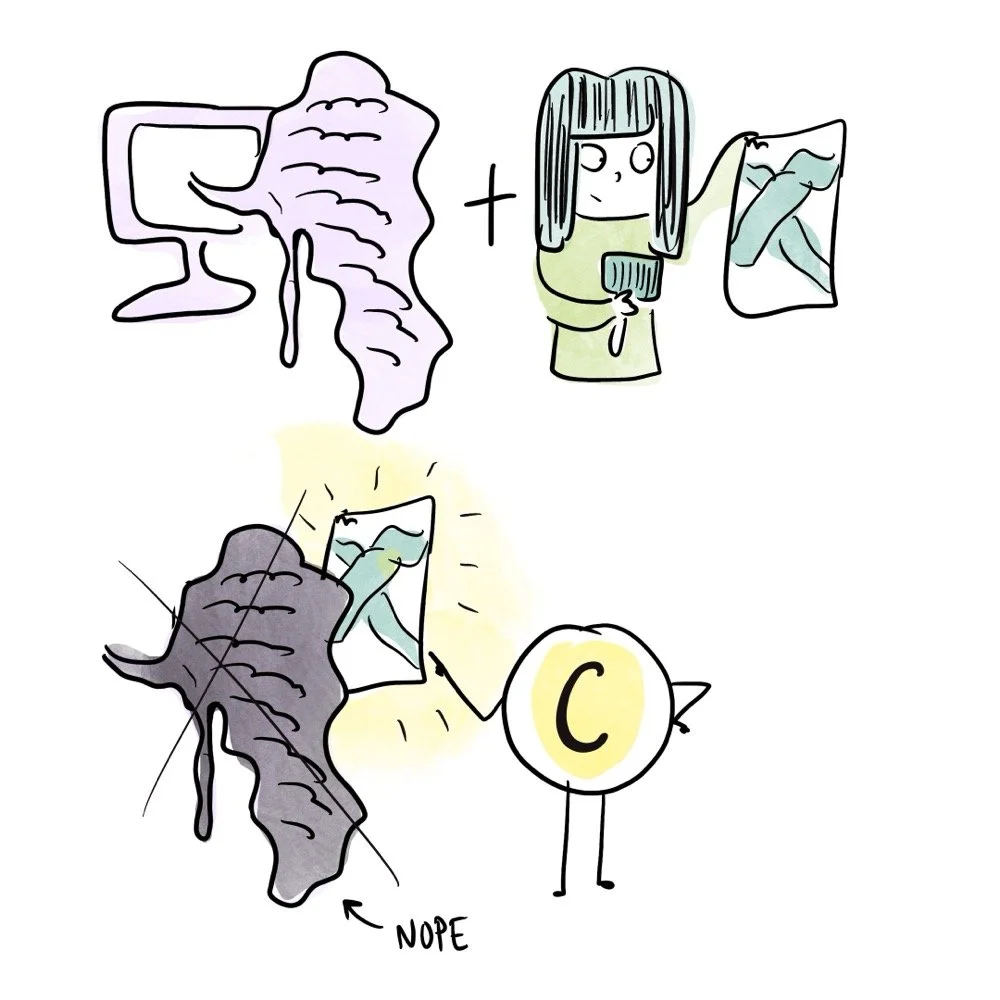
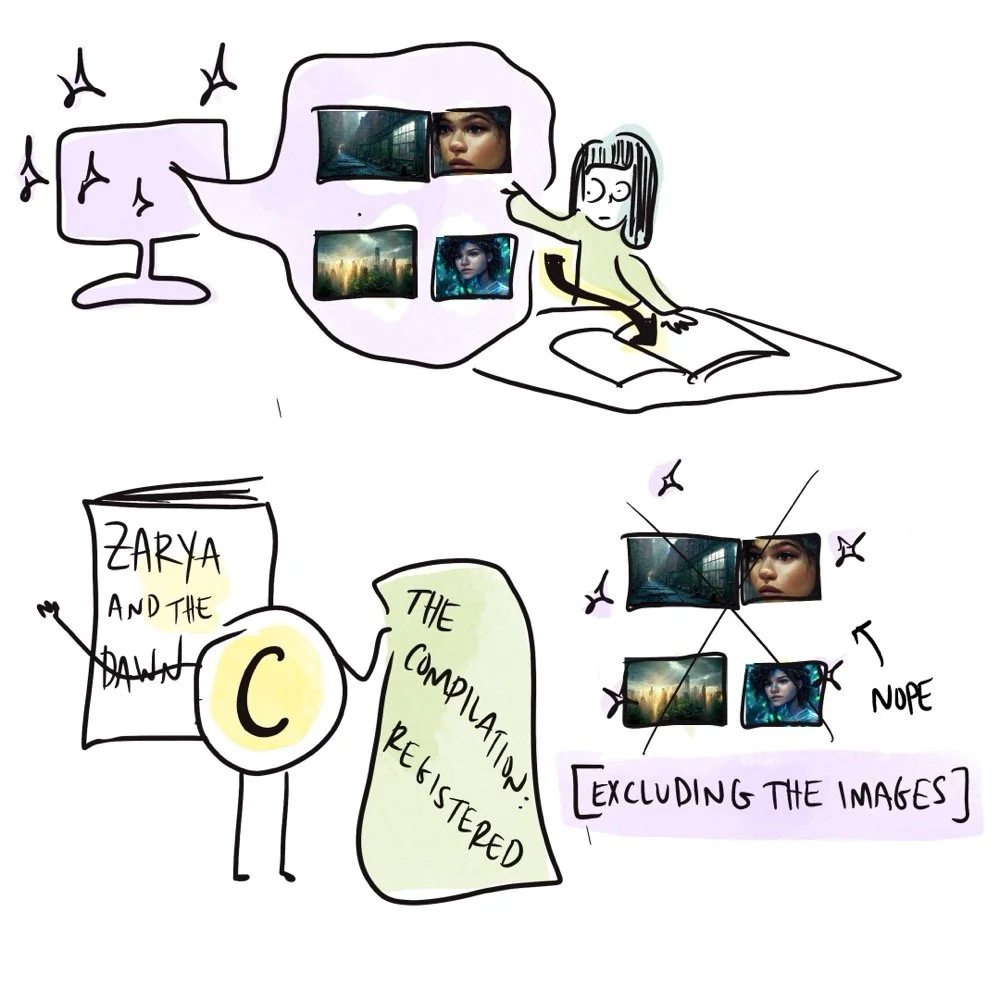
For example, a graphic novel that had AI-generated images but was written, and arranged into a book, by a human was copyrighted as a compilation document. The AI-generated images inside the book were not granted copyright.
Even when many hundreds of human-written prompts are used to generate an image, it is not copyrightable. (The prompts and any photoshopping after AI-generation may be copyrightable, though.)
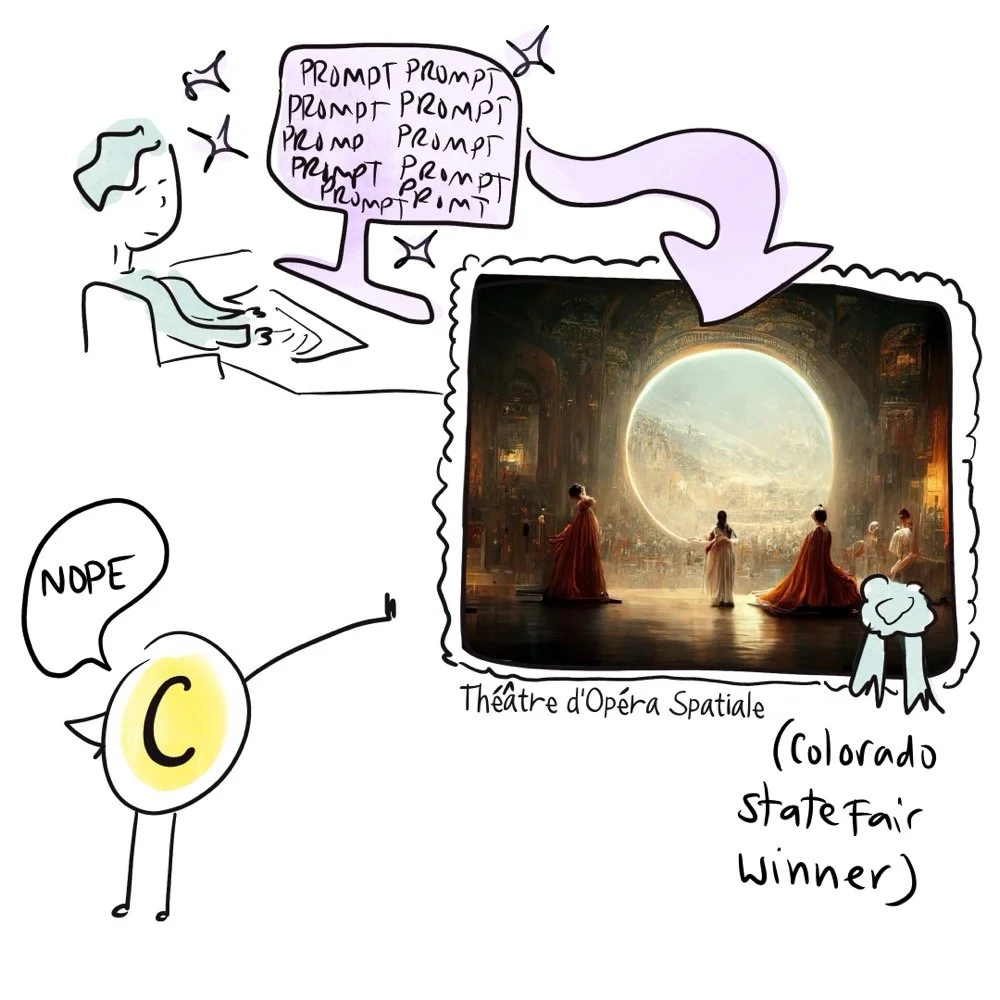
The creator of this image believes the AI image generator was just a tool that he made using over 600 prompts that he, the human, developed. He is challenging the Copyright Office’s decision in federal court.7
As a matter of pure concept, the Copyright Office is clear that any part of a work that was generated with AI is not copyrightable. This theoretically has advantages for creators because it should disincentivize companies from turning to AI to make them something that they want to be solely theirs. In theory, this should making them continue hiring artists. There is some evidence this is working, maybe only a tiny bit.
But there are challenges with this framework that I imagine we will be watching play out over the coming years.
The Copyright Office requires you to disclose any AI use. Practically speaking, this means filling out a box when you register your work in an online portal. What if people don’t disclose? There may be ways to use existing intellectual property law to disincentivize not disclosing, according to at least one legal scholar. I will be interested to see how this progresses.
I wonder if the way that AI has been hyped and thrown into the atmosphere may also lead to less disclosure because folks adopted it into their creative process without being aware of the potential copyright implications.
What will be the line between clearly AI-generated and clearly human-made work? What about an idea that a human put into expression after consulting with AI for brainstorming? What if the AI provides line edits? Critique? Synonyms? Encouragement for moving forward? What is the human-made, copyrightable element of those scenarios?
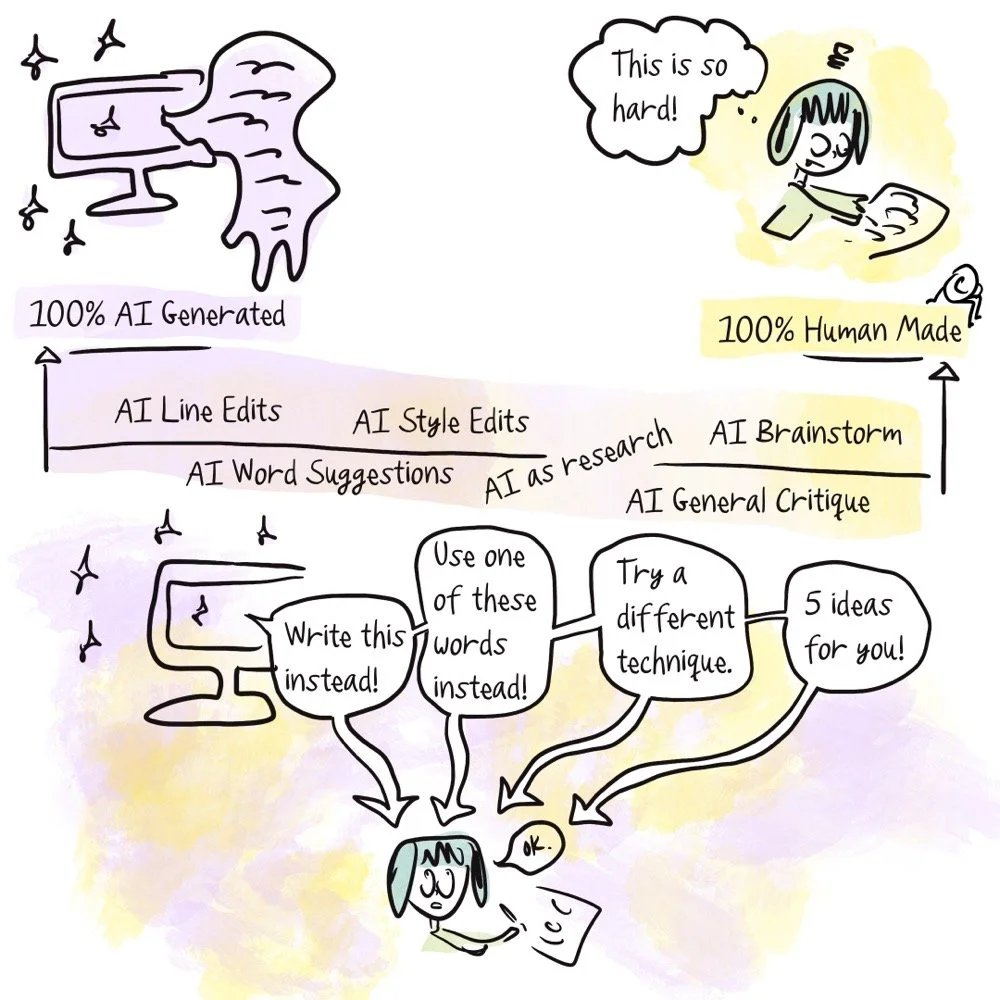
The idea of using AI for something I value as craft makes me uncomfortable, but I believe some will resist a pure approach of no AI whatsoever. People seem to have different boundaries about what it means to create with AI, different views about whether it’s just a tool, like a camera, or something else entirely, and I imagine this will affect how they disclose their AI use when they register a work. Depending on how things play out with future copyright cases, this could affect where the law goes, too.
Notes:
Technically, the Copyright Office turned them down, and then the Court of Appeals ultimately agreed.
Naruto v. Slater, No. 15-cv-04324, 2016 U.S. Dist. LEXIS 11041, at *10 (N.D. Cal. Jan. 28, 2016) (“[Monkey] is not an ‘author’ within the meaning of the Copyright Act”), aff’d, 888 F.3d 418 (9th Cir. 2018) (finding that monkey cannot sue for copyright infringement).See Thaler v. Perlmutter, 687 F. Supp. 3d 140, 149–50 (D.D.C. 2023).
Cert petition was denied on March 2, 2026: https://www.supremecourt.gov/search.aspx?filename=/docket/docketfiles/html/public/25-449.html
This is also the position that the Copyright Office has been taking for a few years now. They issued a long report about it in January 2025. The report seems to basically affirm the guidance they released in March 2023 on the same subject. Both of those links are to PDFs which I have highlighted with what was interesting to me, but you can find these documents easily by Googling them.
It doesn’t even have much value as food for training AI models because it’s AI-generated and training with AI-generated slop is bad for models! If it’s bad for models, why must it pollute our internet?! https://www.nature.com/articles/s41586-024-07566-y
U.S. Copyright Office, Cancellation Decision re: Zarya of the Dawn (VAu001480196) at 5 (Feb. 21, 2023), https://www.copyright.gov/docs/zarya-of-the-dawn.pdf (explaining that registration covered the work’s human-authored text as well as the human-authored selection, coordination, and arrangement of the work’s written and visual elements, but not images generated by Midjourney that were not the product of human authorship).
Allen v. Perlmutter. Link to docket here.
I think we will lose something of ourselves if we think of it as just like a tool, but I don’t have fully evolved thinking on this yet.