
In 1987, Judge Robert Bork was nominated to the Supreme Court, and his nomination failed because it became clear to enough people during his Senate confirmation hearing that his views about the law were just too conservative to be palatable. Before his nomination fell apart, though, a reporter went to Judge Bork’s local video rental store. (I don’t know if it was a Blockbuster, but wasn’t Blockbuster the best?) The reporter got ahold of Judge Bork’s list of movie rentals and wrote about them.
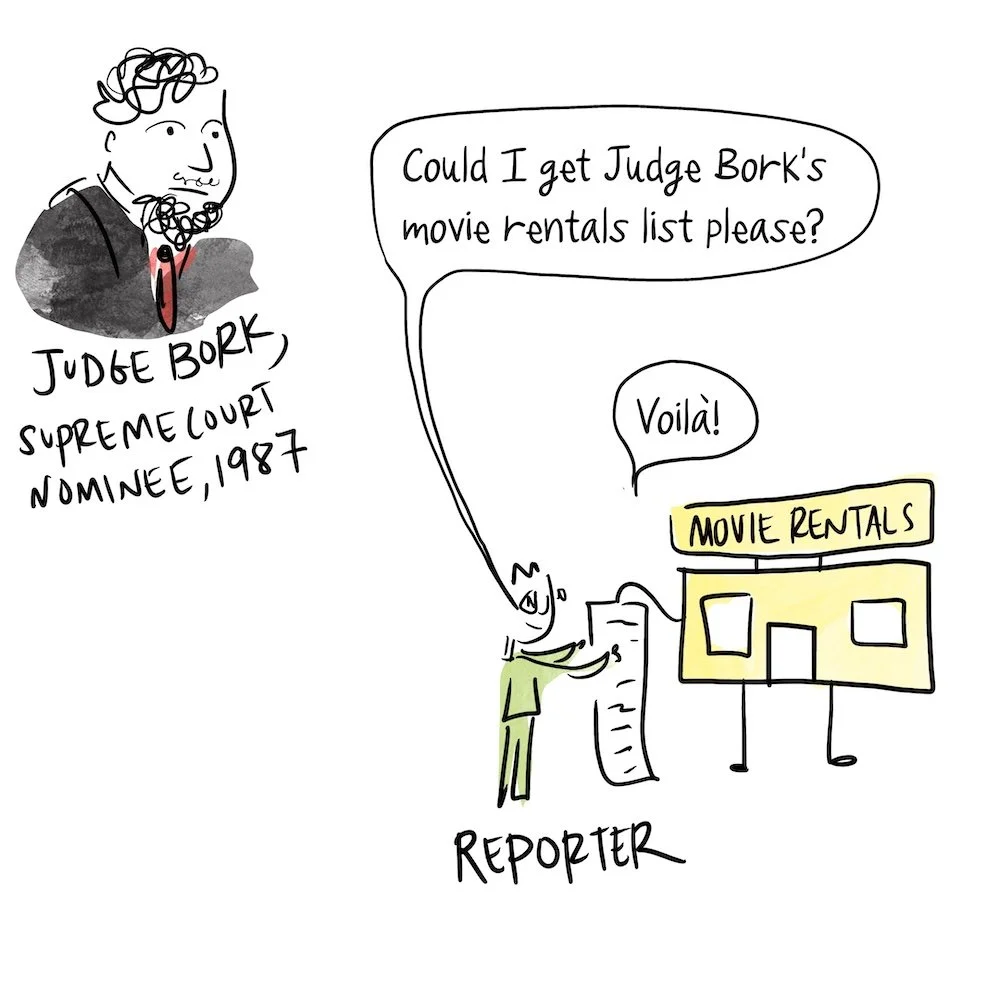
The Bork Tapes weren’t particularly interesting or salacious, but Congress was not amused with what happened. In that era, Congress passed laws when it saw something it didn’t like, and so the Video Privacy Protection Act was born.
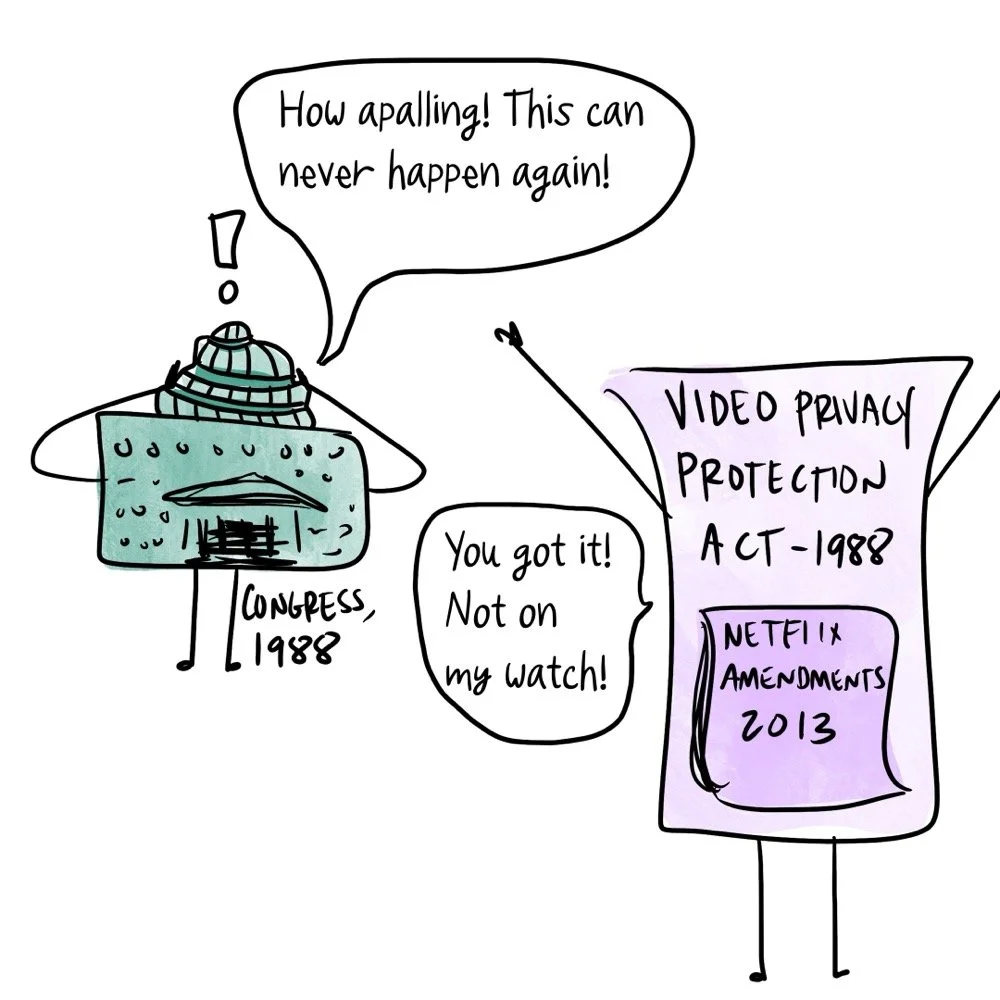
If the reporter had tried the same thing again in 1991, when Justice Thomas was up for nomination (yes, he’s been on the Court that long), Justice Thomas would have had the opportunity to sue a gossipy Blockbuster thanks to this new law.
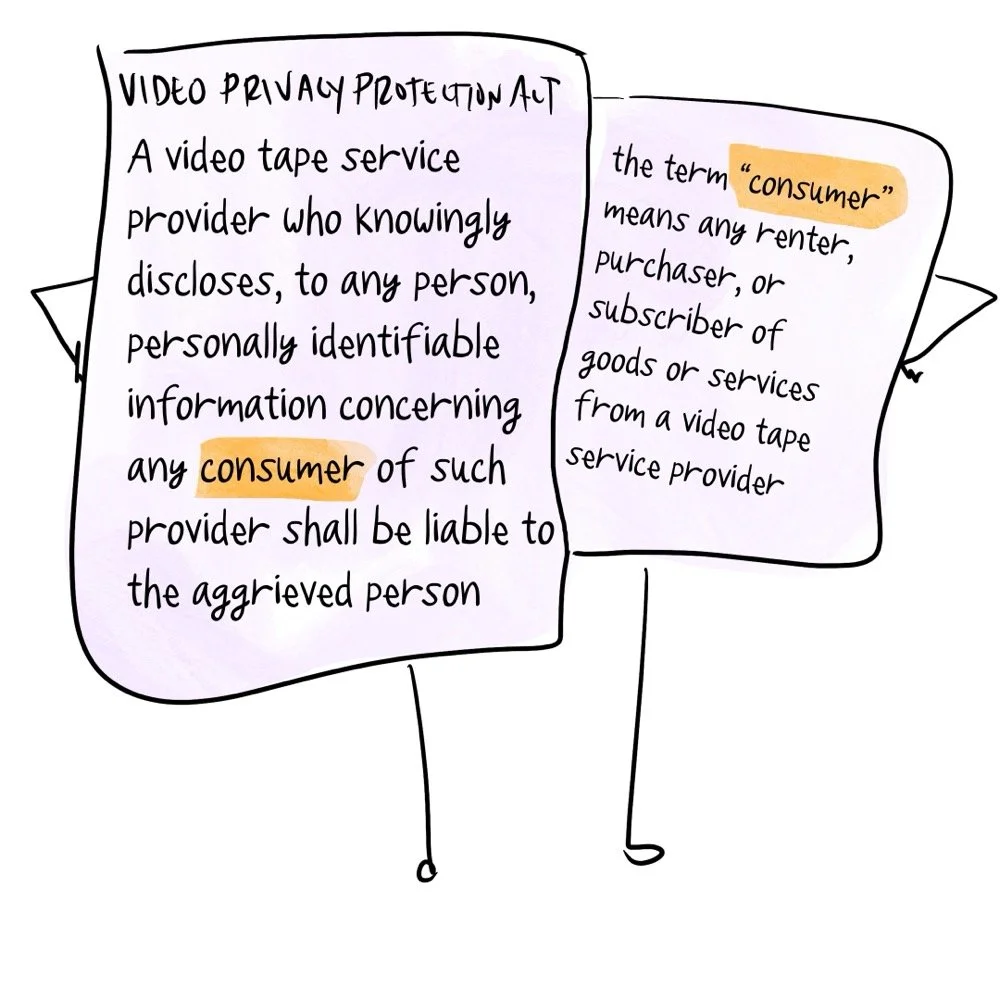
The Video Privacy Protection Act says, “A video tape service provider who knowingly discloses, to any person, personally identifiable information concerning any consumer of such provider shall be liable to the aggrieved person” and defines “consumer” as “any renter, purchaser, or subscriber of goods or services from a video tape service provider.”
Fast forward that VHS tape to 2026. The views that canceled Judge Bork are now shared by most of the Supreme Court, there is only one Blockbuster in existence, and videos are mostly watched online, often for free.
How Does a 1980s Video Law Work Today?
For movies that I rent or purchase or anything I watch using, say, a Netflix subscription, Netflix has to ask for my consent to share my movie list. Everyone (except for maybe Justice Thomas) seems to agree on that. But what if I buy something (not a video!) from a company or subscribe to their non-video newsletter and then later go to their website to watch videos? Can I sue that company if they share my video watching data to advertisers (or the reporter looking for dirt during my Supreme Court nomination hearing)? This is more or less what the Supreme Court was discussing this week at oral argument in a case called Salazar v. Paramount Global.
It’s a little bit obnoxious, but it’s easier to understand when you think about who is concerned about what. Companies that have videos on their websites and use targeted advertising tools that collect data about our viewing habits have one take on this. (Make sure we can keep collecting data and using it for advertising!) People who are sick of their data being collected and shared with advertisers have another view. (Stop stalking me online!) Congress doesn’t seem to want to pass laws that help regular folks anymore, so guy named Michael Salazar and his lawyers have seized onto a law passed in the 1980s to find a solution for a 2020s problem.
How Does the Supreme Court Decide What a Law Means Today?
The process of figuring out what a statute means when there’s a disagreement is called “statutory interpretation.” The story we’ve told for a long time is that this is an exercise for the smartest among us. Yes, the people who can debate the intricacies of these statutes are extremely intelligent in a particular way. Yes, listening to a Supreme Court oral argument feels like attending latin mass. Yes, maybe, it is a language that only some people speak fluently. Yes, ok. But I have started to think that the things that make these legal arguments complicated or mind-numbing is ultimately just a distraction. What is actually going on in these debates—perhaps even if the justice doesn’t recognize it—is the same as when you or I try to make sense of something.
So how do we figure out what things mean?
We look to brains we trust and pay particular attention to them.
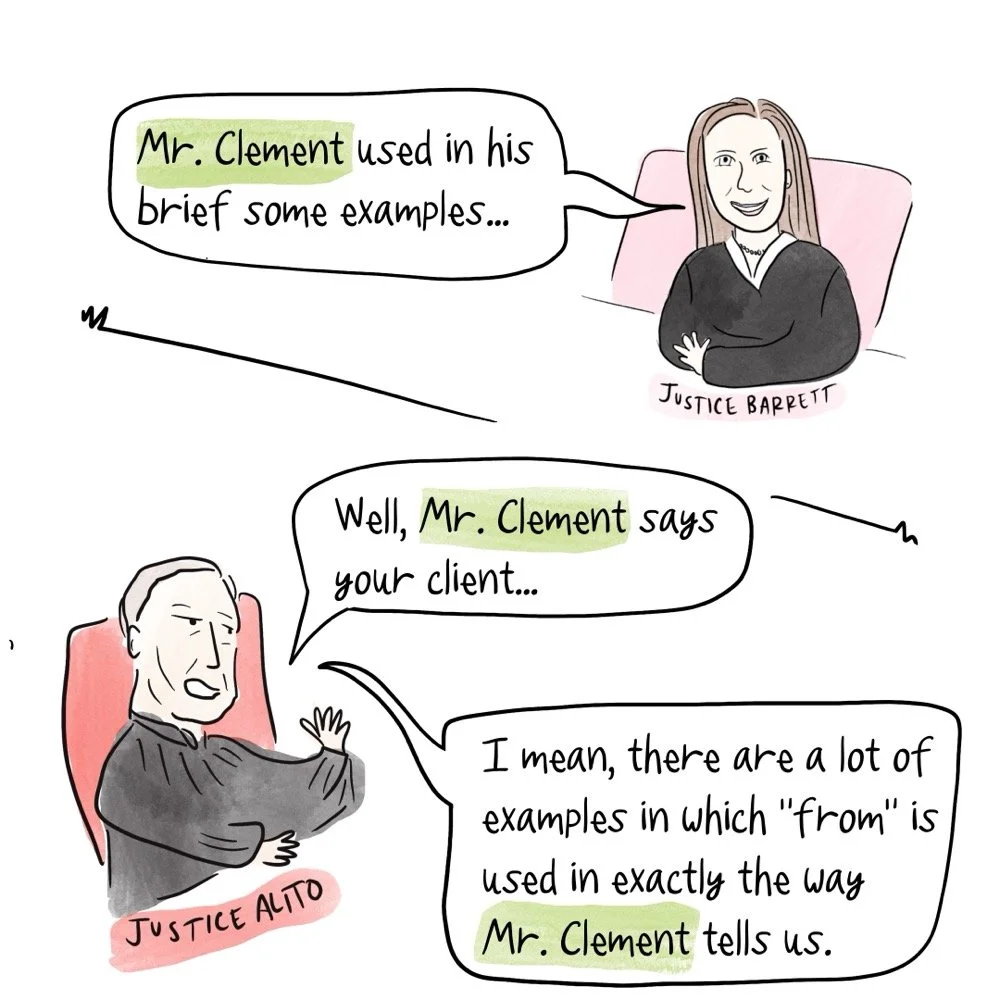
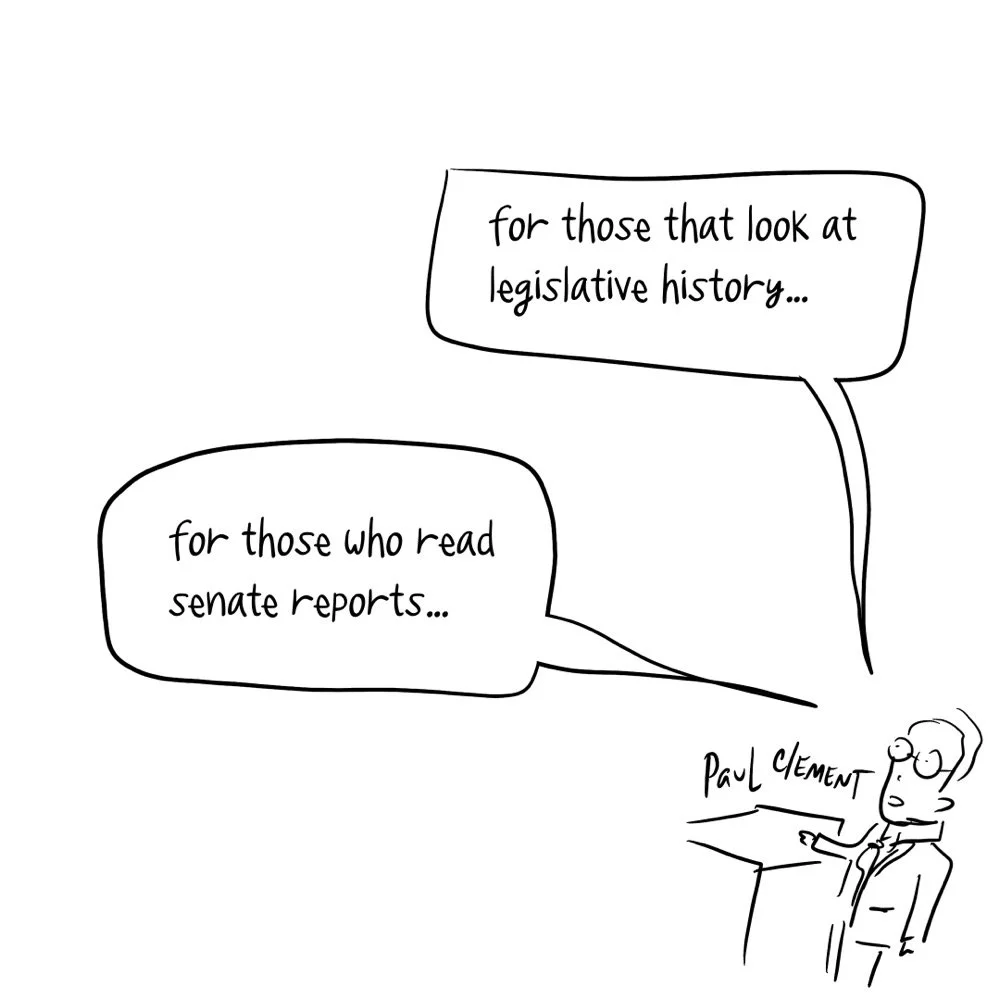
(Paul Clement is a well-known attorney who has argued and won many times in front of the Supreme Court. He was the Solicitor General during the Bush Administration. In this case, he was arguing for Paramount, the side that has videos on websites and uses targeted advertising.)
We are curious about what would happen if we decided a certain way…and whether that’s a big deal..
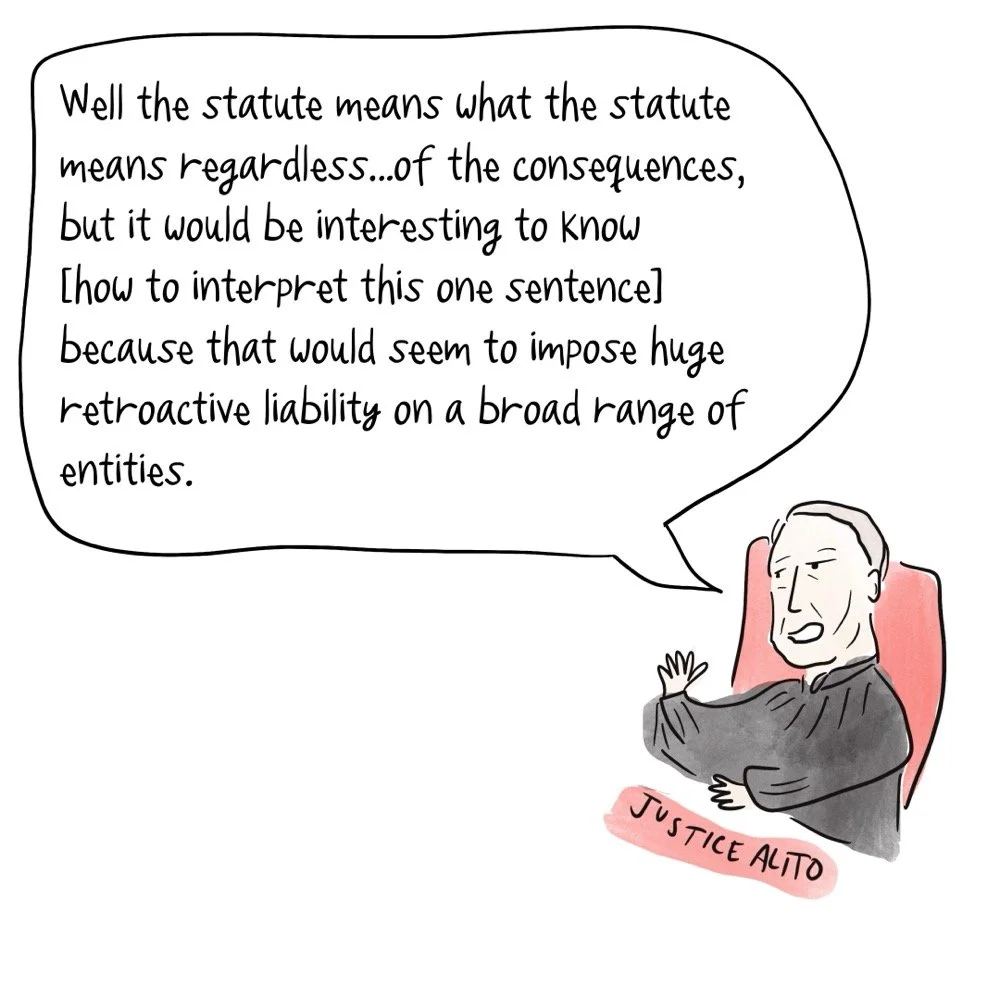
At oral argument, Justice Alito declared, “Well the statute means what the statute means regardless…of the consequences, but it would be interesting to know [how to interpret this one sentence] because that would seem to impose huge retroactive liability on a brand, broad range of entities.”
or whether it’s not that big of a deal because any impacts of our decision would be easily fixable.
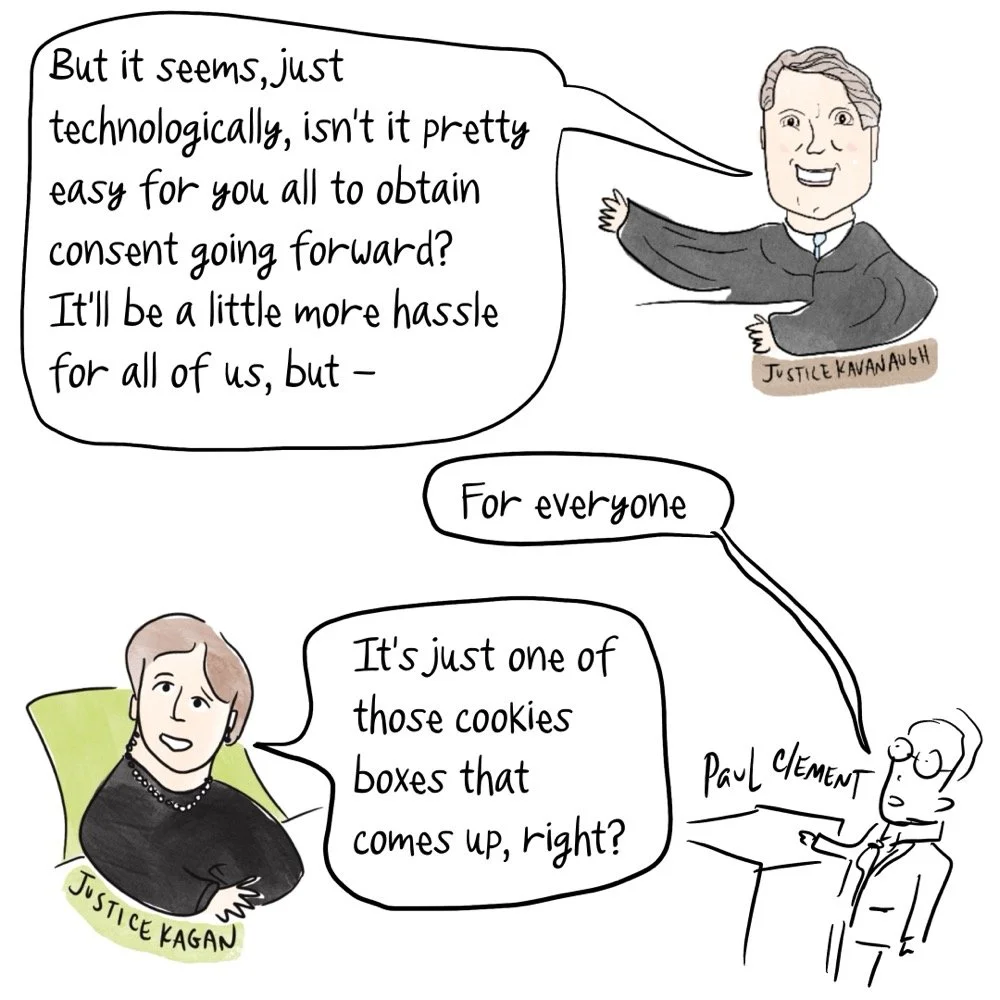
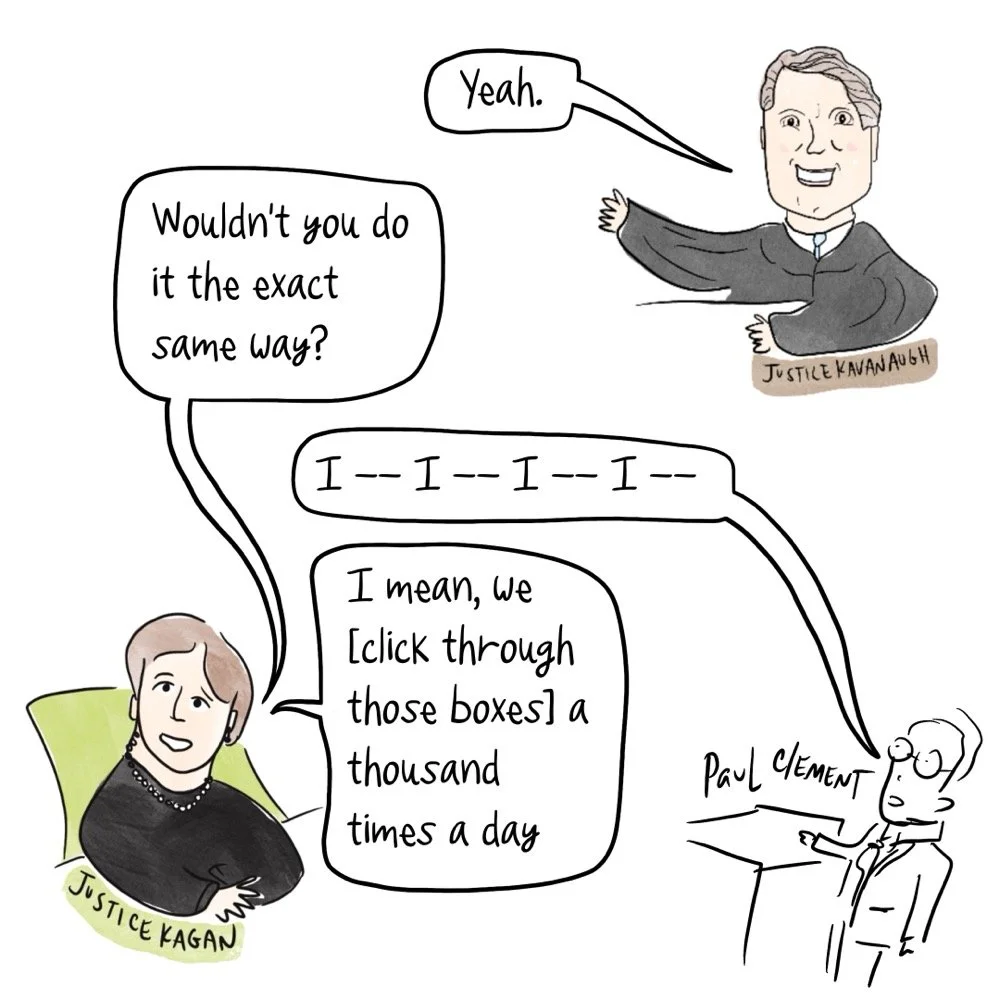
Justice Kagan and Justice Kavanaugh exchanged thoughts on whether it’s that big of a deal to require companies sharing videos and doing targeted advertising to put consent boxes on their websites.
We wonder whether an old rule can be applied to a new problem
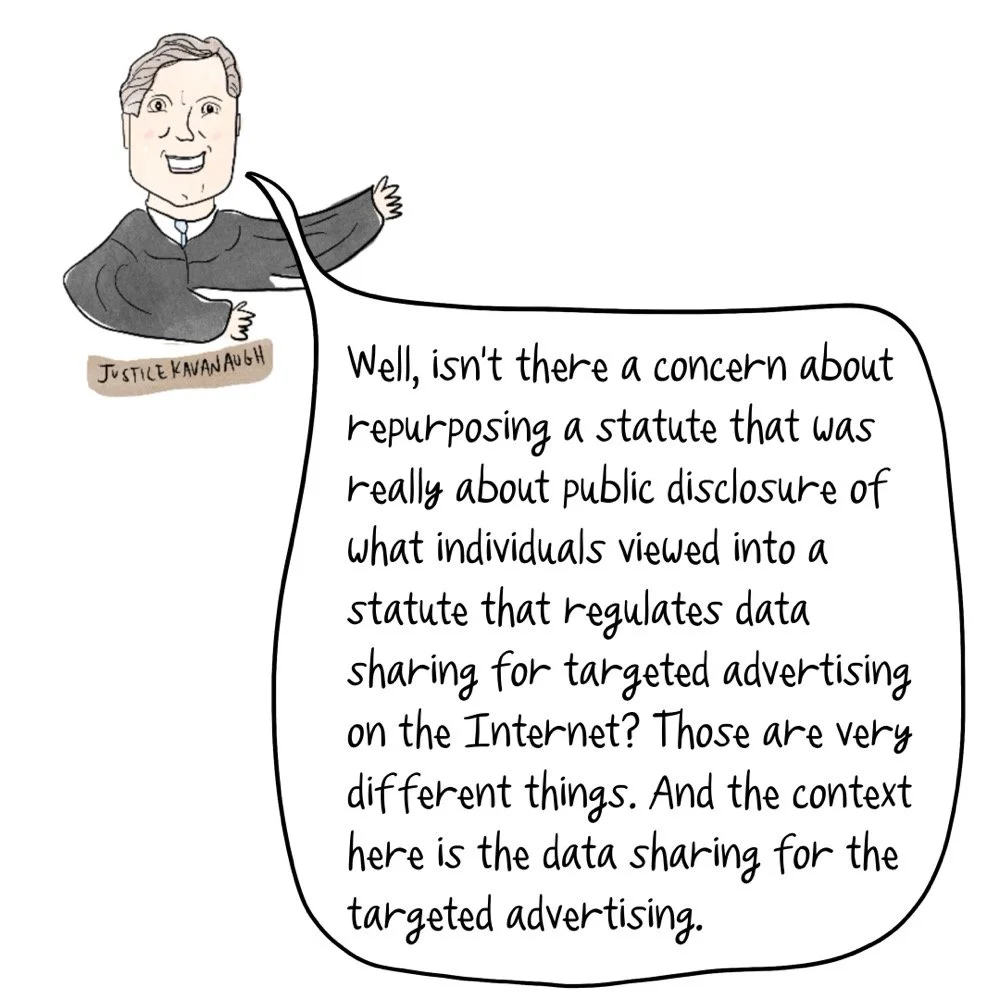
Justice Kavanaugh asked a question that should not bother anyone paying extreme attentino to the text: “Well, isn't there a concern about repurposing a statute that was really about public disclosure of what individuals viewed into a statute that regulates data sharing for targeted advertising on the Internet? Those are very different things. And the context here is the data sharing for the targeted advertising.”
or if the new problem isn’t actually new, but the exact thing the rule was meant to fix in the first place.
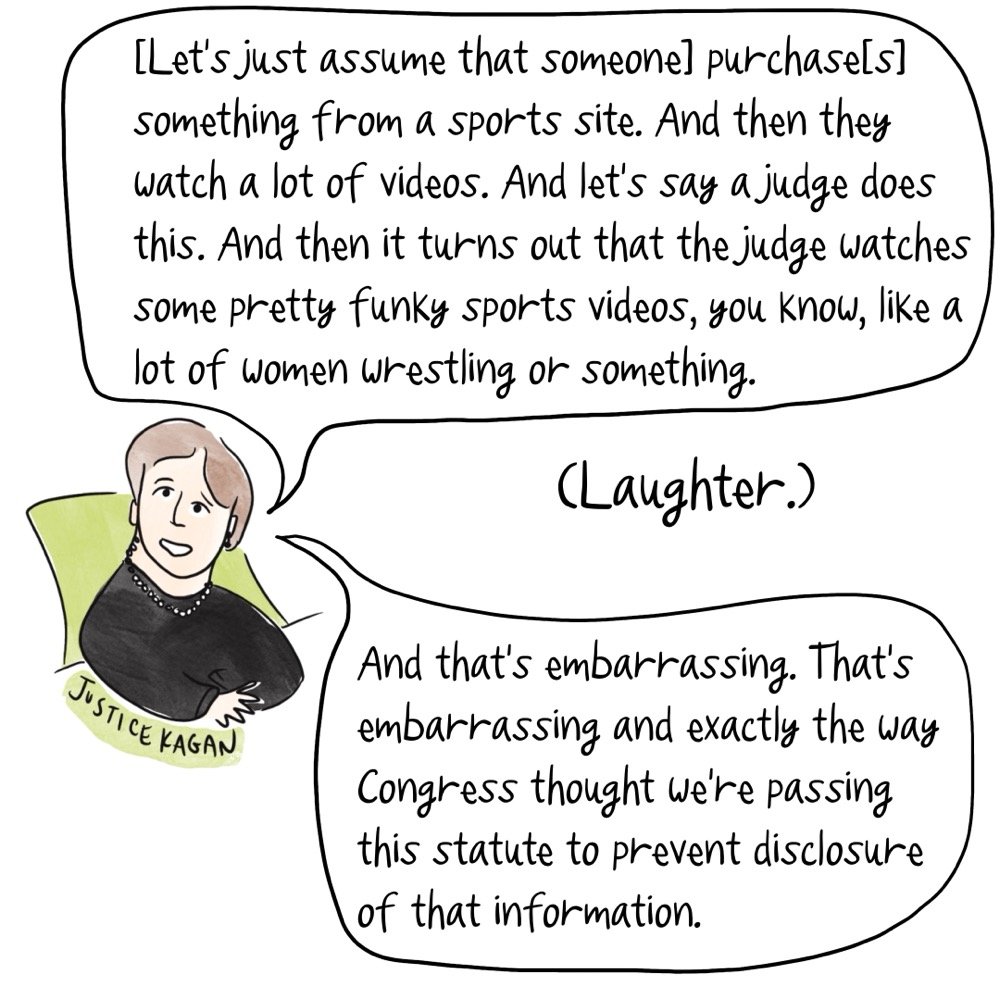
Justice Kagan asks a hypothetical question about a judge who purchases something from a sports site. “And then they watch a lot of videos. And let's say a judge does this. And then it turns out that the judge watches some pretty funky sports videos, you know, like a lot of women wrestling or something. ..And that's embarrassing. That's embarrassing and exactly the way Congress thought we're passing this statute to prevent disclosure of that information.”
We might even wonder what the person who wrote the rule was thinking.
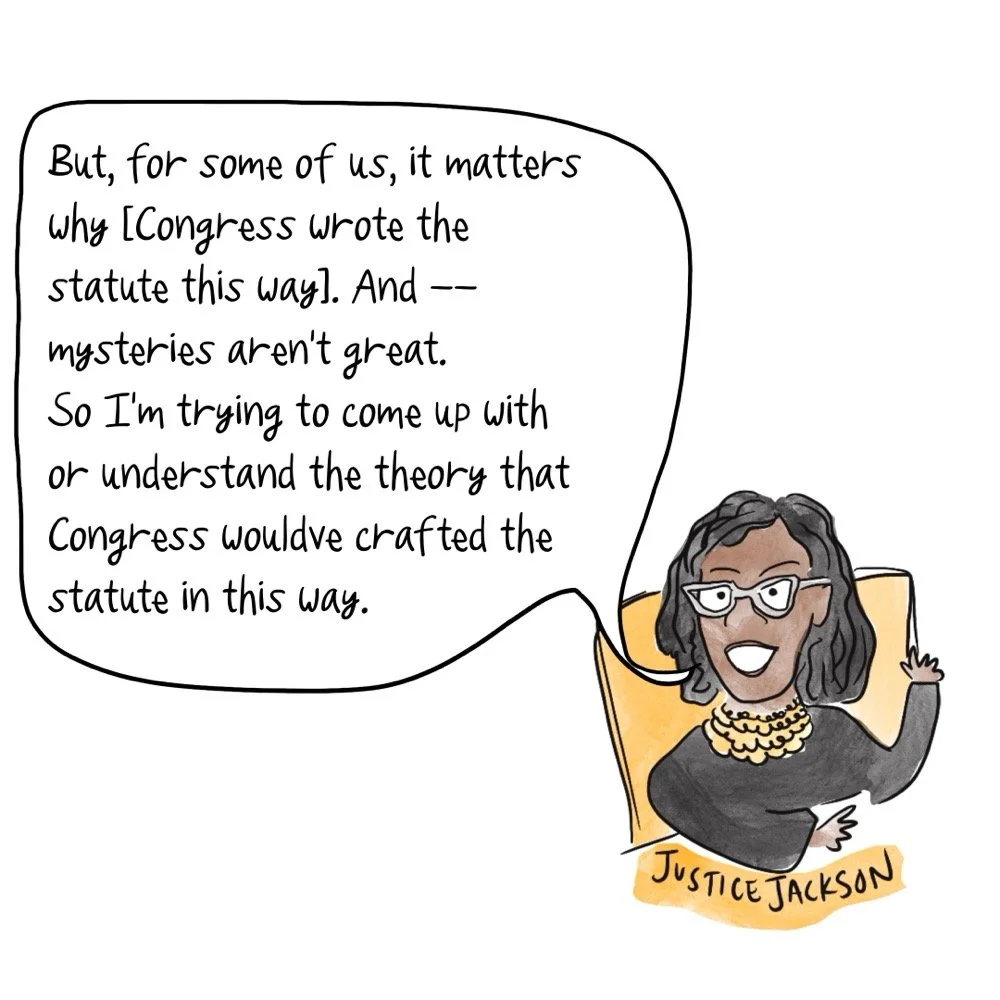
Justice Jackson, who cares about legislative history, urges Salazar’s attorney to explain why Congress wrote the law the way that it did: “But, for some of us, it matters why [Congress wrote the statute this way]. And -- and mysteries aren't great. So I'm trying to come up with or understand the theory that Congress would have crafted a statute in this way.”
even if our colleagues find that to be unfashionable.
But Isn’t the Supreme Court Only Interested in the Text of Statutes?
The conservative legal movement that curated the current 6-3 Court has also succeeded in convincing most of the legal community that “textualism” is the only true way to understand what a statute means. Textualists aren’t supposed to care about what Congress was thinking when passing a law. Textualists aren’t supposed to pay attention to the impact of their interpretation because it’s Congress’s job to fix any ensuing chaos. Textualists certainly shouldn’t consider who is arguing and what they want. Textualists can just look at the text! It has all the answers!
Yet when you’re asked to answer a question like this:
whether the phrase “goods or services from a video tape service provider,” as used in the VPPA’s definition of “consumer,” refers to all of a video tape service provider’s goods or services or only to its audiovisual goods or services.
it’s easy for the text to lead you in multiple directions, and I think it’s inevitable that you will be using more than just the text to figure out what you really think, whether you realize it or not.
I don’t know how the justices are going to decide this case, but I bet that the decision will be written with lots of discussion about prepositions, definitions, and “canons of construction” that explain why the words of the statute clearly require the case to be decided this way.
P.S.
(Unless Justice Jackson is writing the opinion because she actually does care what Congress was thinking and isn’t embarrassed to show it. And for that very reason, Mr. Clement came prepared for to grab her vote, if he could.)
Thanks for being here!
Behind the Scenes - a Podcast
This week, I made the tiniest of cameos on a Supreme Court podcast!
Slate’s Amicus podcast put out a call a few months ago for examples of how you and I are engaging in Constitutional interpretation. It’s not just a job for the Supreme Court! I wrote to them about this newsletter, and they included a little interview with me in their show, alongside the story of a woman who has been knitting the Constitution (I desperately want to see a photo of that). Most of the episode is a discussion between with Stacey Abrams, Ilyse Hogue, and Daphna Renan, moderated by Slate’s Dahlia Lithwick, and it’s worth listening to if you’ve felt frustrated about the Supreme Court and wonder how to think about the way forward.
You can find it here: Amicus by the People | The People v. SCOTUS (gift link)
I’m a lawyer (Michigan Law alum) and artist, and I
simplify legal and technology concepts for lawyers, technologists, and academics with my human-made infographics.
run workshops for professionals that help build their creative brain muscles in a world of AI
provide analysis on the Supreme Court and rule of law using words and illustrations.
If you’d like me to run a workshop for your organization, translate your big idea, or break down the latest legal issues, I'd love to connect!
If you enjoyed this piece of illustrated legal commentary, you may also enjoy:
Birthright Citizenship at the Supreme Court - SCOTUS Oral Argument in Drawings