Birthright Citizenship at the Supreme Court
I’m a lawyer (Michigan Law alum) and artist, and I
simplify legal and technology concepts for lawyers, technologists, and academics with my human-made infographics.
run workshops for professionals that help build their creative brain muscles in a world of AI
provide analysis on the Supreme Court and rule of law using words and illustrations.
If you’d like me to run a workshop for your organization, translate your big idea, or break down the latest legal issues, I'd love to connect!
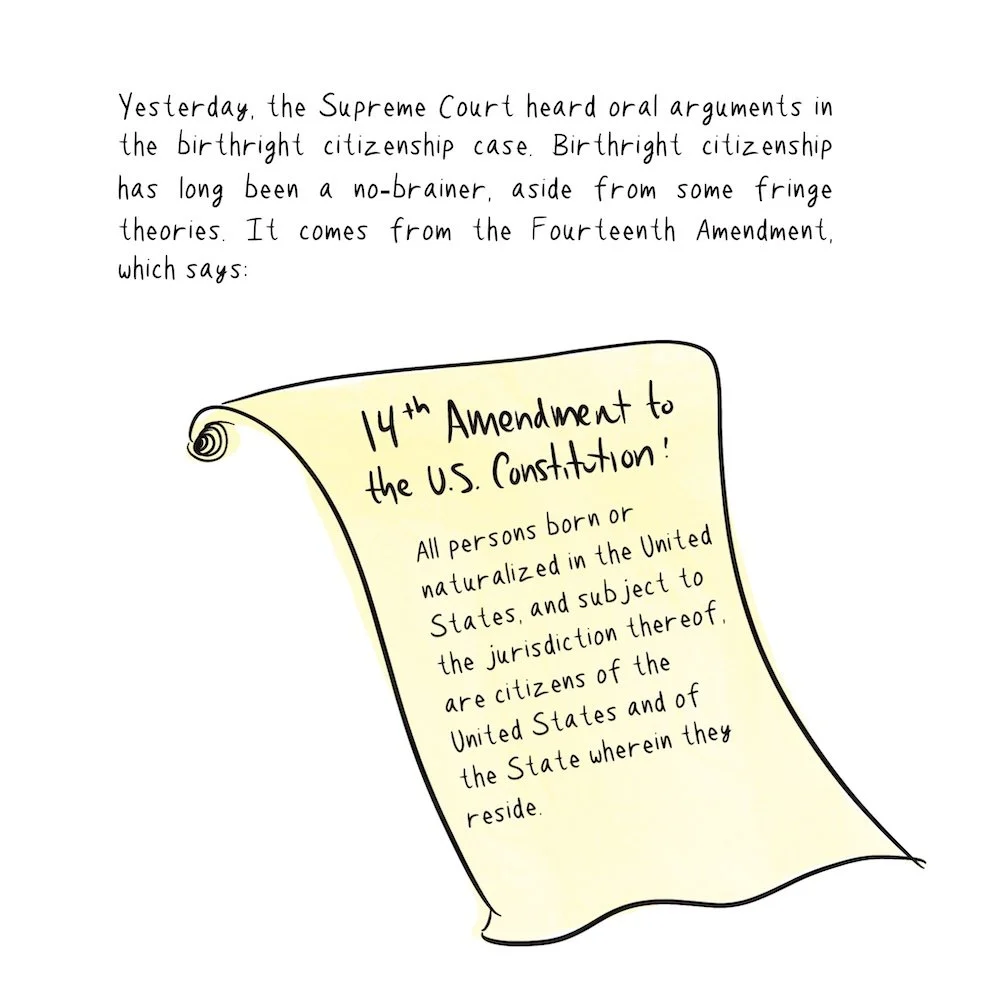
Yesterday (April 2, 2026), the Supreme Court heard oral arguments in the birthright citizenship case. Birthright citizenship has long been a no-brainer, aside from some fringe theories. It comes from the Fourteenth Amendment, which says, “All persons born or naturalized in the United States, and subject to the jurisdiction thereof, are citizens of the United States and of the State wherein they reside.”
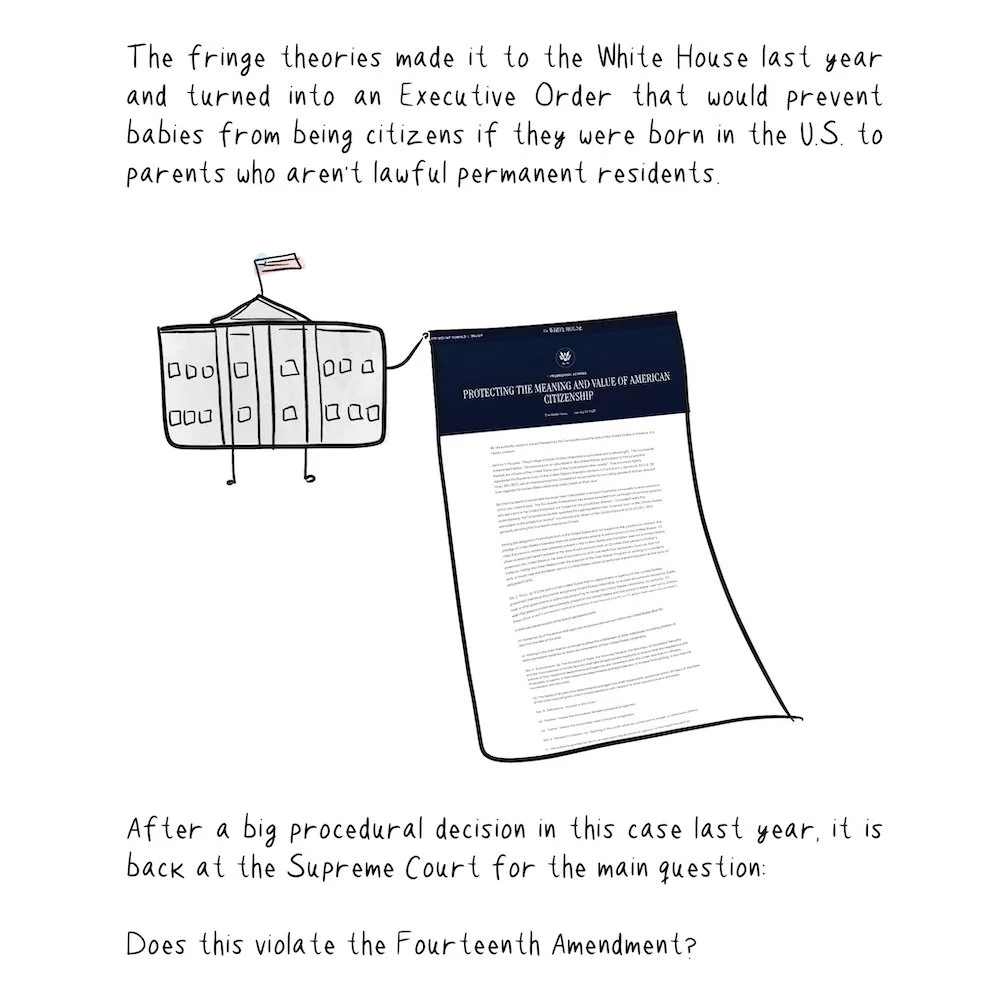
The fringe theories made it to the White House last year and turned into an Executive Order that would prevent babies from being citizens if they were born in the U.S. to parents who aren’t lawful permanent residents.
After a big procedural decision in this case last year, it is back at the Supreme Court for the main question: Does this violate the Fourteenth Amendment?
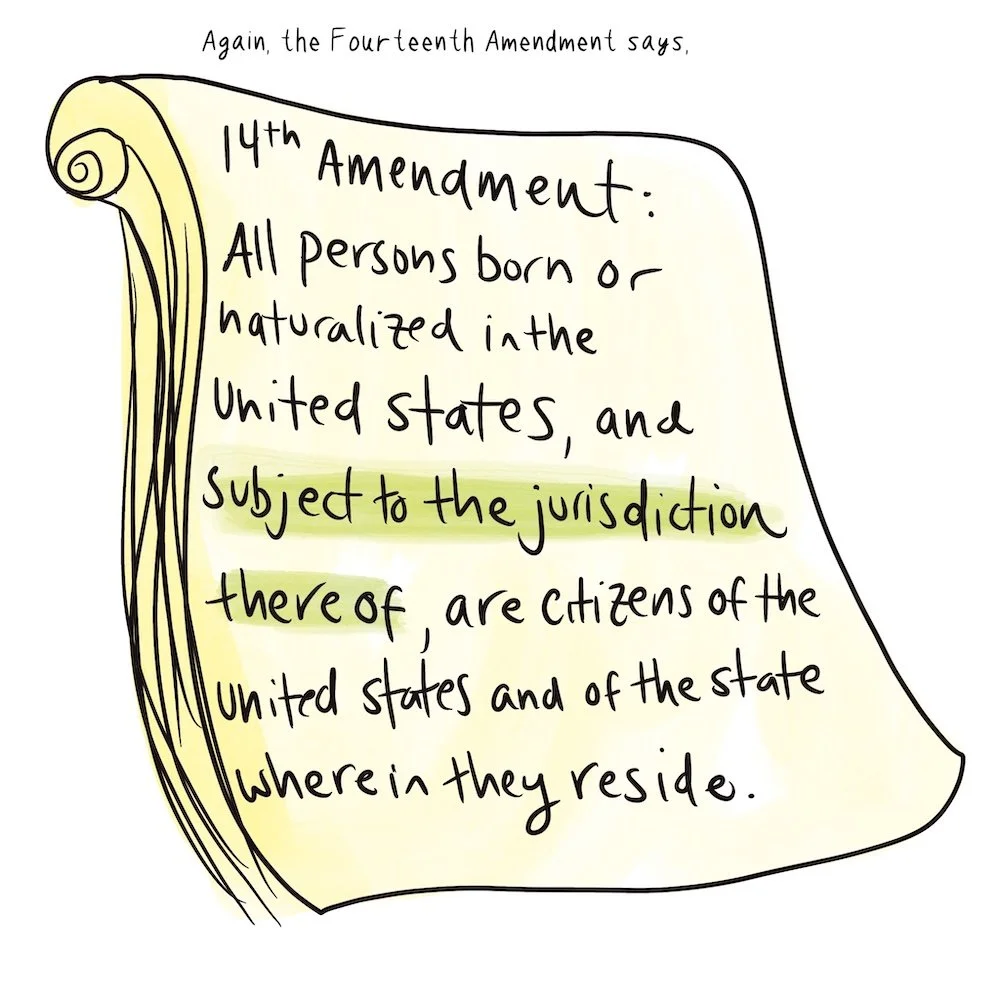
Again, the Fourteenth Amendment says, “All persons born or naturalized in the United States, and subject to the jurisdiction thereof, are citizens of the United States and of the State wherein they reside.”
Isn’t this executive order obviously unconstitutional? It sure seems so. The language of the Fourteenth Amendment is clear, and there has been a widespread understanding that it covers babies whose parents are here temporarily. The Court has even decided this issue before, a long time ago. In 1898, in a case called Wong Kim Ark, the Supreme Court decided that a man born in San Francisco to Chinese immigrant parents in the U.S. was a U.S. citizen.
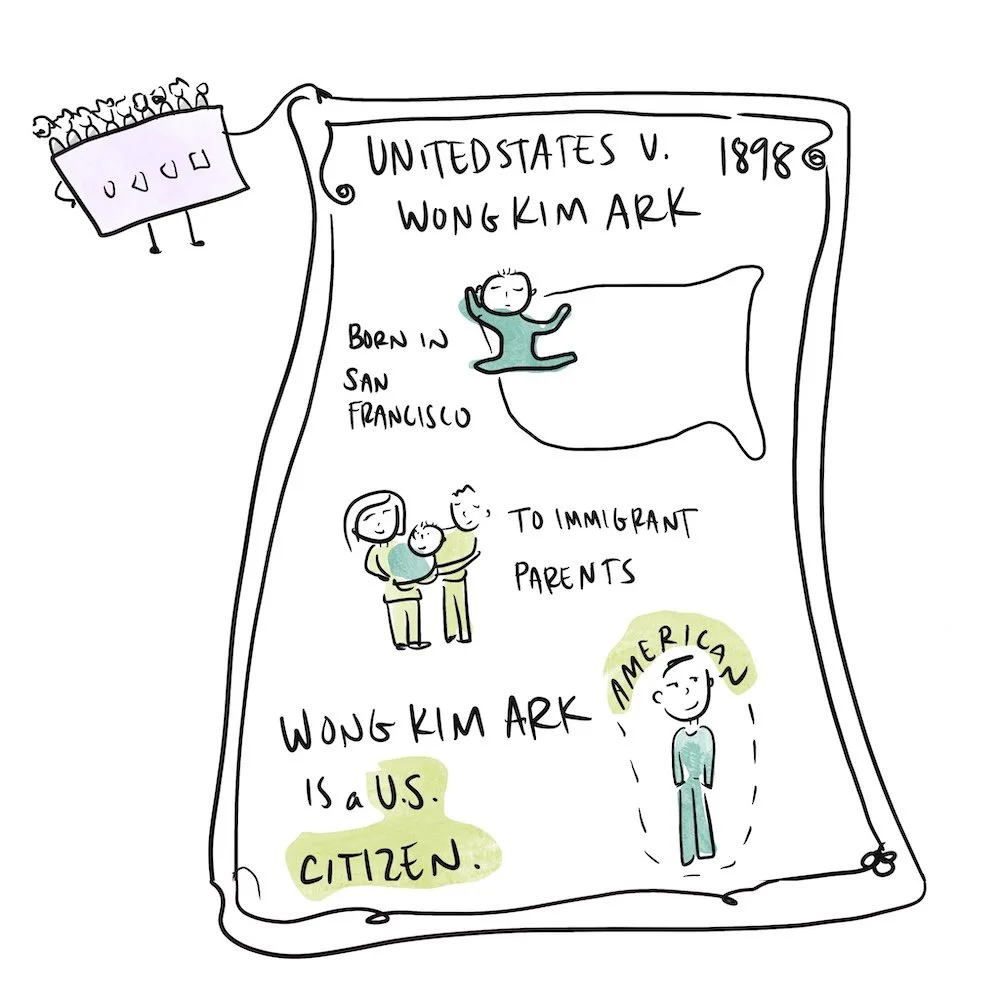
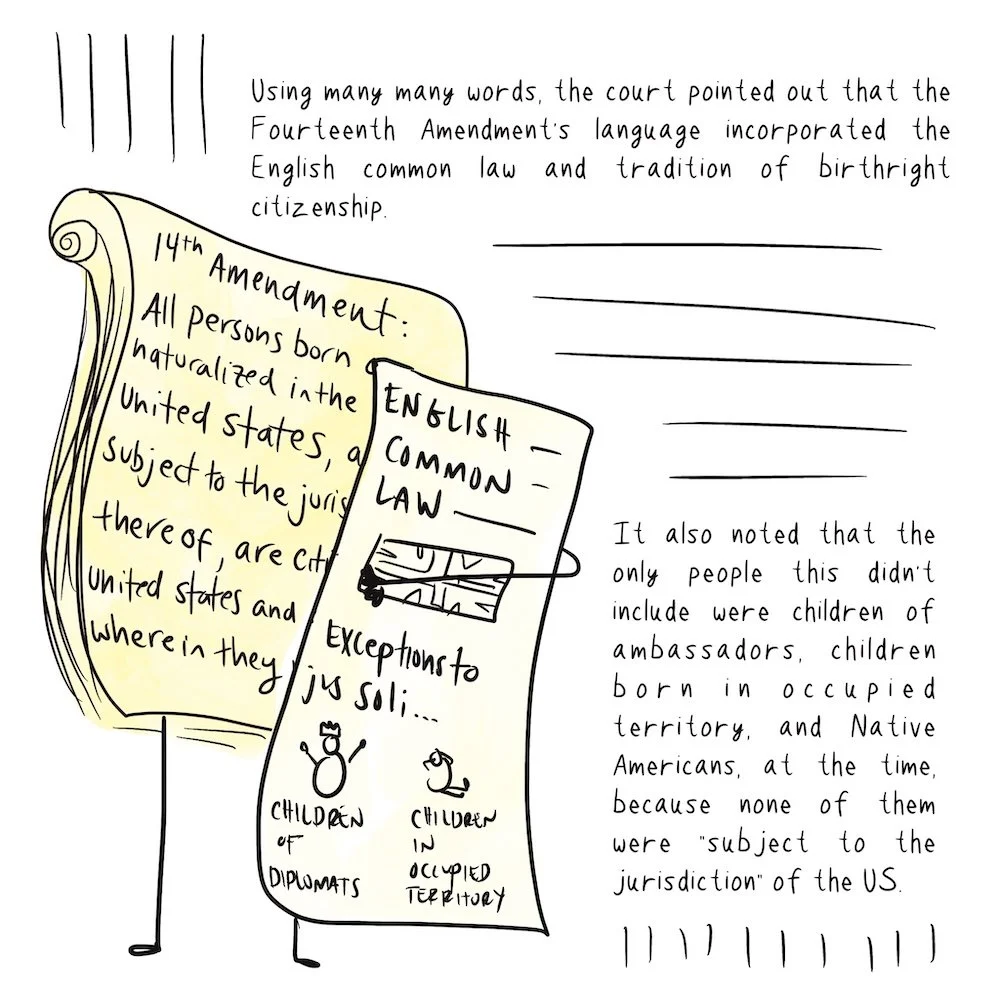
Using many many words, the Court pointed out that the Fourteenth Amendment’s language incorporated the English common law and tradition of birthright citizenship. It also noted that the only people this didn’t include were children of ambassadors, children born in occupied territory, and Native Americans, at the time, because none of them were “subject to the jurisdiction” of the US.
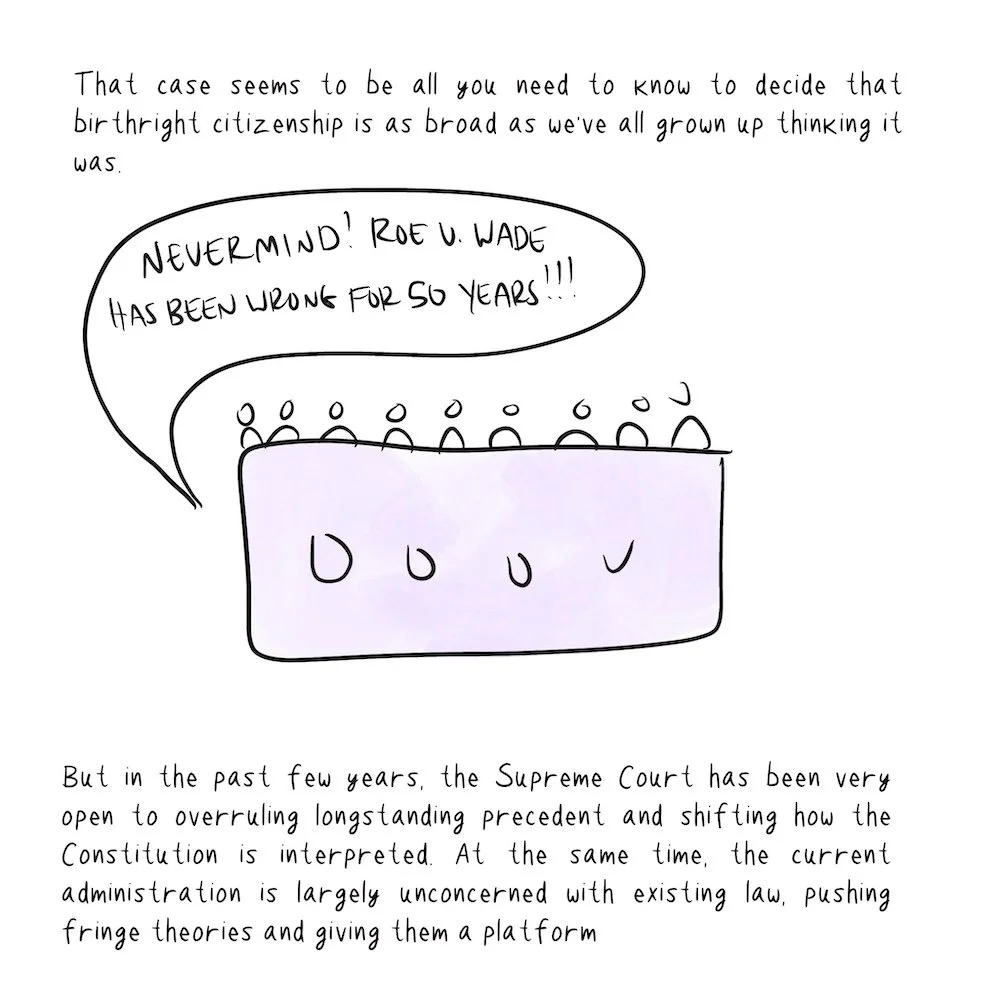
That case seems to be all you need to know to decide that birthright citizenship is as broad as we’ve all grown up thinking it was. But in the past few years, the Supreme Court has been very open to overruling longstanding precedent and shifting how the Constitution in interpreted. At the same time, the current administration is largely unconcerned with existing law, pushing fringe theories and giving them a platform.
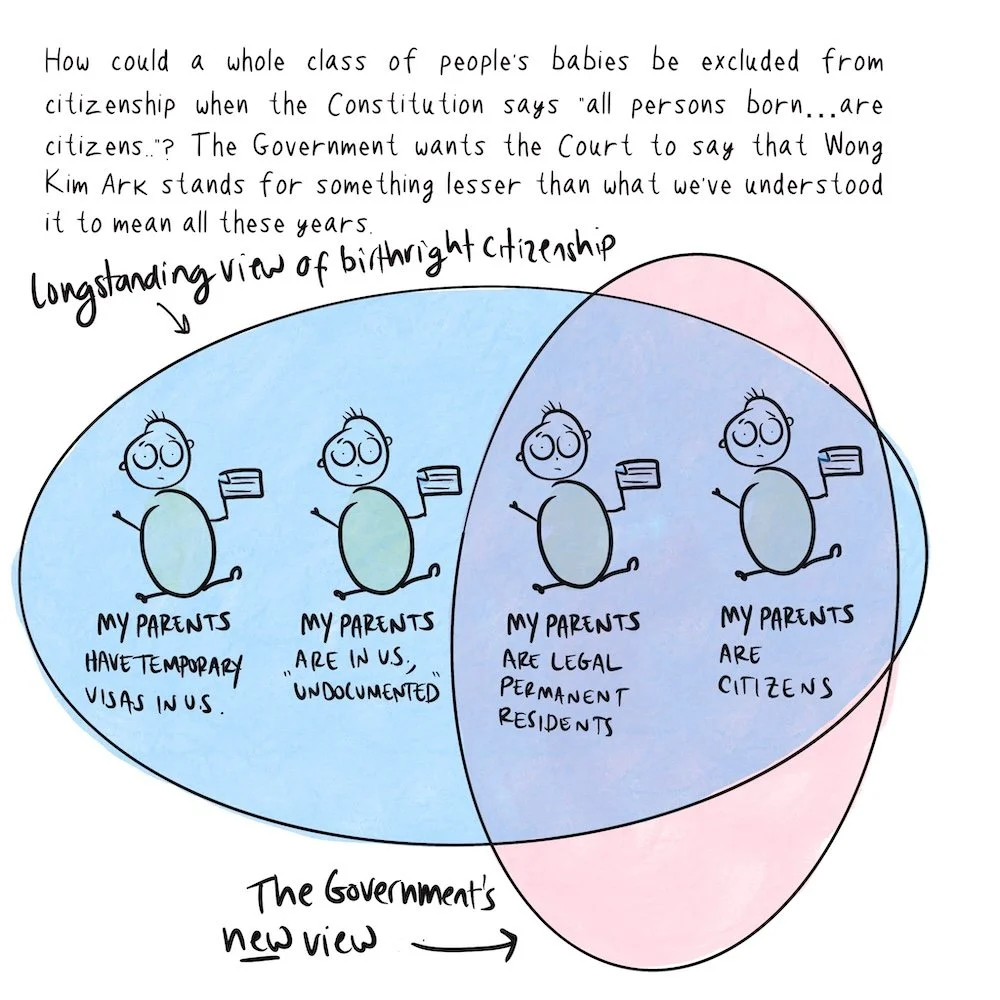
How could a whole class of people’s babies be excluded from citizenship when the Constitution says, “all person born…are citizens…”? The Government wants the Court to say that Wong Kim Ark stands for something lesser than what we’ve understood it to mean all these years.
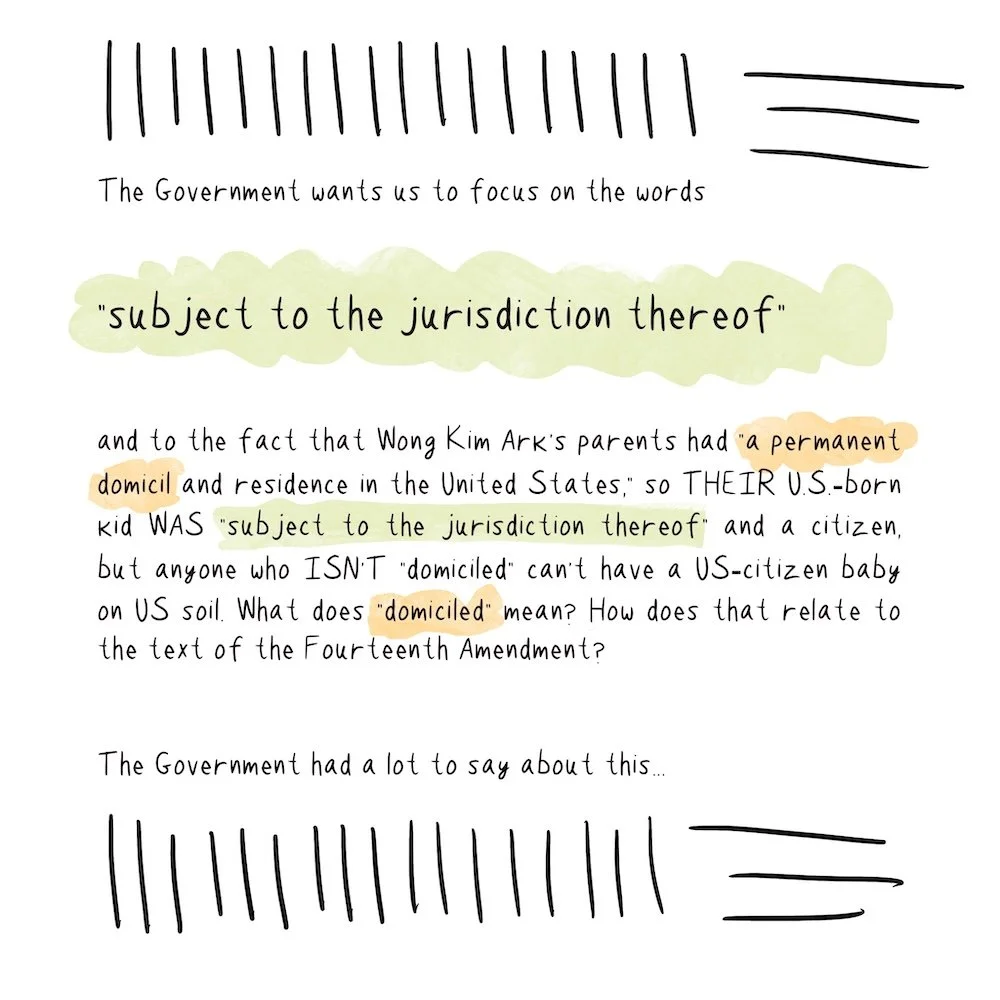
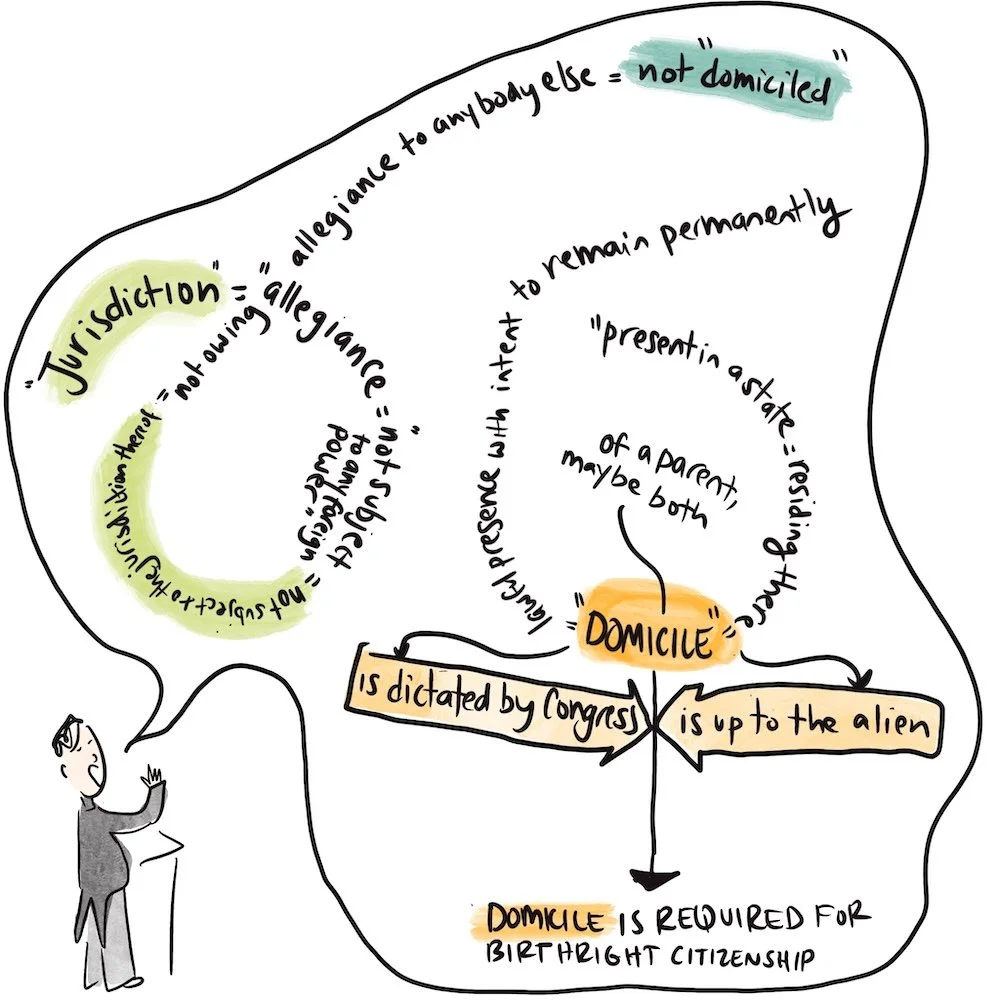
The Government wants us to focus on the words “subject to the jurisdiction thereof” and to the fact that Wong Kim Ark’s parents had a “permanent domicil and residence in the United States",” so THEIR U.S.-born kid WAS “subject to the jurisdiction thereof” and a citizen, but anyone who ISN’T “domiciled” can’t have a US-citizen baby on US soil. What does “domiciled” mean? How does that relate to the text of the Fourteenth Amendment?
The Government had a lot to say about this…
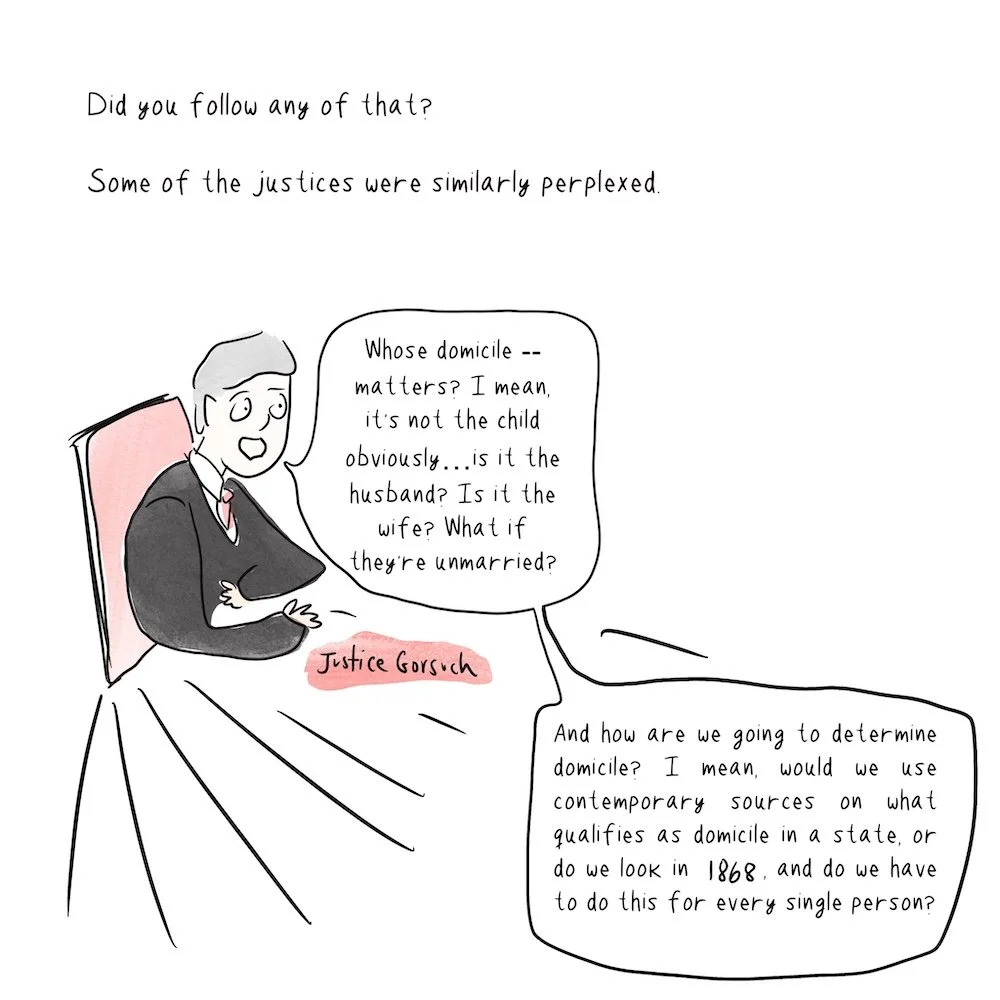
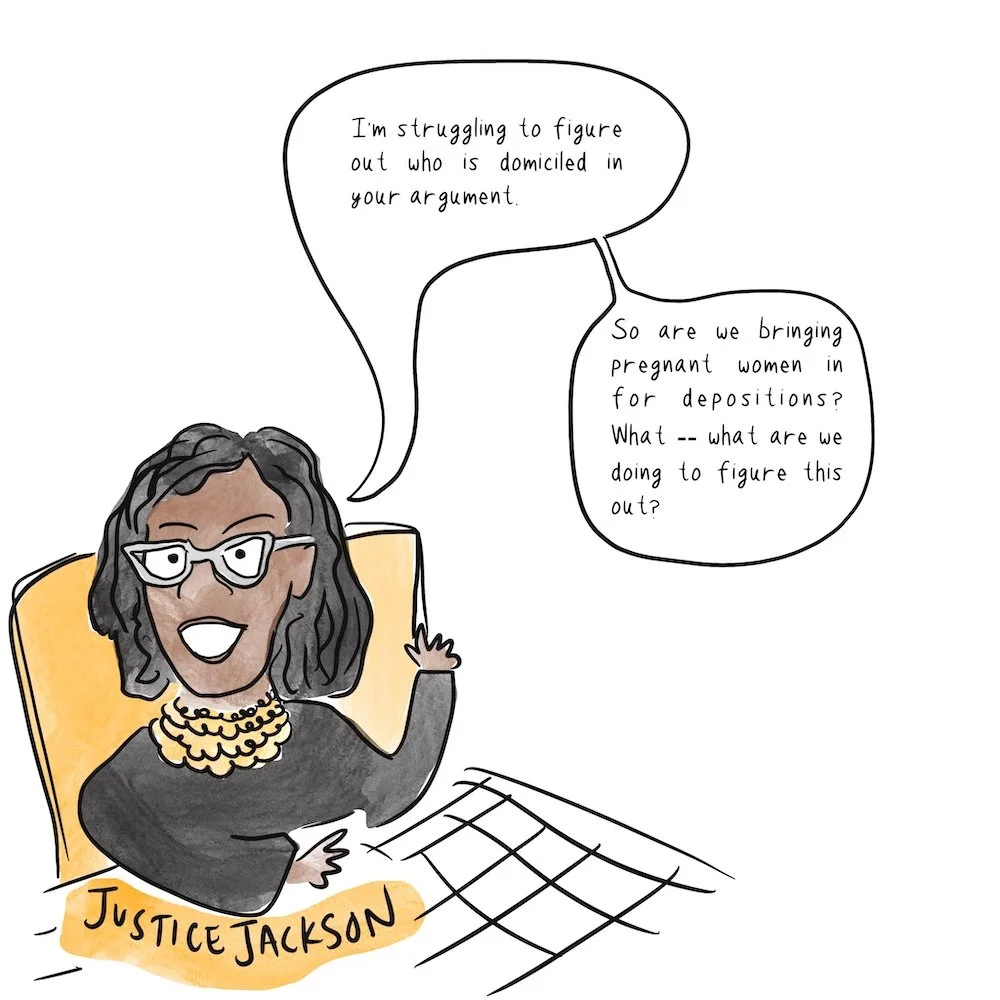
Did you follow any of that? Some of the justices were similarly perplexed. Justice Gorsuch asked, “Whose domicile—matters? I mean, it’s not the child obviously…is it the husband? Is it the wife? What if they’re unmarried?” Meanwhile, Justice Jackson said,”I’m struggling to figure out who is domiciled in your argument” and pointed out the practical implications of the argument when she questioned, “So are we bringing pregnant women in for depositions? What—what are we doing to figure this out?”
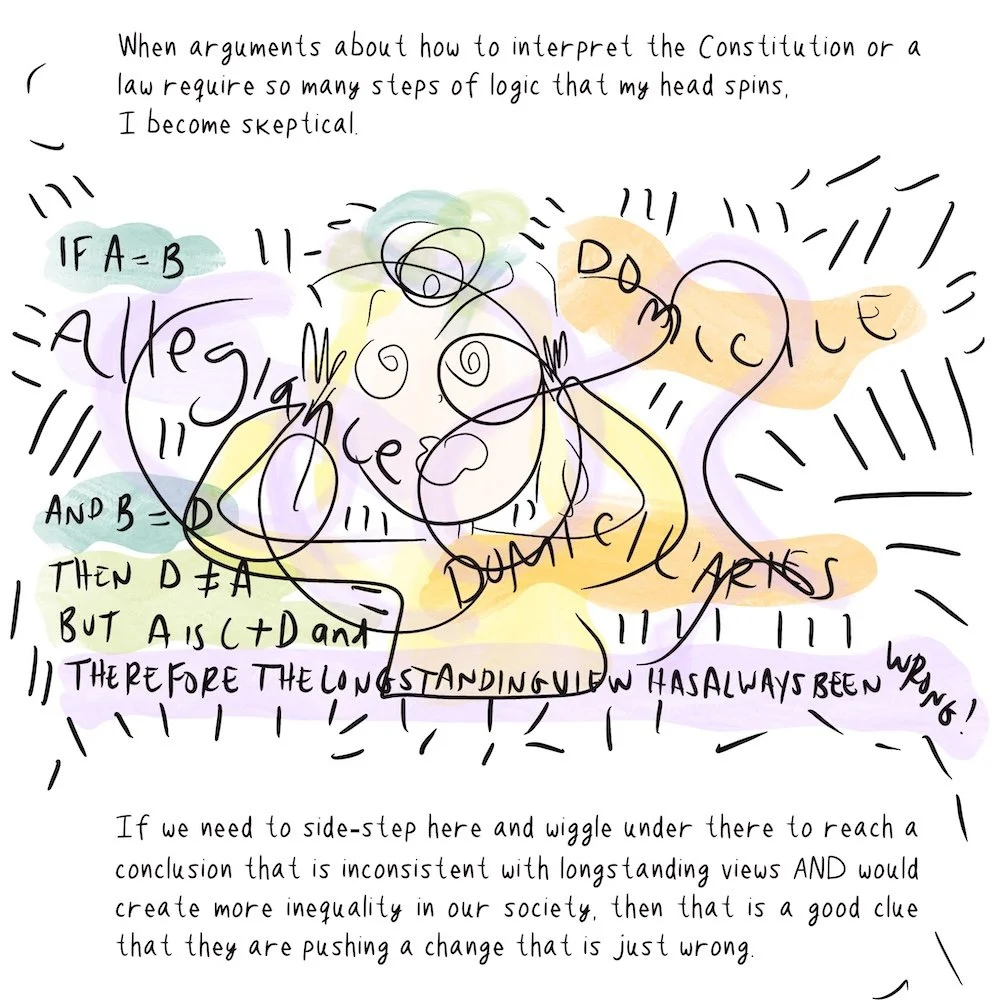
When arguments about how to interpret the Constitution or a law require so many steps of logic that my head spins, I become skeptical. If we need to side-step here and wiggle under there to reach a conclusion that is inconsistent with longstanding views AND would create more inequality in our society, then that is a good clue that they are pushing a change that is just wrong.
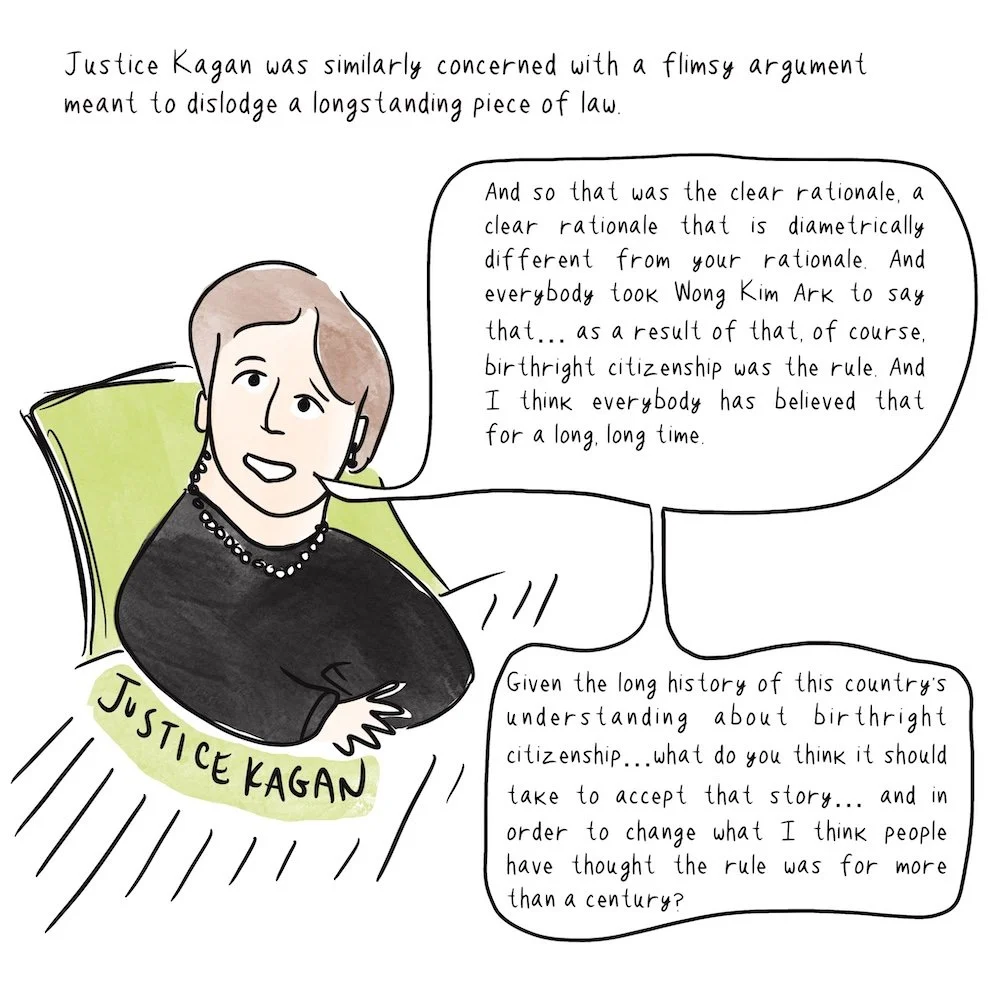
Justice Kagan called out the leaps the Government was attempting to make with its legal logic. She said, “General, I think even your brief concedes that the position you’re taking now is a revisionist one with respect to a substantial part of our history. And I think that that’s in large part because of Wong Kim Ark and the way people have read that case, which, of course, was in the late nineteenth century, and have read it every since then…”
And then, “But the rationale of the case is really quite clear. It says there was this common law tradition. It came from England. We know what it was. Everybody got citizenship by birth except for a few discrete categories…And that tradition carried over to the United States. And then what the Fourteenth Amendment did was accept that tradition and not attempt to place any limitations on it.”
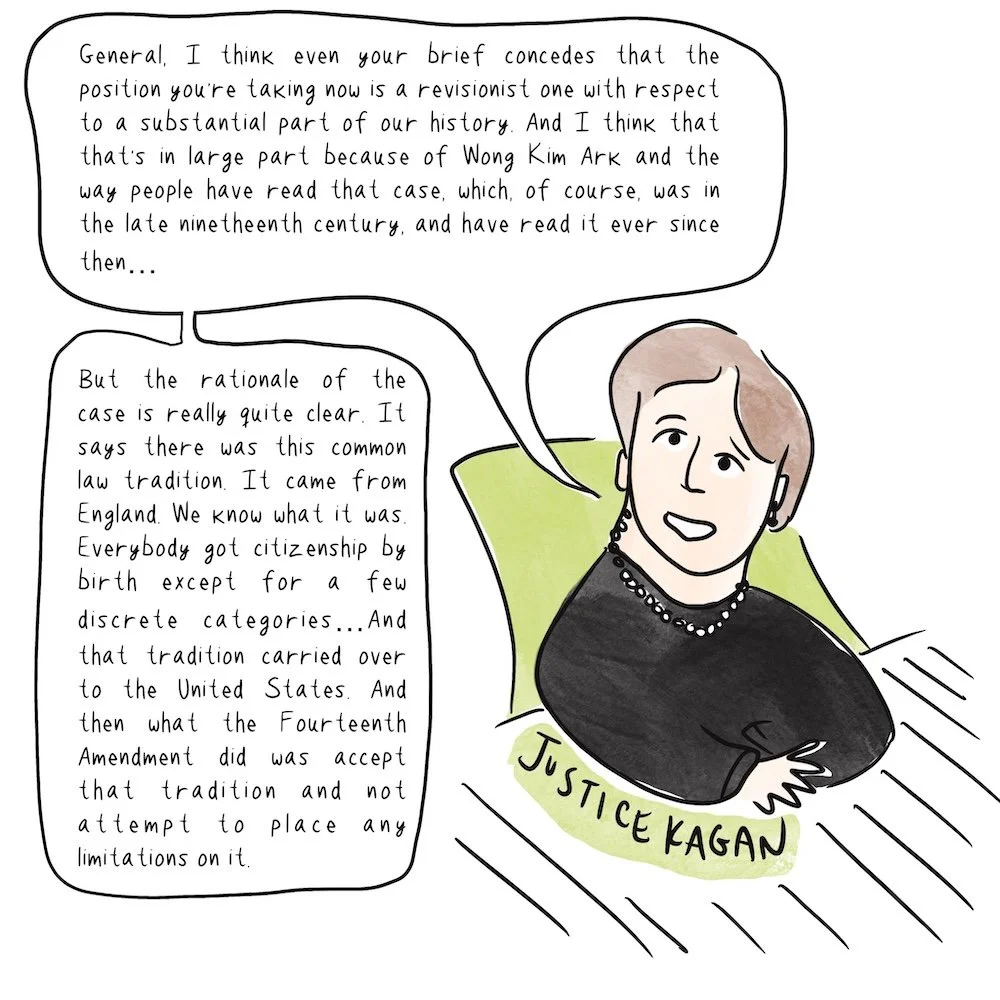
Justice Kagan was similarly concerned with a flimsy argument meant to dislodge a longstanding piece of law:
As so that was the clear rational, a clear rationale that is diametrically different from your rationale. And everybody took Wong Kim Ark to say that…as a result of that, of course, birthright citizenship was the rule. And I think everybody has believed that a long, long time.
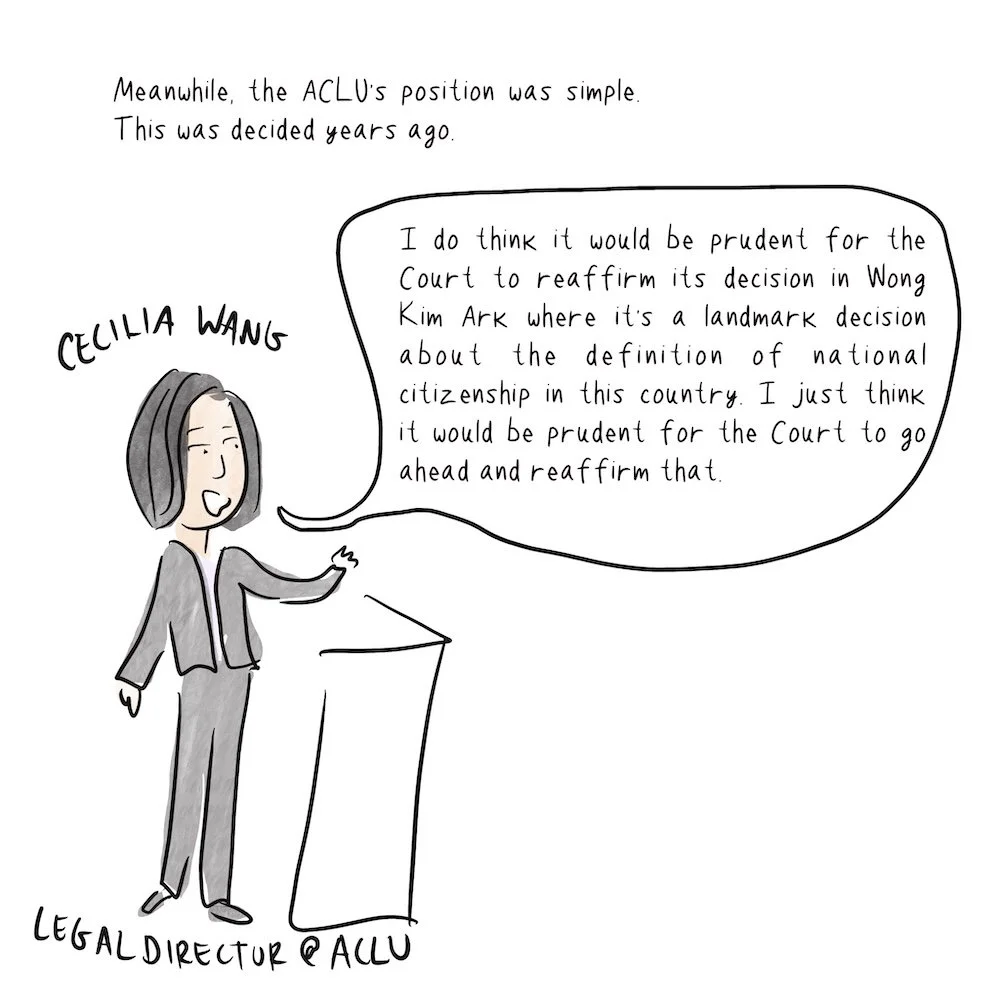
Meanwhile, the ACLU’s position was simple. This was decided years ago! Cecelia Wang, Legal Director at the ACLUE stated calmly to the Justices when asked how they should rule, “I do think it would be prudent for the Court to reaffirm its decision in Wong Kim Ark where it’s a landmark decision about the definition of national citizenship in this country. I just think it would be prudent for the Court to go ahead and reaffirm that.”
There have always been different opinions about how to interpret the Constitution. Do you just look at the text and use rules of language and dictionaries? Do you think about what people thought at the time this language was written? Do you avoid rocking the boat on settled issues? Do you do what is most pragmatic? Do you take into account how the world has changed over time?
Currently, most of the Court is obsessed with arguments about history, about what was thought about the issue at the time the relevant bit of law was written. Whether that can be determined is what they end up degbating about, and it’s full of problems, as historians love to point out.
What about this instead? What is the longstanding tradition, but also the thing that takes into account the humanity of people in this country, the most likely to ensure a system of people able to participate in a democracy?
The consensus seems to be that the Court will not adopt the government’s argument. Instead, they may sa, “yep, the Constitution means what we all thought it meant.” (Or, they may not.) Even though that would be a victory, the fact that we even have to relitigate somethign that was widely considered settled law is already a bit of a loss.