
I voted today.

I got to vote today because of all the women before me who looked at the Constitution, thought something was off about how it was working, and decided to change the conversation.
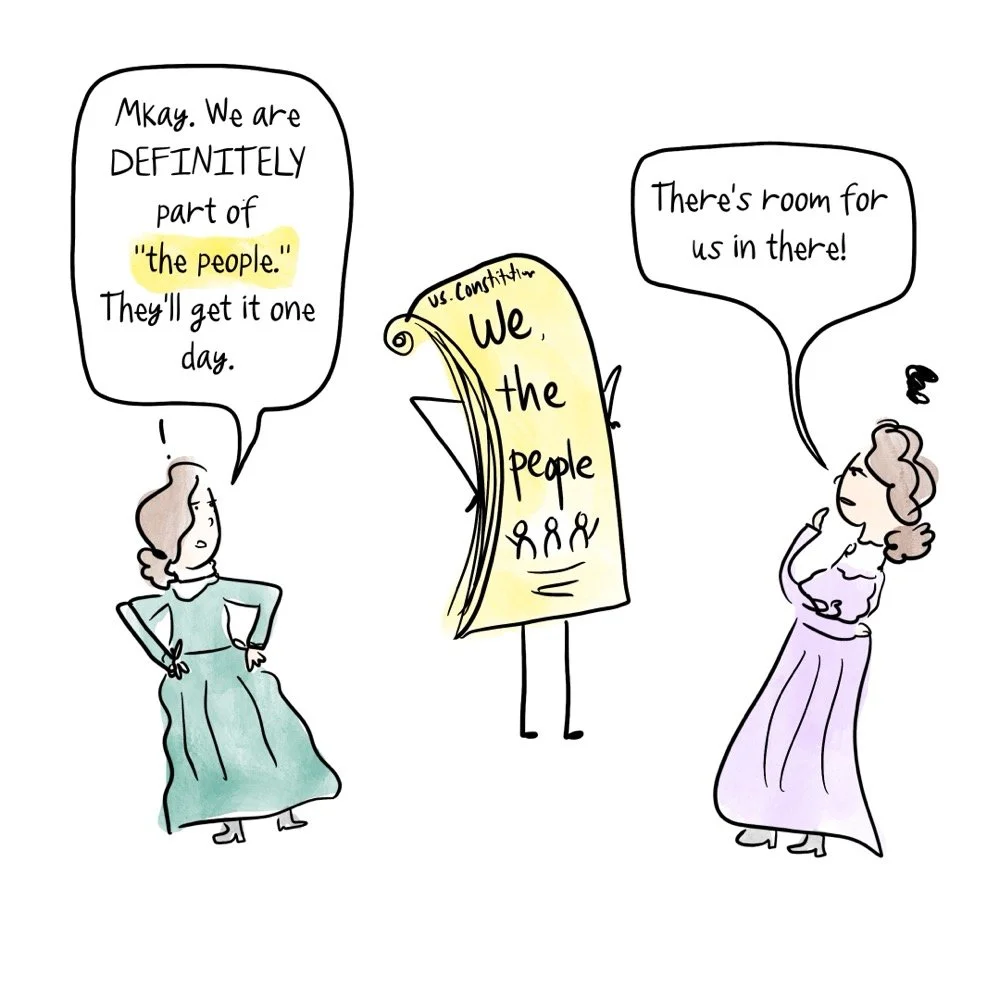
They talked about it. They wrote about it. And then when the 14th Amendment was added to the Constitution, some women read it and decided it could be interpreted to give women the vote.
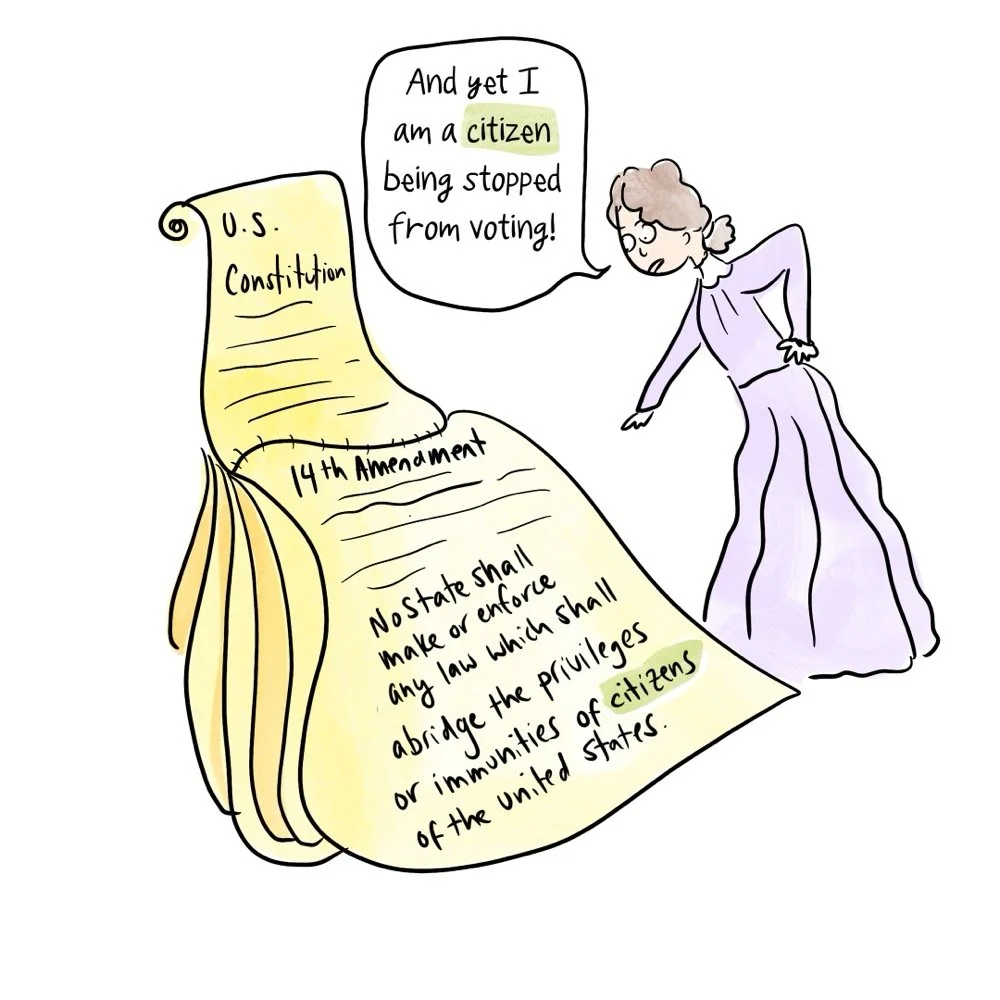
It’s not that weird to read these words:
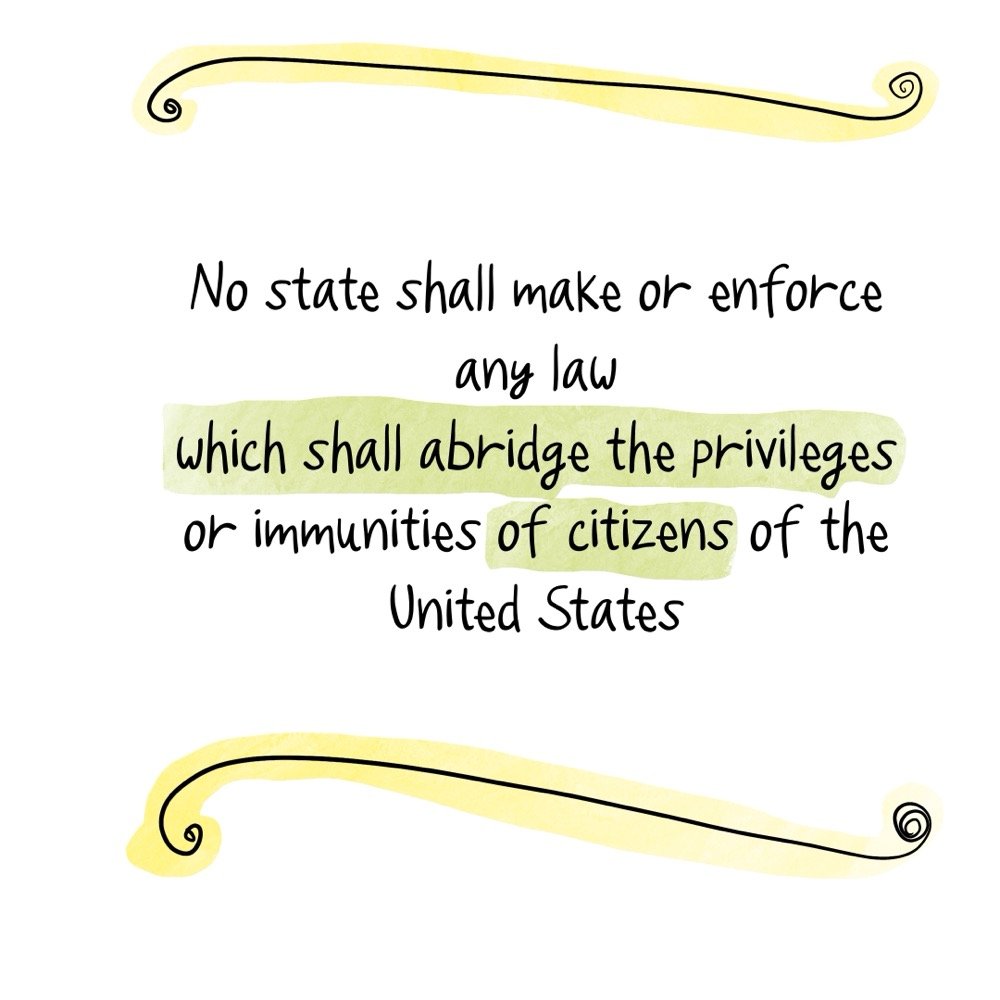
(“No state shall make or enforce any law which shall abridge the privileges or immunities of citizens of the United States”)
And then conclude that stopping women from voting is messing with her privileges as a citizen. No, it’s not a ridiculous way of reading those words. But…
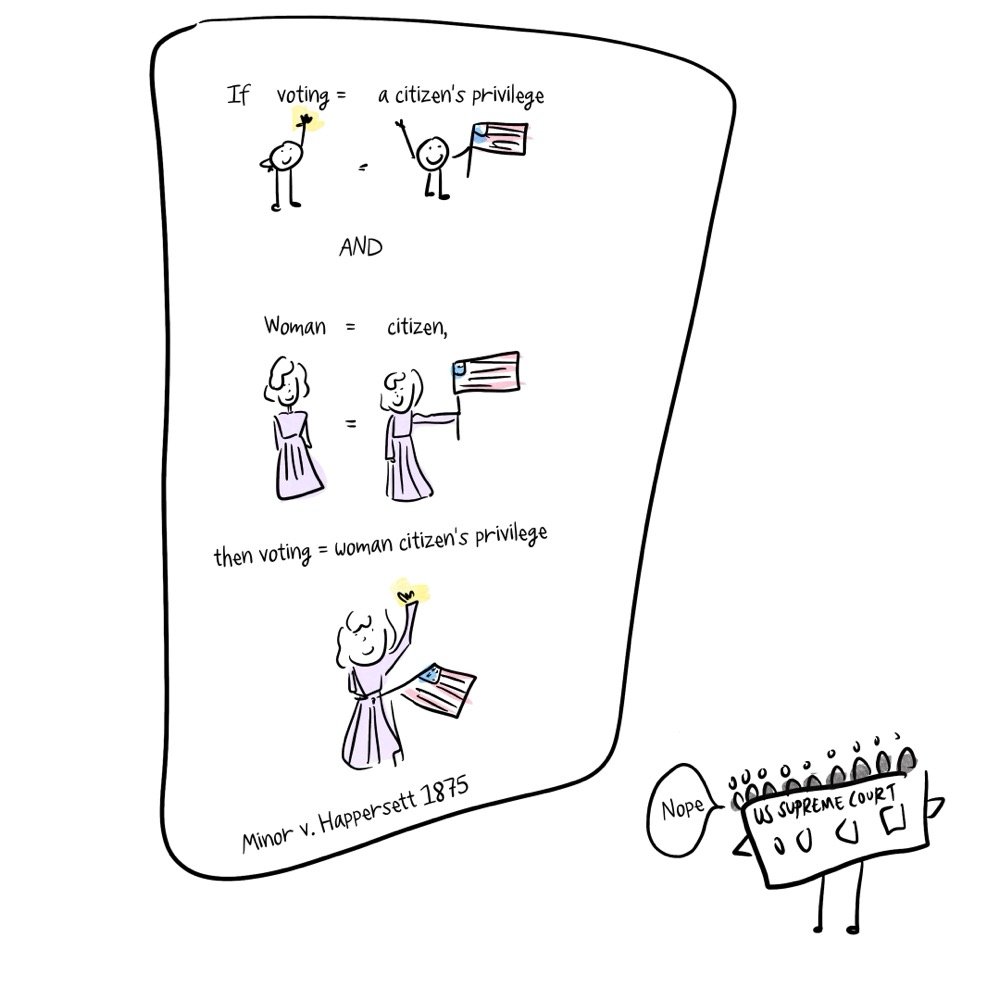
the Supreme Court disagreed, so they tried other things. They got some states to give women the right to vote. They had more meetings and conventions and protests about it, and gradually their insistence that women should have the right to vote under the U.S. Constitution gained enough attention that President Wilson
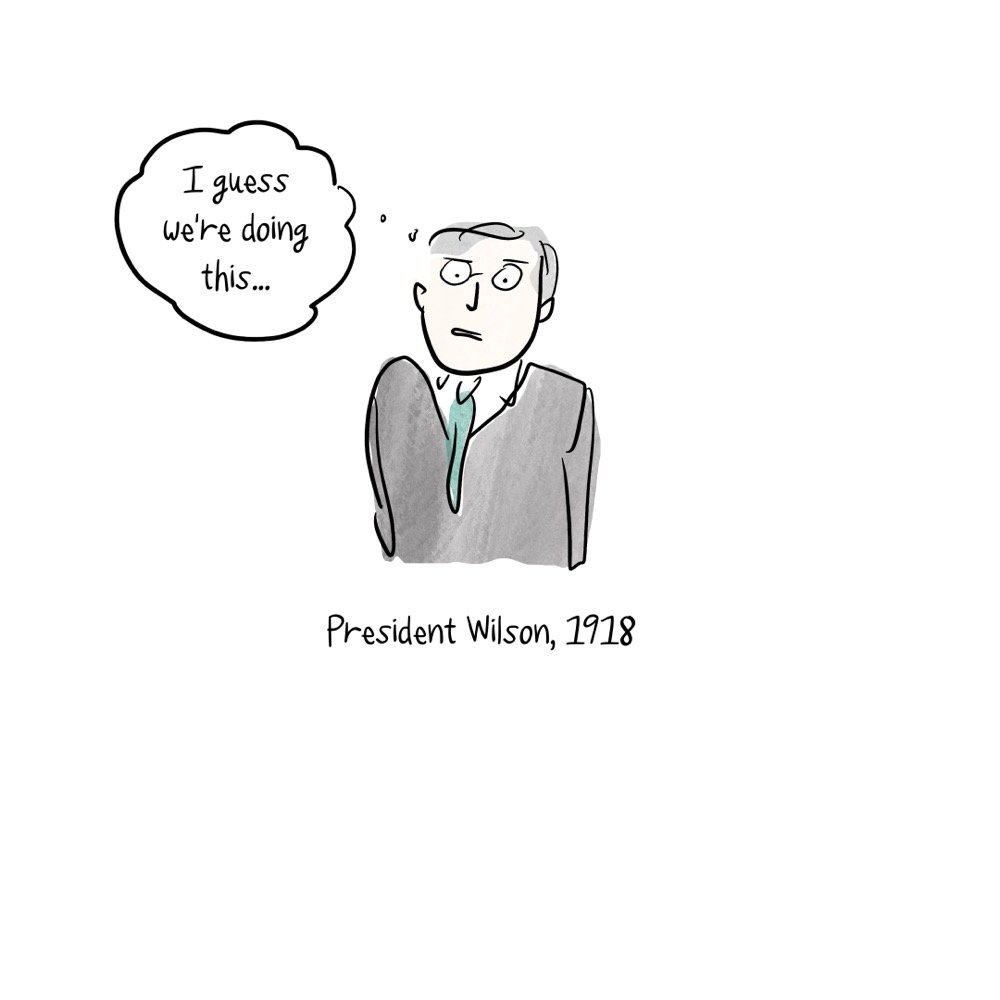
endorsed the idea of a constitutional amendment to give women the right to vote.
Passing and ratifying the amendment wasn’t quick and required even more activism, lobbying, and conversations. Apparently a crucial vote on ratifying the amendment came down to one representative whose mother had told him to “be a good boy” and ratify that amendment.
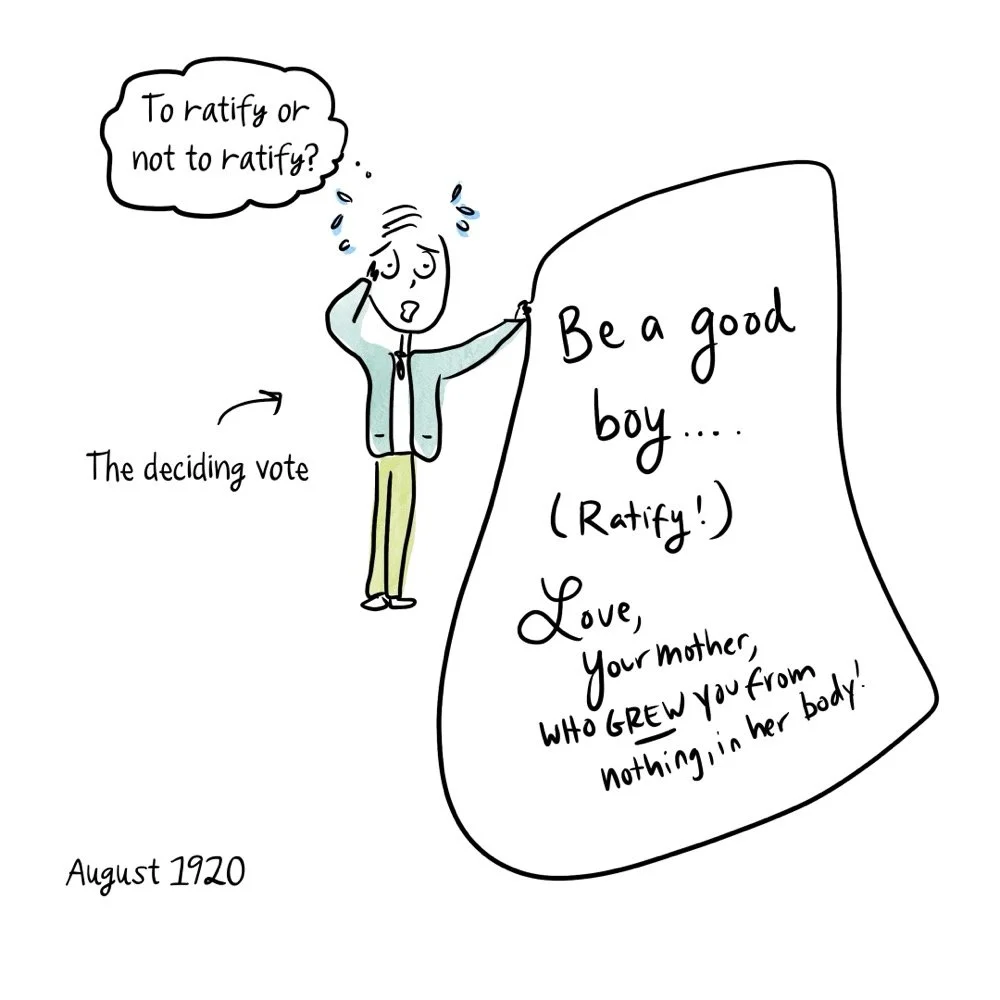
None of this was easy, and it was full of setbacks.
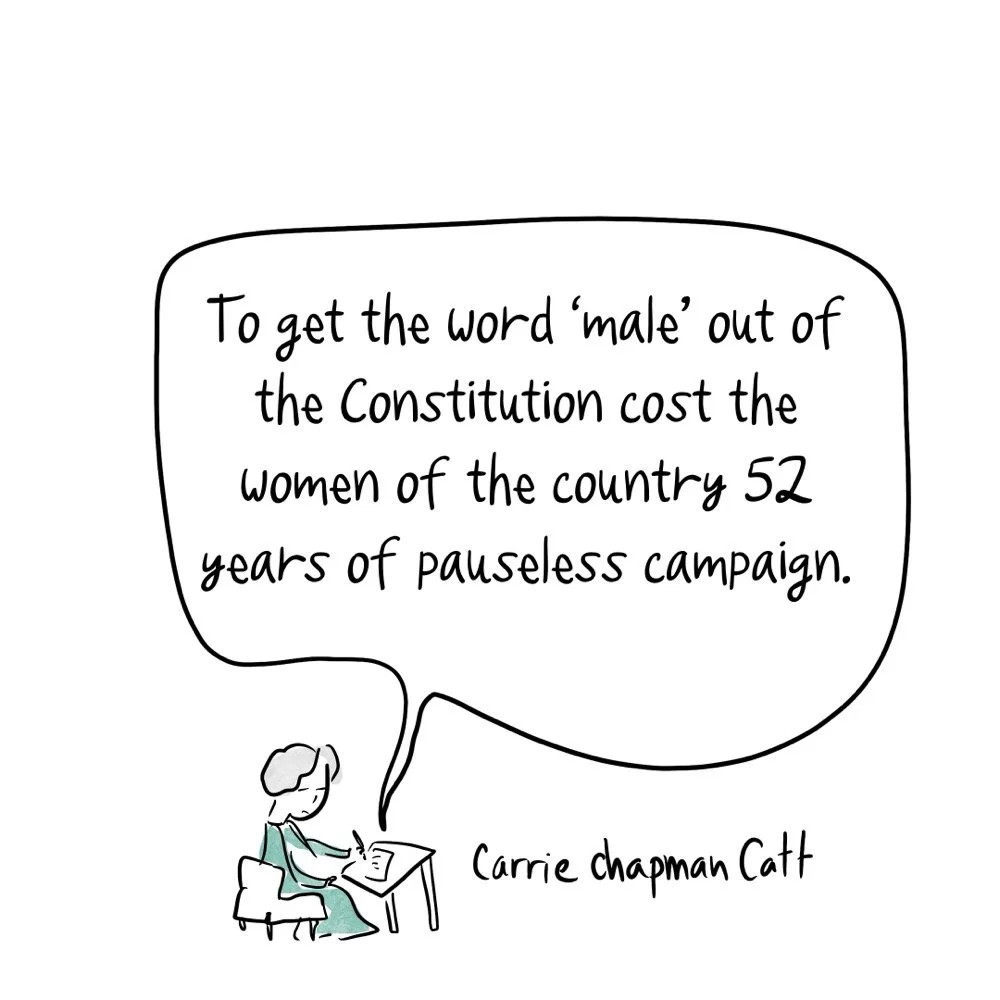
As Carrie Chapman Catt wrote in 1920, “To get the word ‘male’ out of the Constitution cost the women of the country 52 years of pauseless campaign.”
A bunch of ordinary people engaged with the Constitution and caused the conversation to change over time, adding the 19th Amendment.
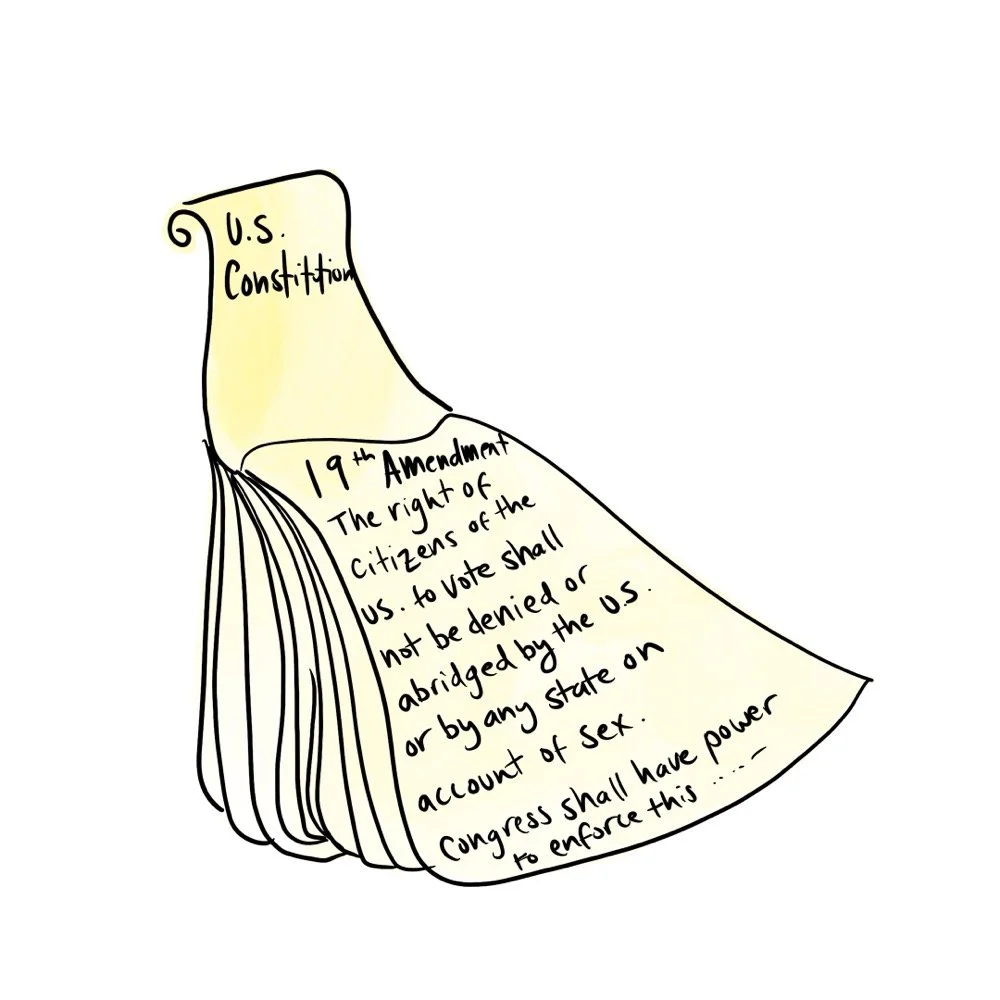
We can do this in our time, too. In fact, just last week I noticed two tiny examples of how the conversation around the Constitution is evolving.
On October 20th, Justice Elena Kagan spoke at the Catholic Law school, where she gave a “polite takedown of originalism,” gently calling out how her colleagues have been interpreting the constitution in a way that has become a problem.
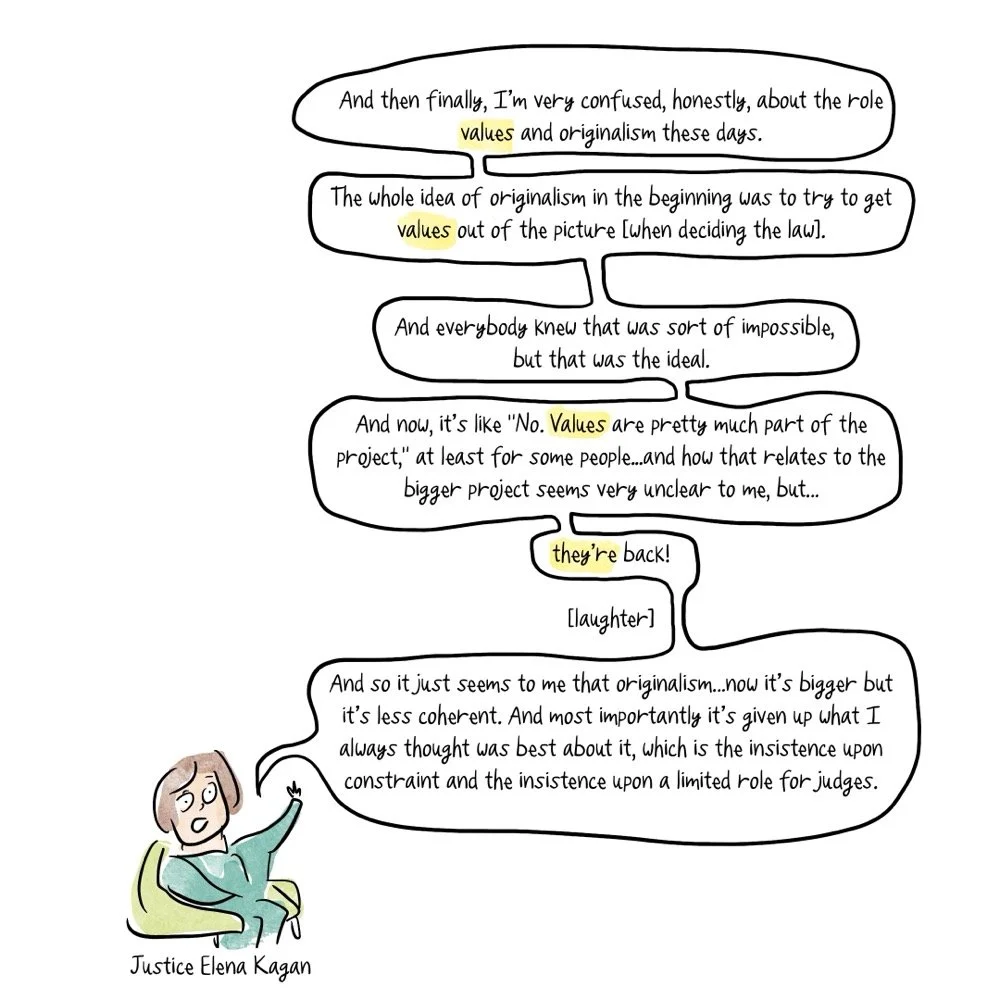
People have been making critiques like this for a while now, but it’s notable that this relatively measured Supreme Court Justice is comfortable making these observations in public now, too.
Also last week, Hillary Clinton shared her support for expanding the Supreme Court.
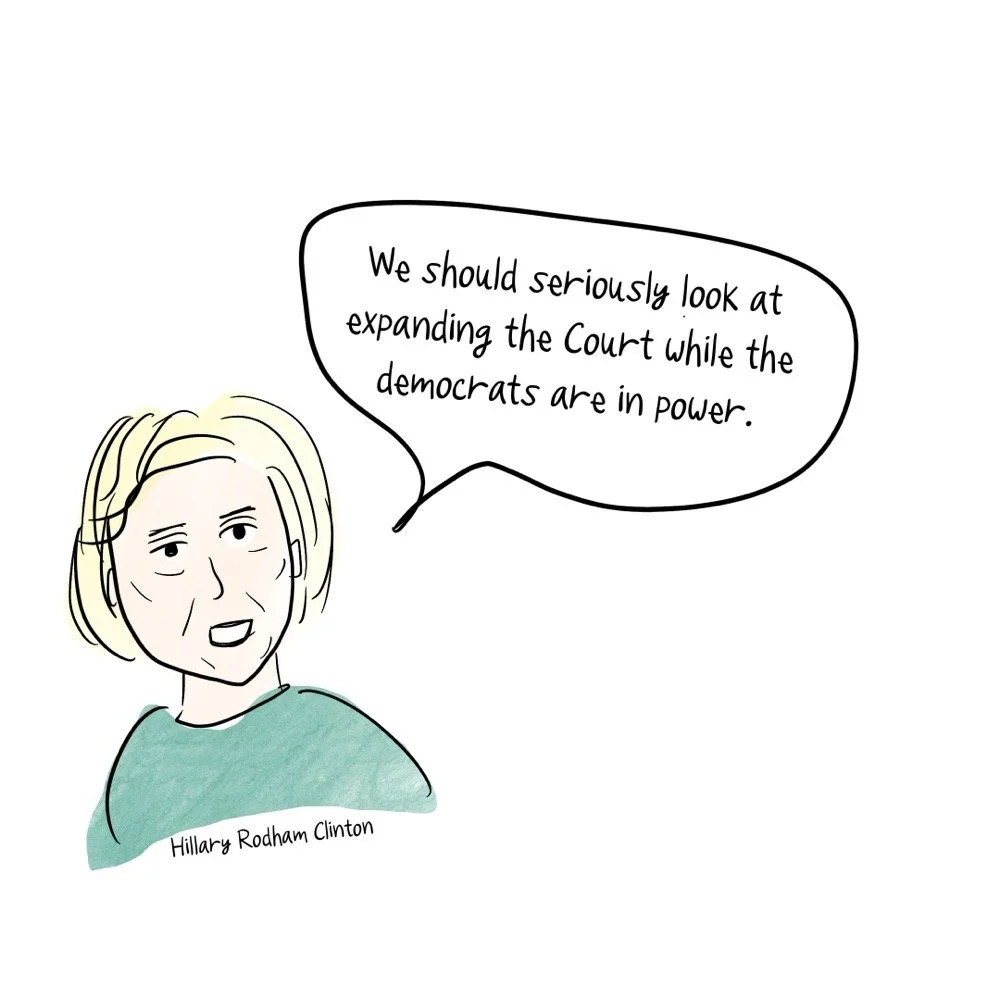
“We should seriously look at expanding the Court while the democrats are in power,” she said. Adding Supreme Court justices to water down the votes of the conservative justices has been considered a more drastic approach to Supreme Court reform. But there have been sustained efforts to get everyone talking about court reform lately and lots of debates about whether that court expansion is a good idea. If Hillary Clinton is saying it, then expanding the Court is more mainstream than it used to be.
The conversation around the Constitution can change, and you can be a part of it. It can be slow, but you can see it happening if you look closely. Vote now, but keep pushing the conversation forward all year long.
Behind the Scenes:
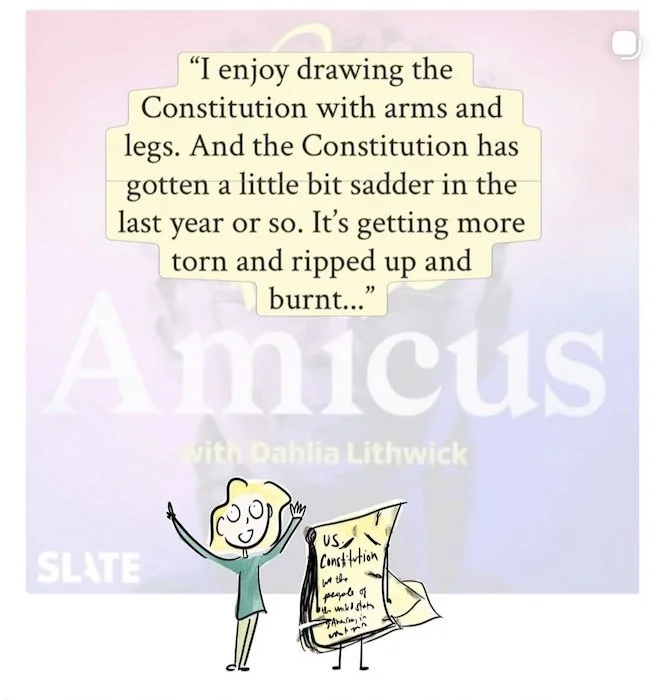
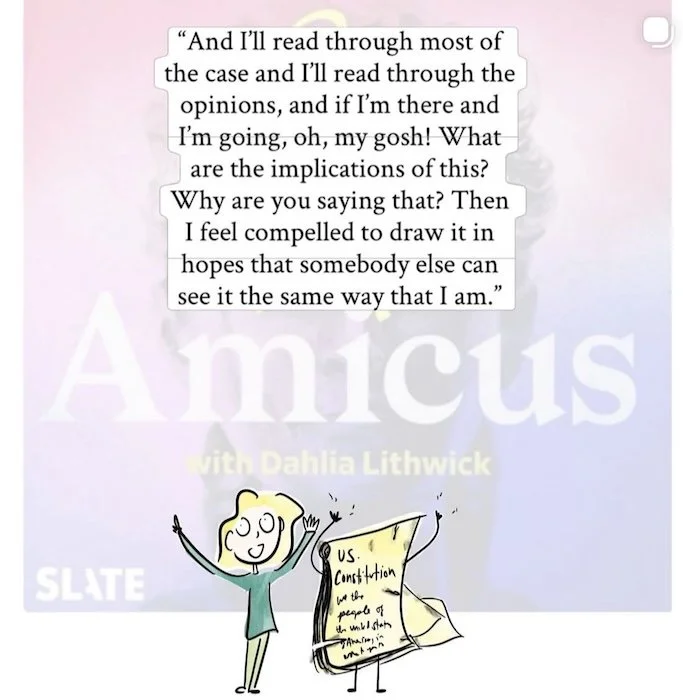
The Constitution and I were on Slate’s Amicus podcast recently!
If you want to know more…
About Court reform: I wrote about term limits recently (which Hillary says in that interview she doesn’t like, for what it’s worth)
About originalism:
Read The Originalism Trap by Madiba K. Dennie
Read How Originalism Ate the Law (gift link)
Read Throw Originalism Out. It’s Time for Inclusive Constitutionalism (gift link)
If you want another illustrated discussion of the making of the 19th Amendment, Kelcey Ervick has done a ton of this!
Hillary Clinton talks about expanding the court (around 38 mins in)
Justice Kagan explains the problem with originalism (50 minutes in)
I’m a lawyer (Michigan Law alum) and artist, and I
simplify legal and technology concepts for lawyers, technologists, and academics with my human-made infographics.
run workshops for professionals that help build their creative brain muscles in a world of AI
provide analysis on the Supreme Court and rule of law using words and illustrations.
If you’d like me to run a workshop for your organization, translate your big idea, or break down the latest legal issues, I'd love to connect!
If you enjoyed this piece, you may also enjoy:
How Term Limits Would Work for the Supreme Court
VHS Tapes and How Supreme Court Justices Decide What a Law Means