
District court judges are the first ones to get a case. They deal with all the preliminary documents, temporary restraining orders, preliminary injunctions, etc.. They are the ones asked to sign warrants. They do the trials. Their type of judging is much less political than an appellate court judge’s role. District court judges don’t want your attention.
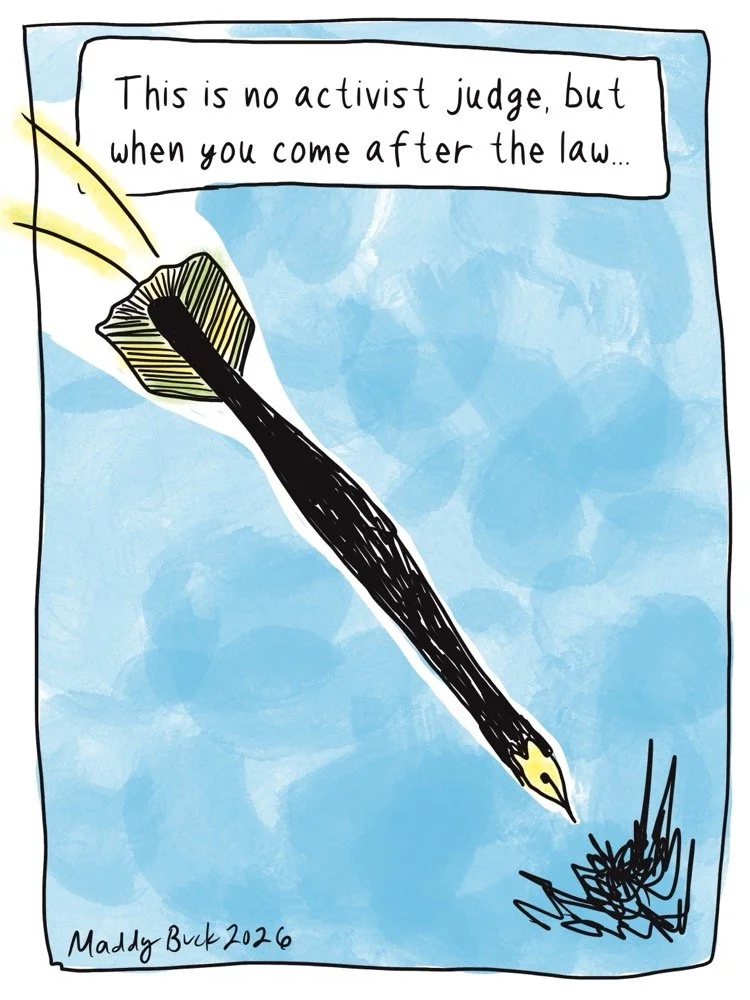
But now the assault to our rule of law has become so concerning that the judges are using the only tool they have to call it out. Here are a few examples.
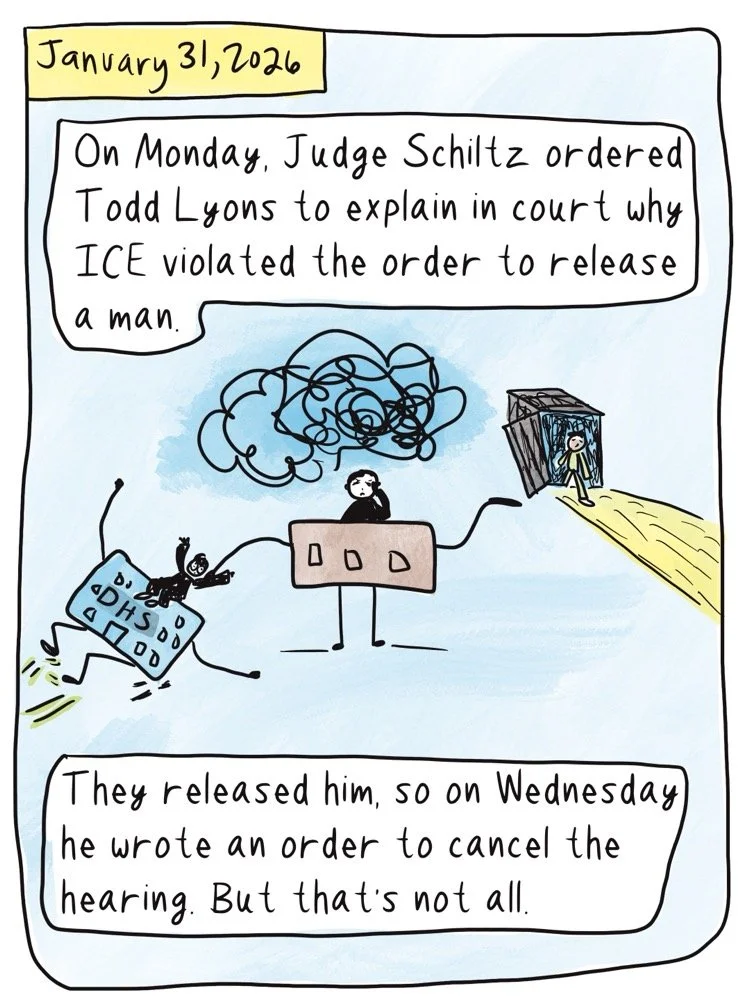
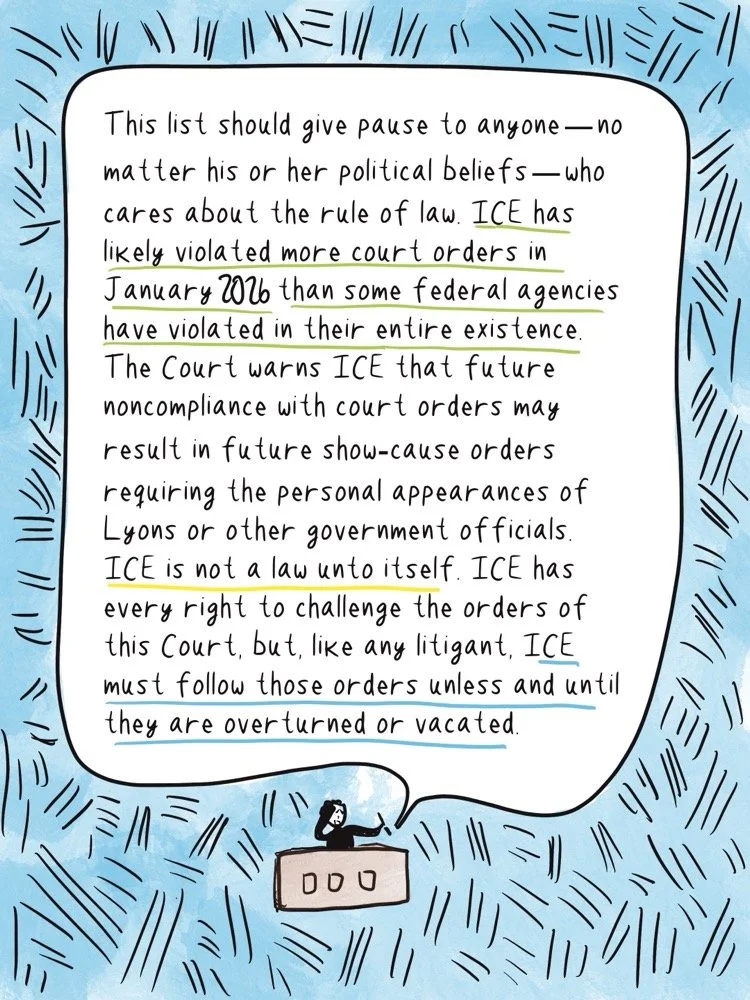
“ICE has likely violated more court orders in January 2026 than some federal agencies have in their entire existence.”
In case you’ve been hibernating, thousands of federal officers descended upon my state in the last two months, wrecklessly detaining people and violating our Constitutional rights left and right. The courts have been inundated with petitions from people who are detained, requesting their unlawful detainment be reviewed. Last week, the Chief Judge of the Federal District Courts here in Minnesota reprimanded Immigrations and Customs Enforcement (ICE) for its inordinate violations of court orders.
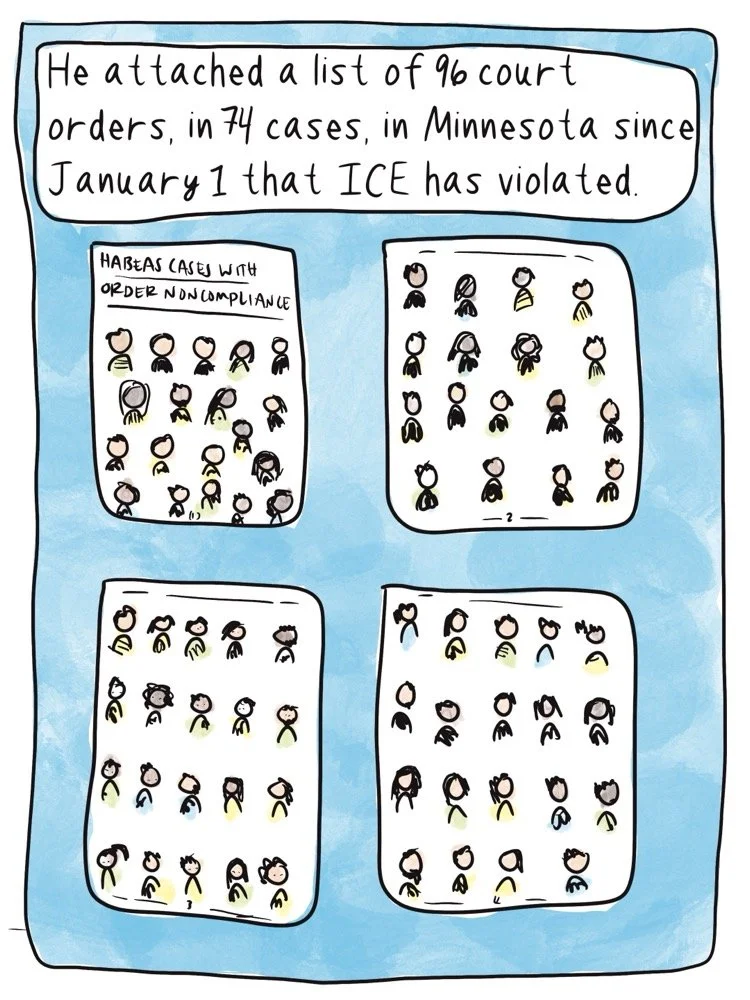
Each of these cases represents a person wrongly detained. Recent reporting has highlighted the horrendous conditions of this detainment, including locking people in bathrooms in the local federal building.
“Thirty-three-year-old Thomas Jefferson enumerated grievances against a would-be-authoritarian king over our nascent nation…’We the people’ are hearing echos of that history.”
On Sunday of this week, Judge Biery in Texas wrote a fiery order releasing 5 year-old Liam and his father from detention. They were taken from a north suburb of Minneapolis last week.
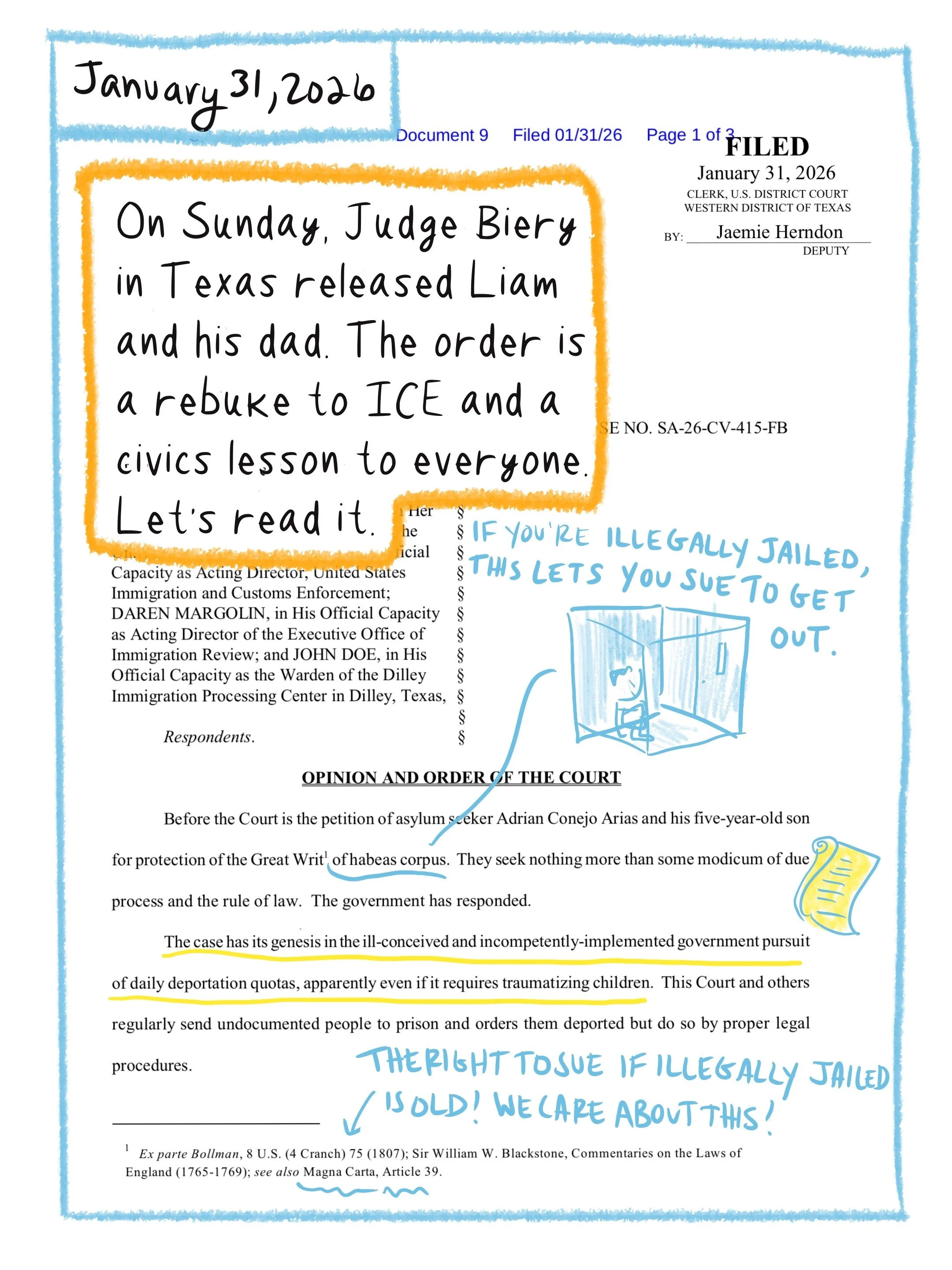
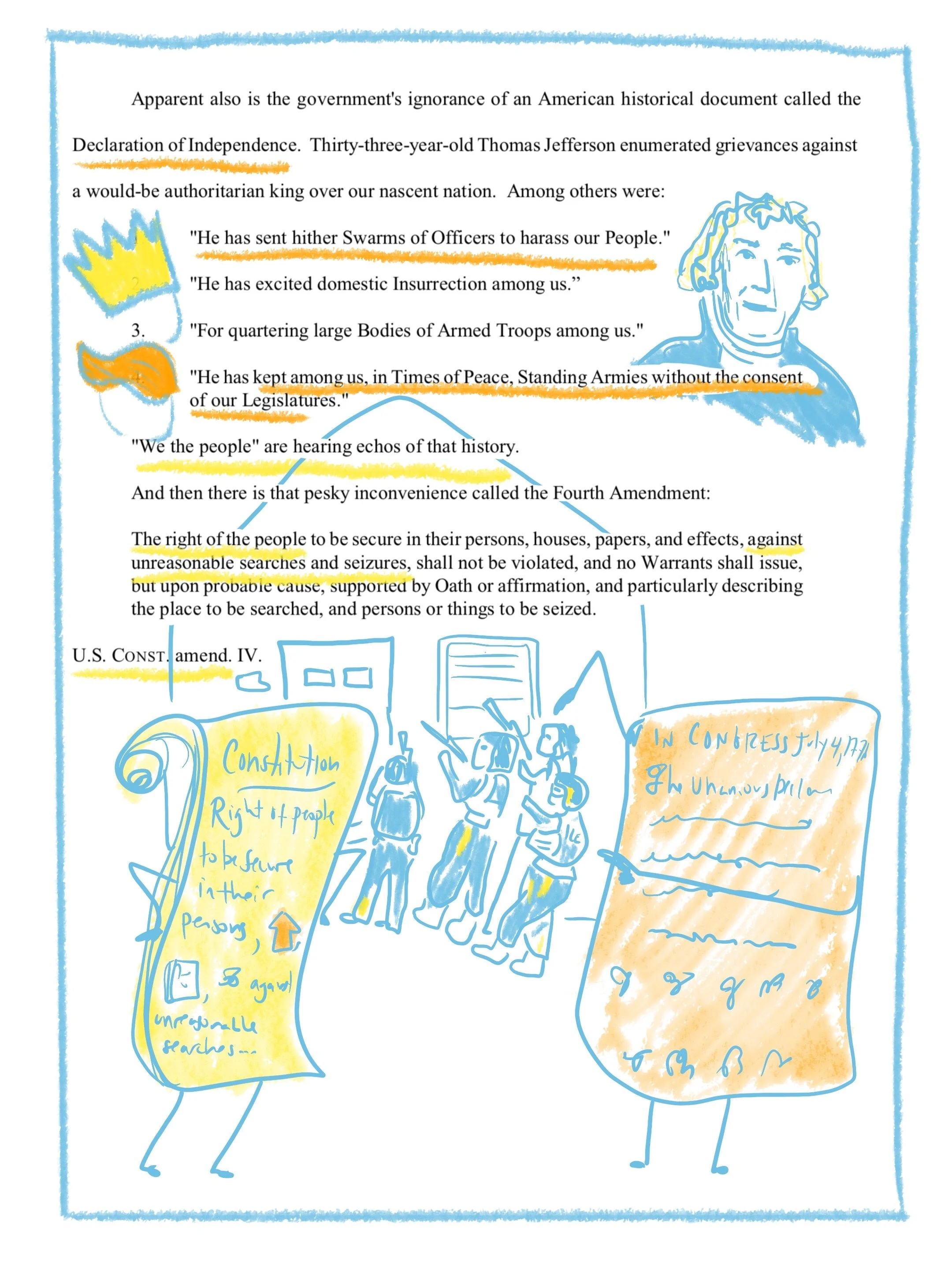
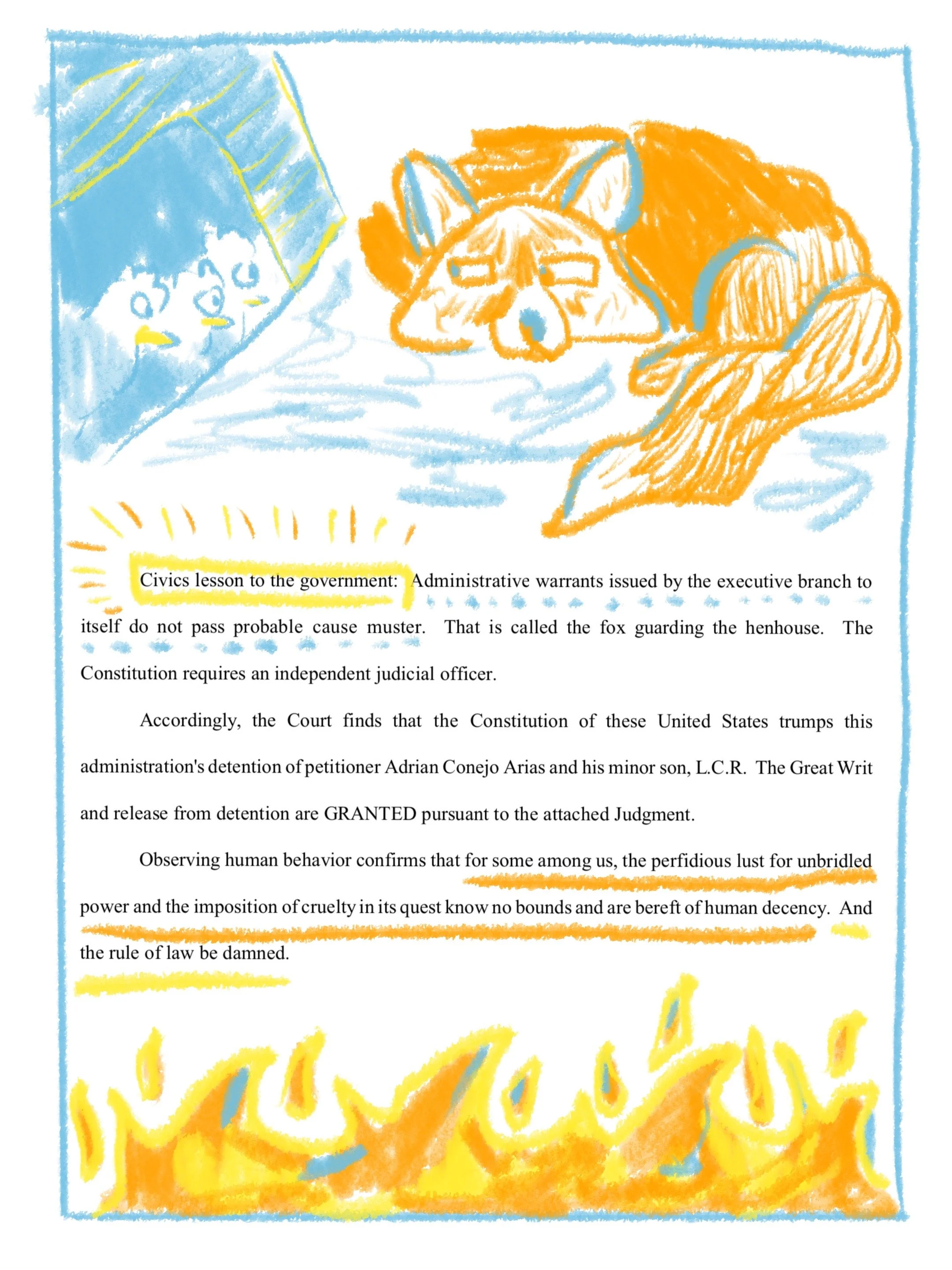
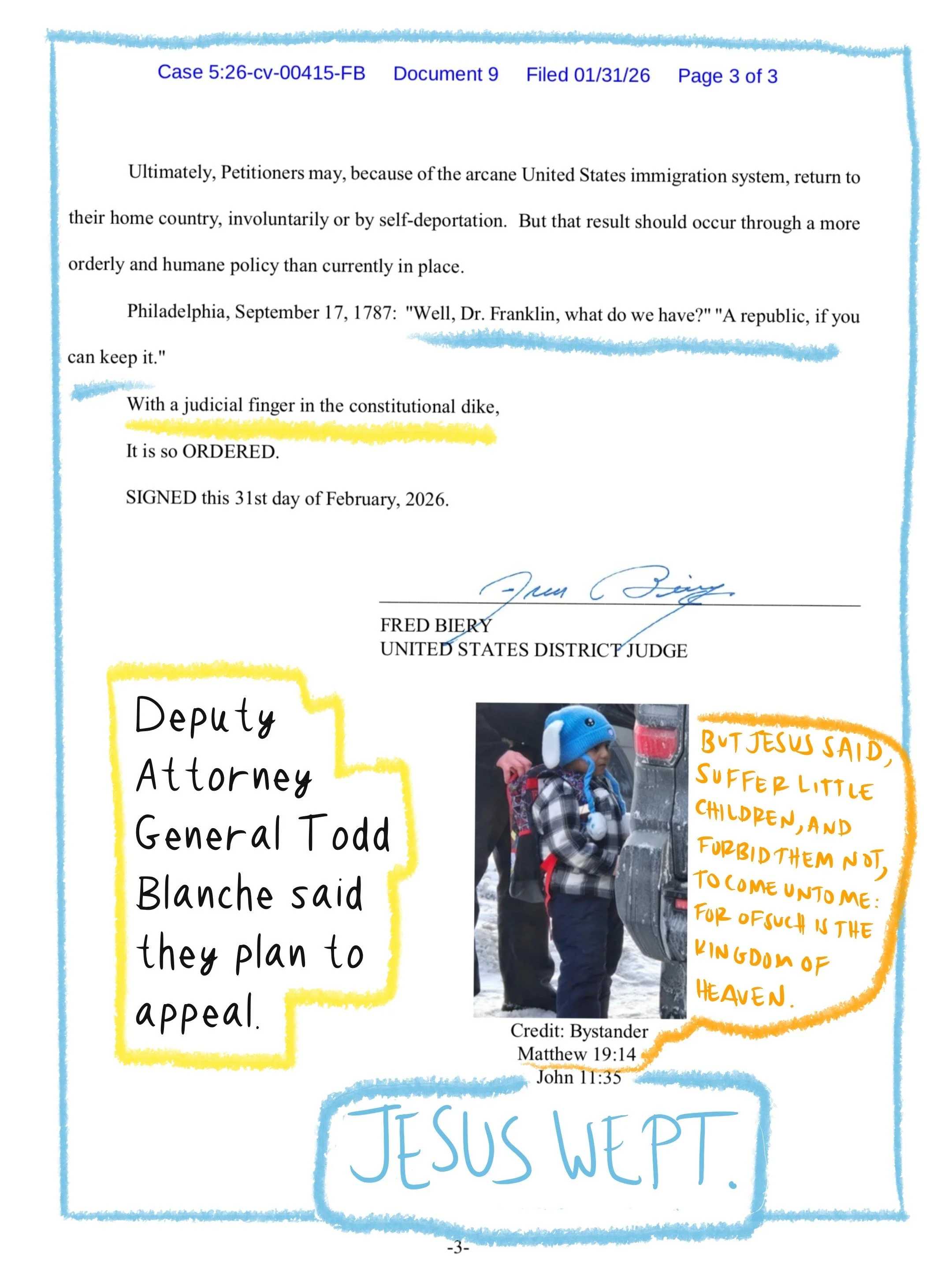
The judge reminds us the Constitution exists because an occupying force was doing many of the same things we’re seeing in Minneapolis. And he ends the order with the infamous photo and a reference to two bible verses.
Judges don’t end their orders with bible verses.
“Together, we the people of the United States— you and me—have our magnificent Constitution.”
Last fall, I wrote about a judge from Massachusetts who framed his entire opinion as a civics lessson in response to an anonymous postcard.
A Court Decision or a Reply to a Postcard?
The postcard writer asks, “Trump has pardons and tanks, what do you have?” The judge replies, “Alone, I have nothing but my sense of duty. Together, we the people of the United States— you and me—have our magnificent Constitution. Here’s how it works.”
In the decision, he concludes that the Trump administration violated First Amendment rights when it arrested and attempted to deport students for their pro-Palestinian views. He then goes on to discuss how remedying the situation is very hard to do with the legal tools available to him. He ends with this:
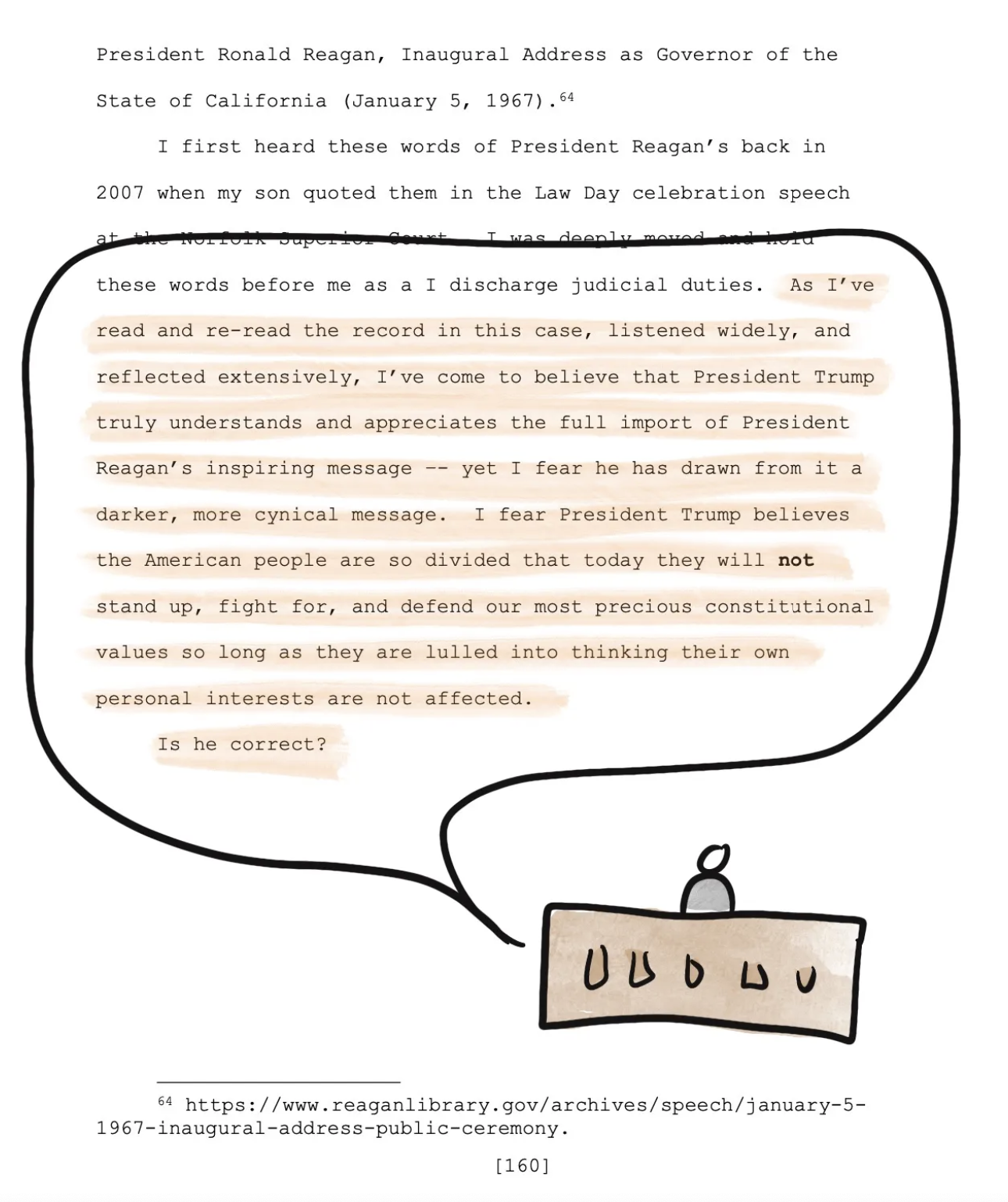
More examples of this kind of unusual judicial writing come out every day. I wish I could include them all.
The judges are writing for you. They’re writing for me. They’re writing because they care about the Constitution and they’re fed up with how much the current adminstration is abusing it.