
The Supreme Court’s “Shadow Papers,” in Black and White
I’m a lawyer (Michigan Law alum) and artist, and I
simplify legal and technology concepts for lawyers, technologists, and academics with my human-made infographics.
run workshops for professionals that help build their creative brain muscles in a world of AI
provide analysis on the Supreme Court and rule of law using words and illustrations.
If you’d like me to run a workshop for your organization, translate your big idea, or break down the latest legal issues, I'd love to connect!
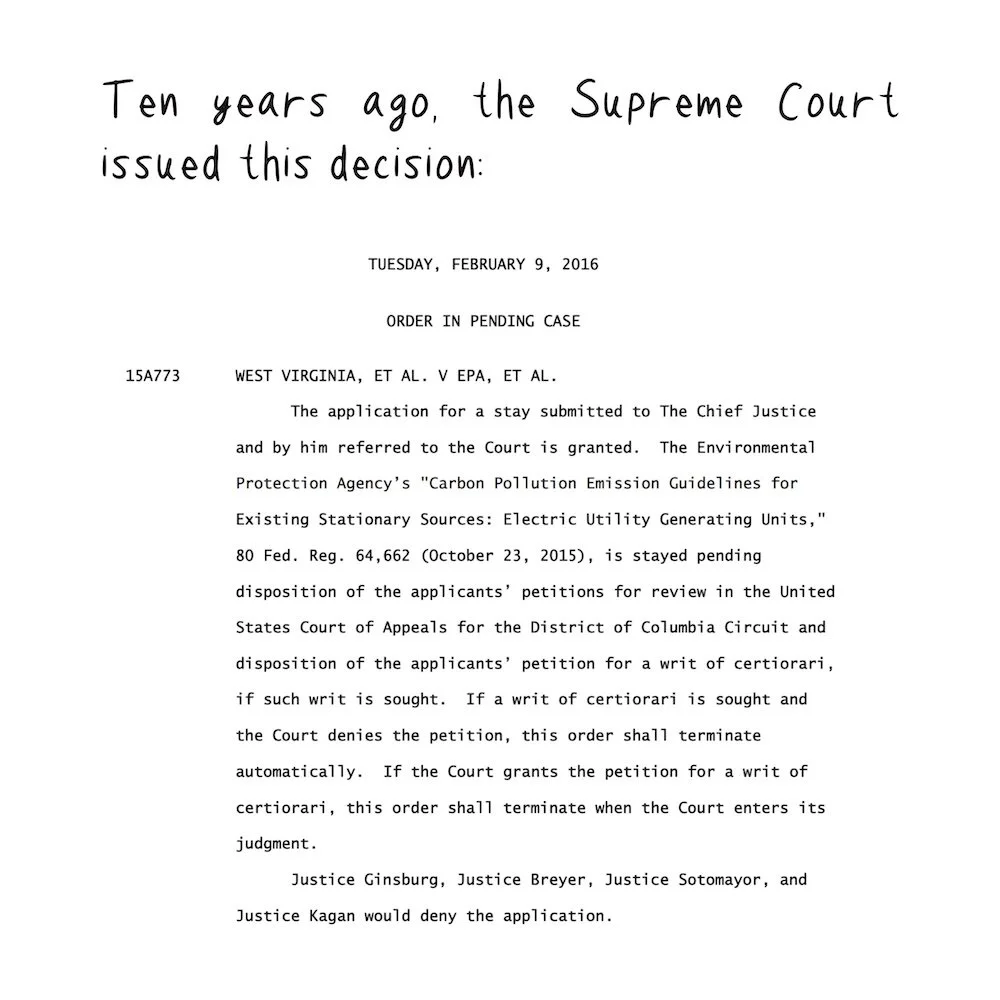
Ten years ago, the Supreme Court issued a decision in West Virginia v. EPA.
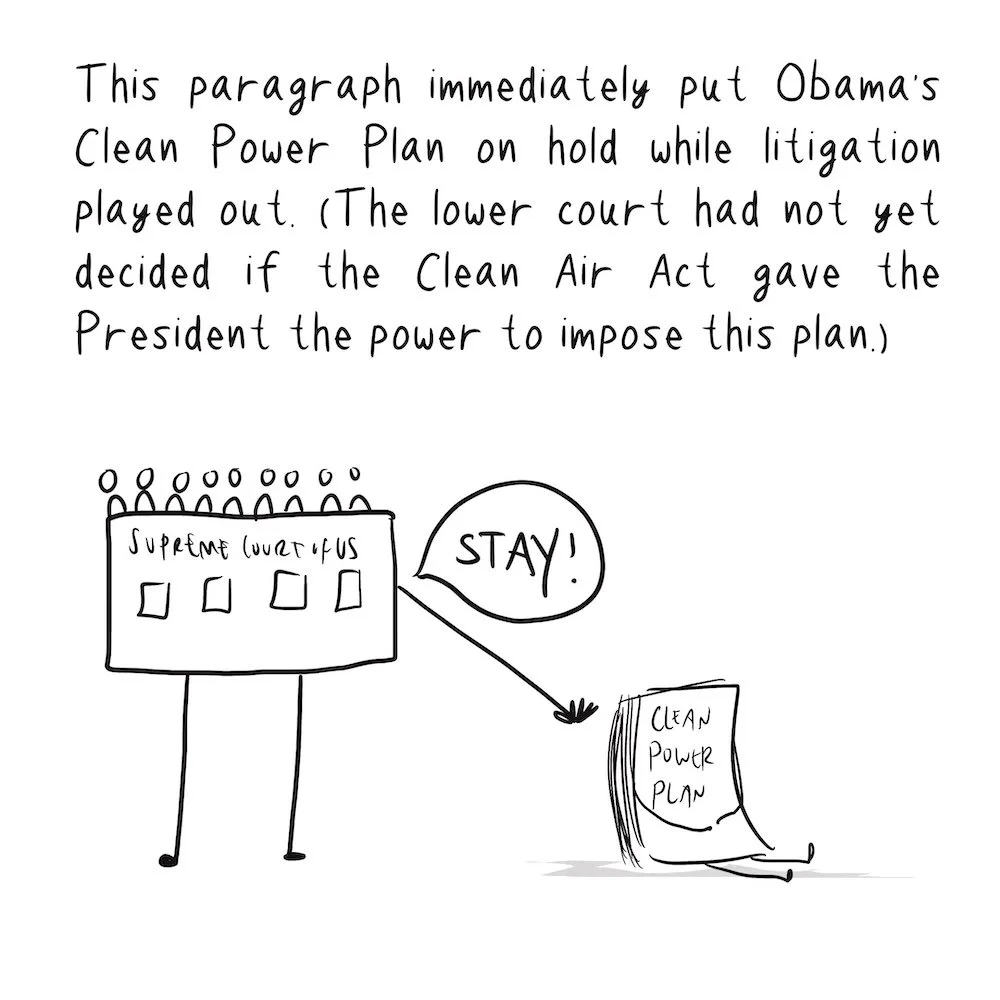
This paragraph immediately put Obama’s Clean Power Plan on hold while litigation played out. (The lower court had not yet decided if the Clean Air Act gave the President the power to impose this plan.)
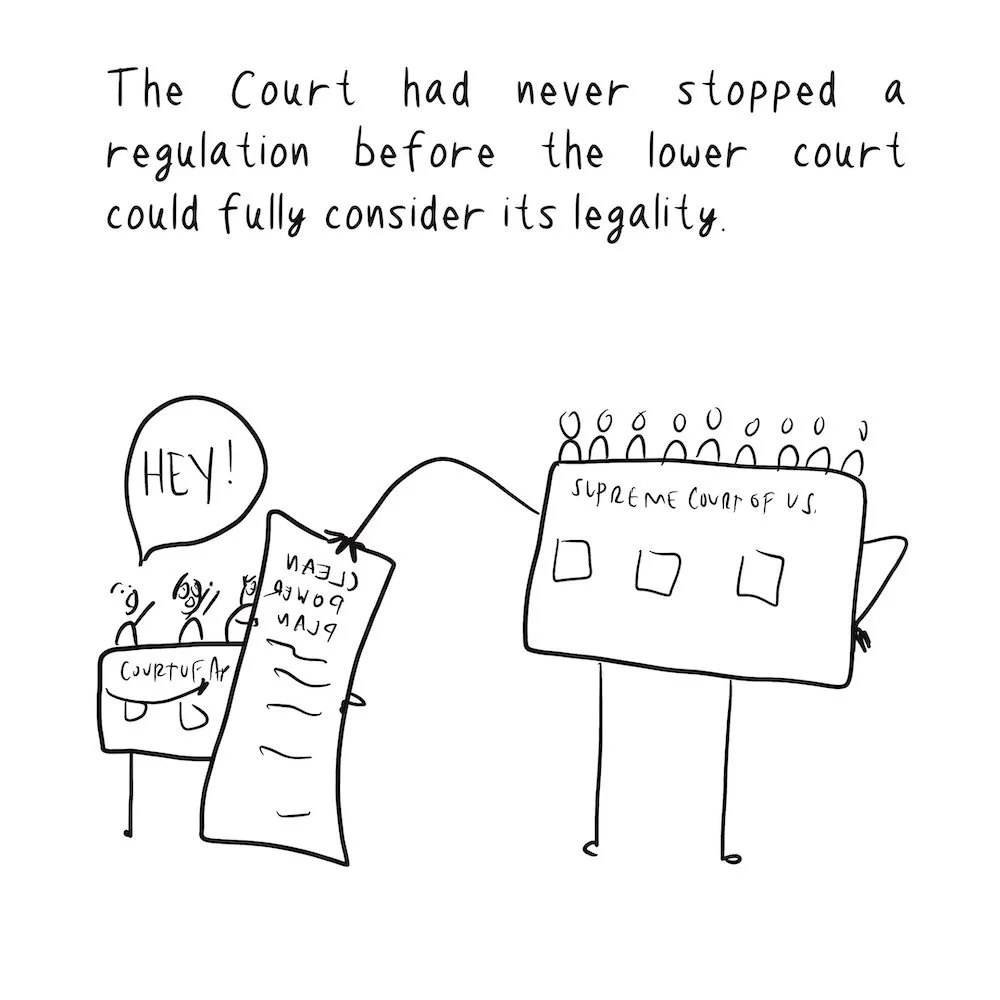
The Court had never stopped a regulation before the lower court could fully consider its legality.
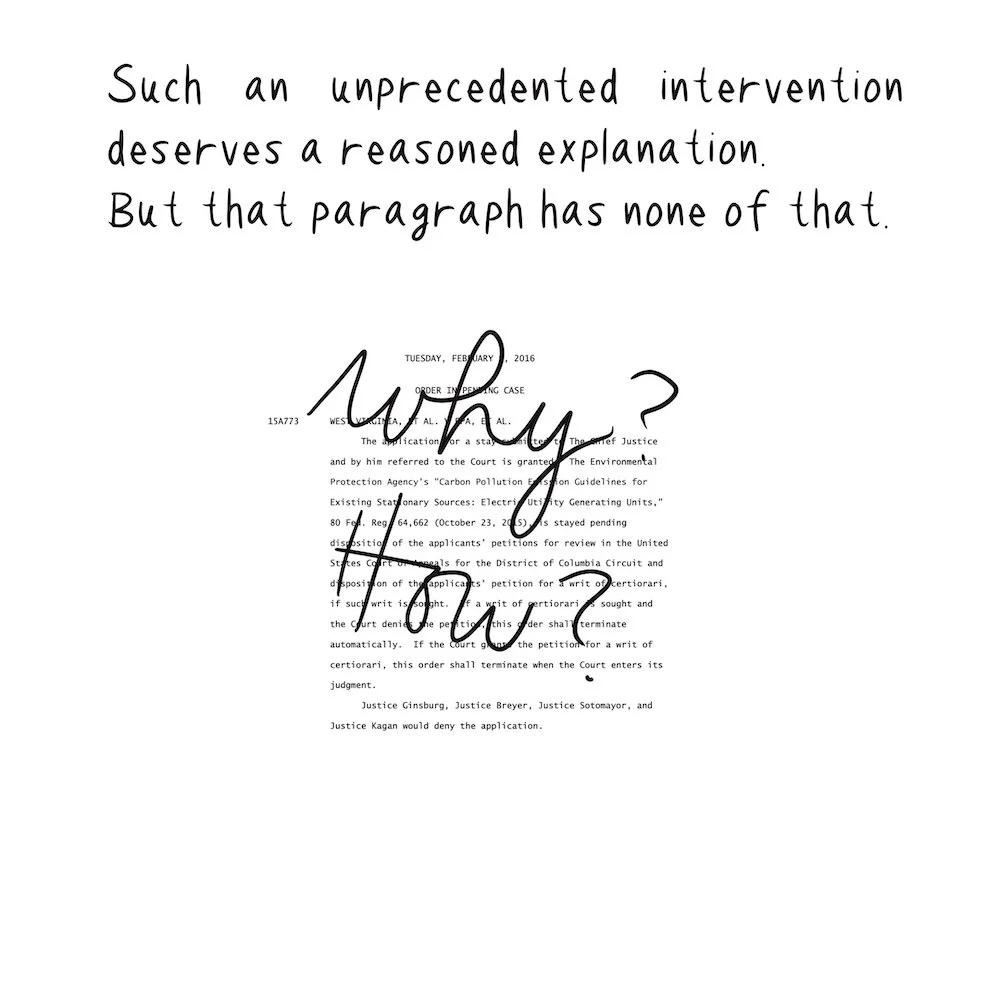
Such an unprecedented intervention deserves a reasoned explanation. But that paragraph has none of that.
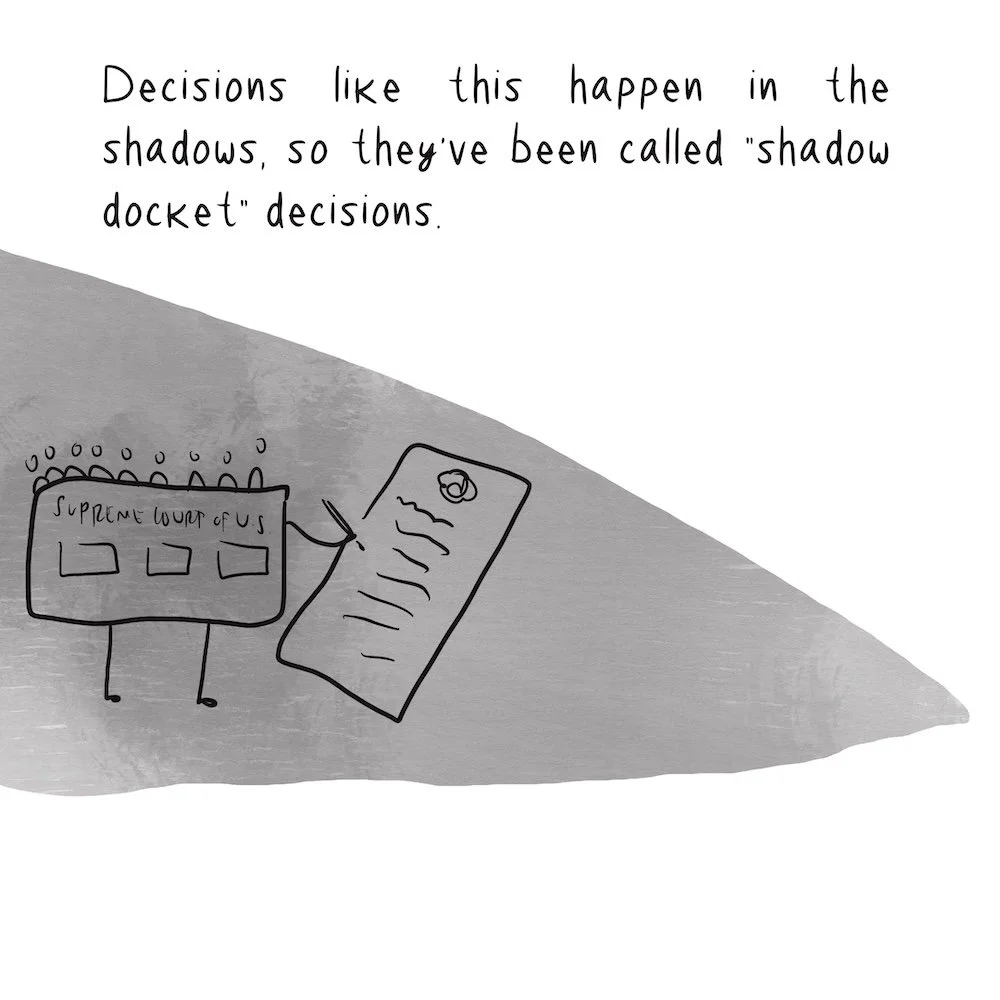
Decisions like this happen in the shadows, they’ve been called “shadow docket” decisions. The term was coined by law professor William Baude and the phenomenon has been analyzed extensively by law professor Steve Vladeck.
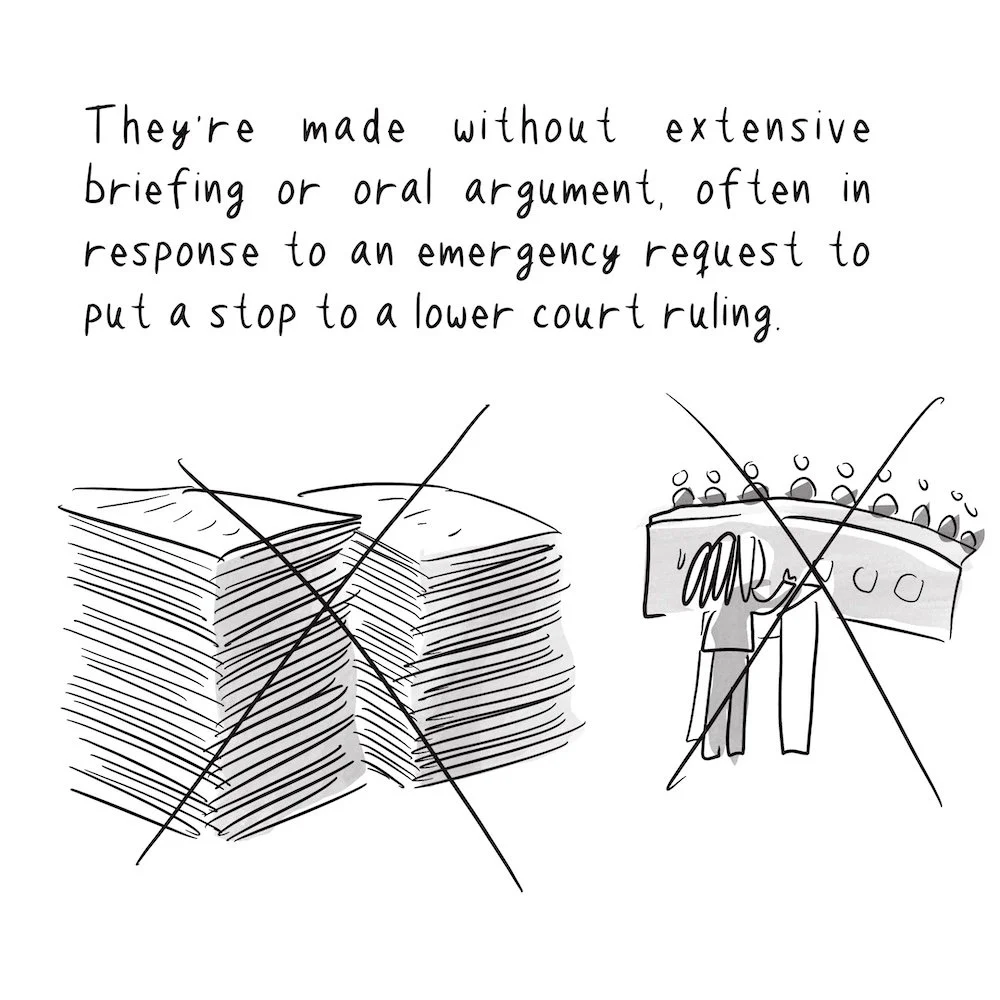
They’re made without extensive briefing or oral argument, often in response to an emergency request to put a stop to a lower court ruling.
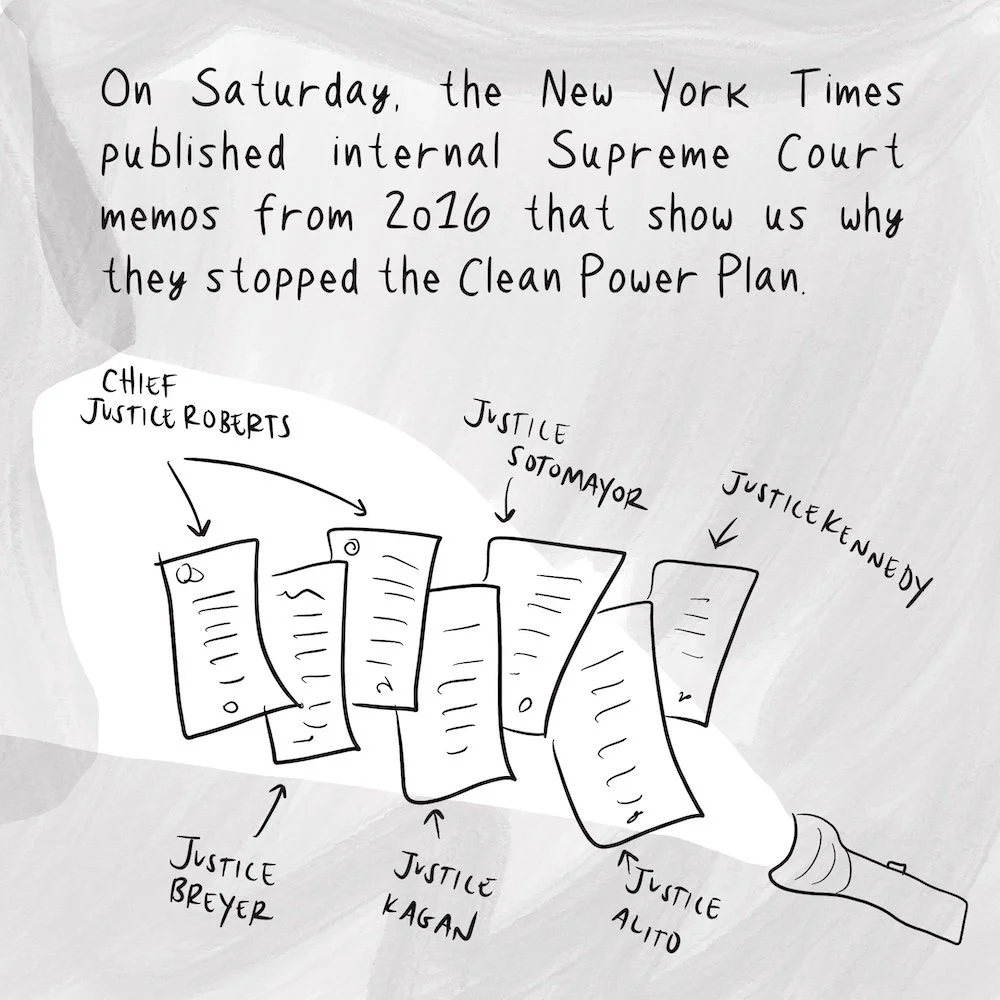
Recently, the New York Times published internal Supreme Court memos from 2016 that show us why they stoped the Clean Power Plan.
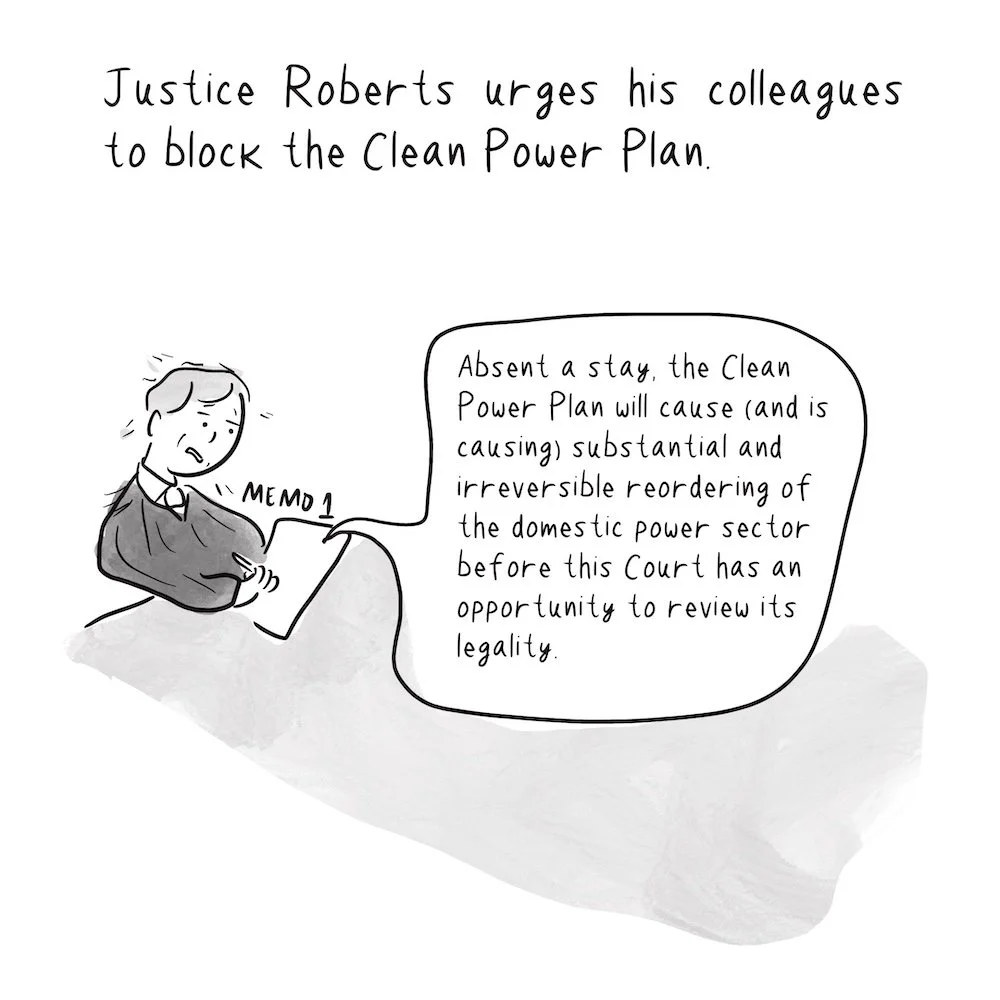
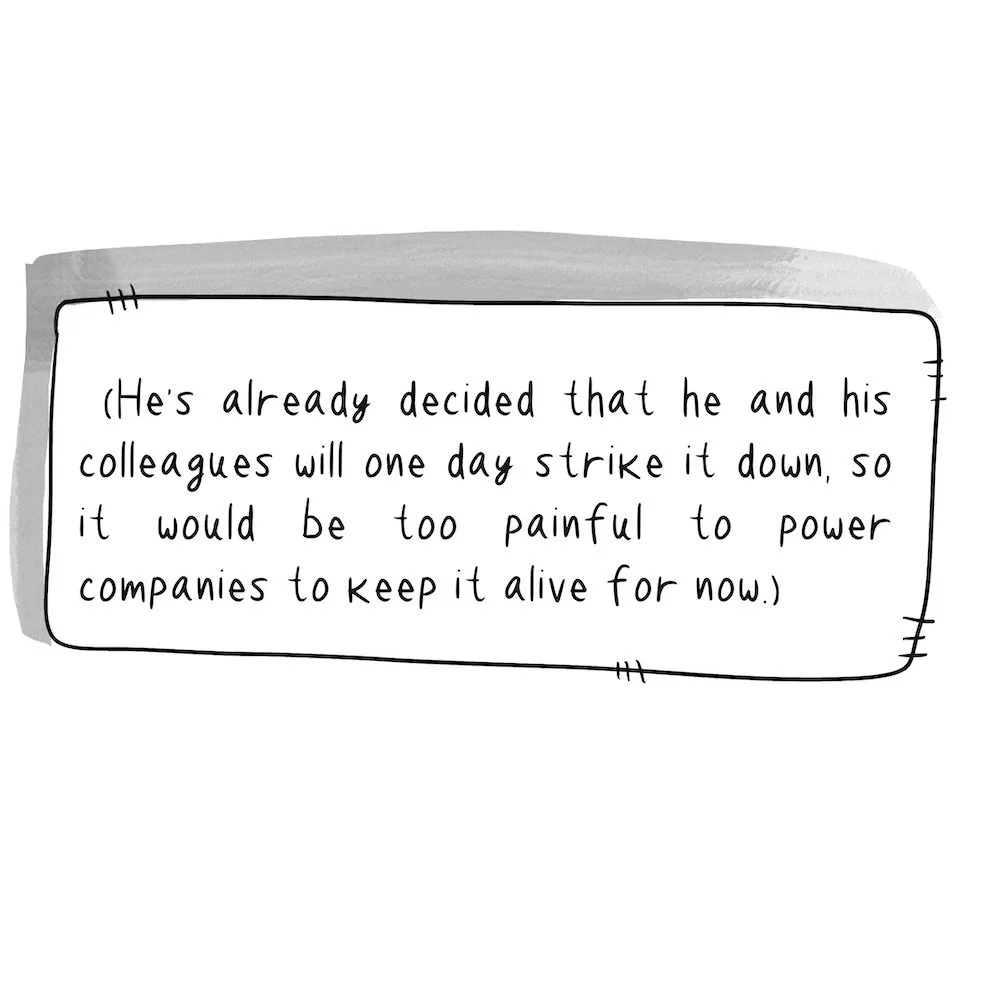
Justice Roberts urges his colleagues to block the Clean Power Plan. (He’s already decided that he and his colleagues will one day striek it down, so it would be too painful to power companies to keep it alive for now.)
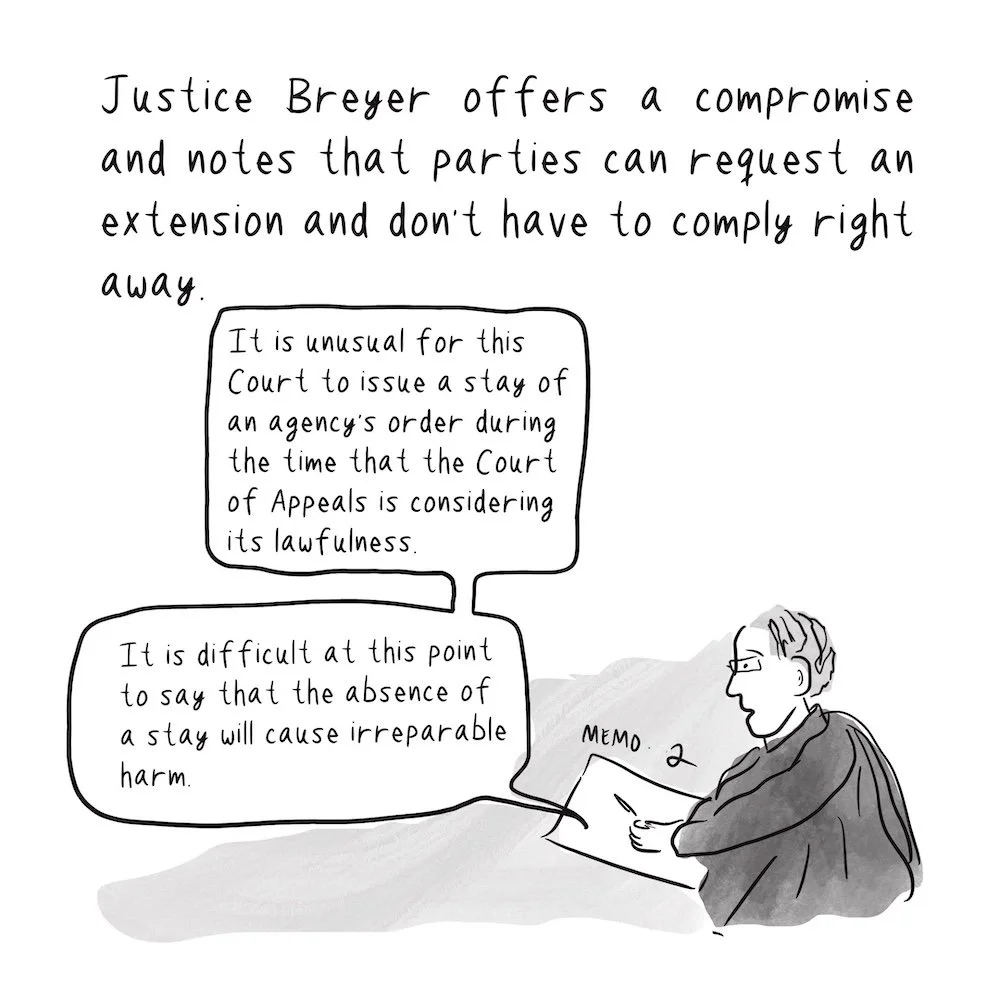
Justice Breyer offers a compromise and notes that parties. can request an extension and don’t have to comply right away. "He says, “it is unusual for this Court to issue a stay of an agency’s order during the time that the Court of Appeals is considering its lawfulness.” and “It is difficult at this point to say that the absence of a stay will cause irreparable harm.”
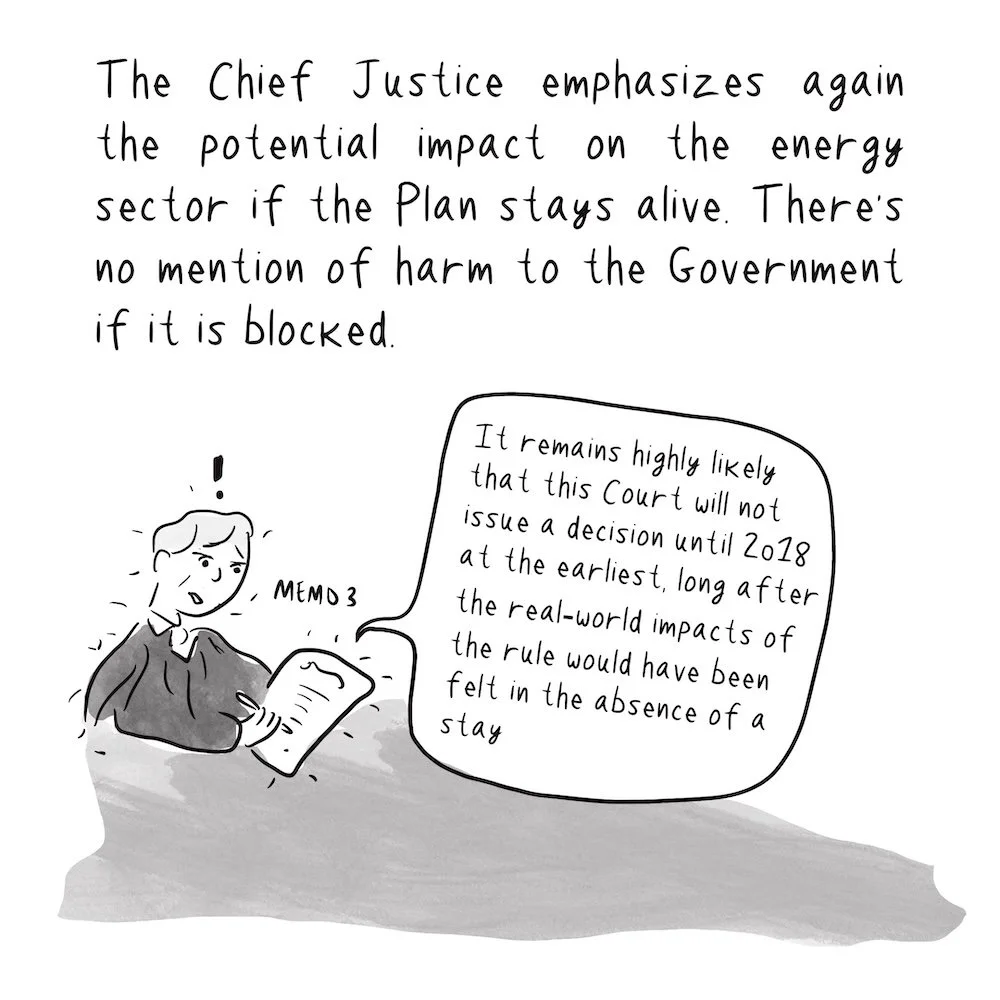
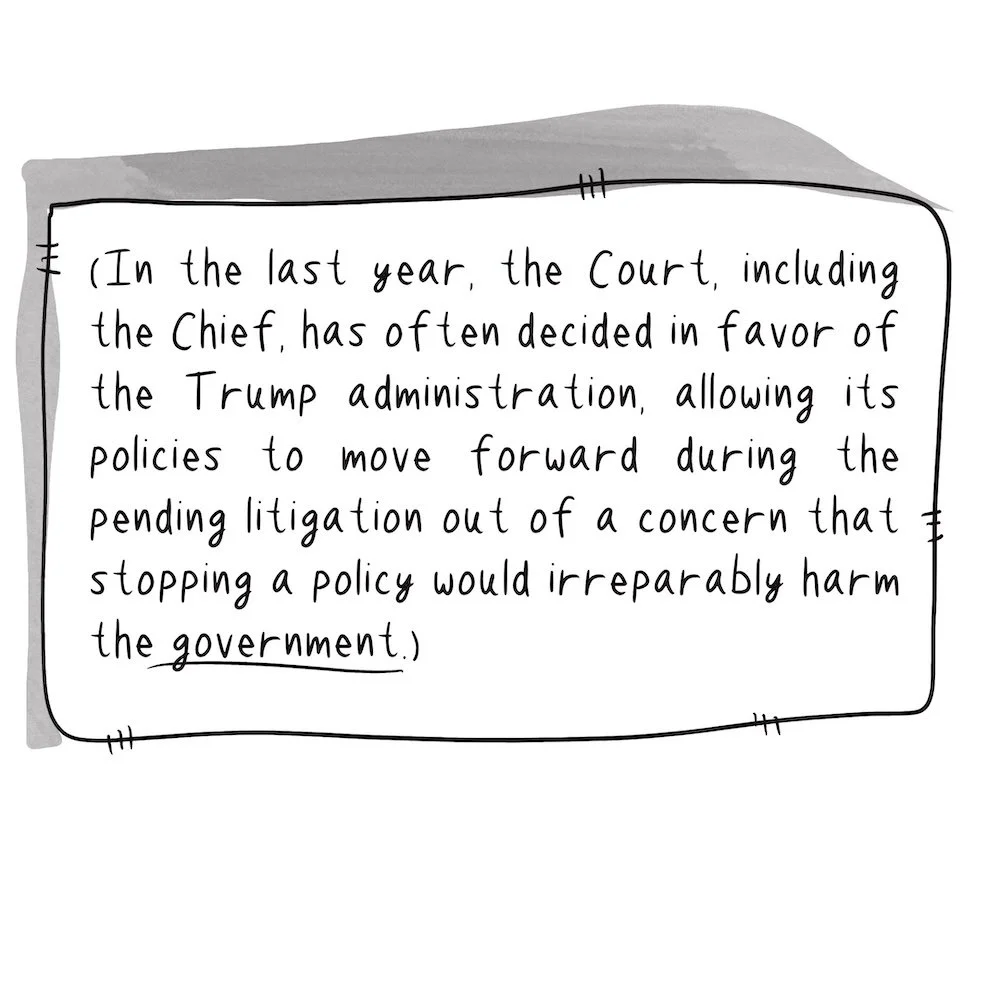
The Chief Justice emphasizes again the potential impact on the energy sector if the Plan stays alive. There’s no mention of harm to the Government if it is blocked. Justice Roberts writes, “It remains highly likely that this Court will not issue a decision until 2018 at the earliest, long after teh real-world impacts of the rule would have been felt in the absence of a stay.” (In the last year, the Court, including the Chief, has often decided in favor of the Trump administration, allowing its policies to move forward during the pending litigation out of a concern that stopping a policy would irreparably harm the government.)
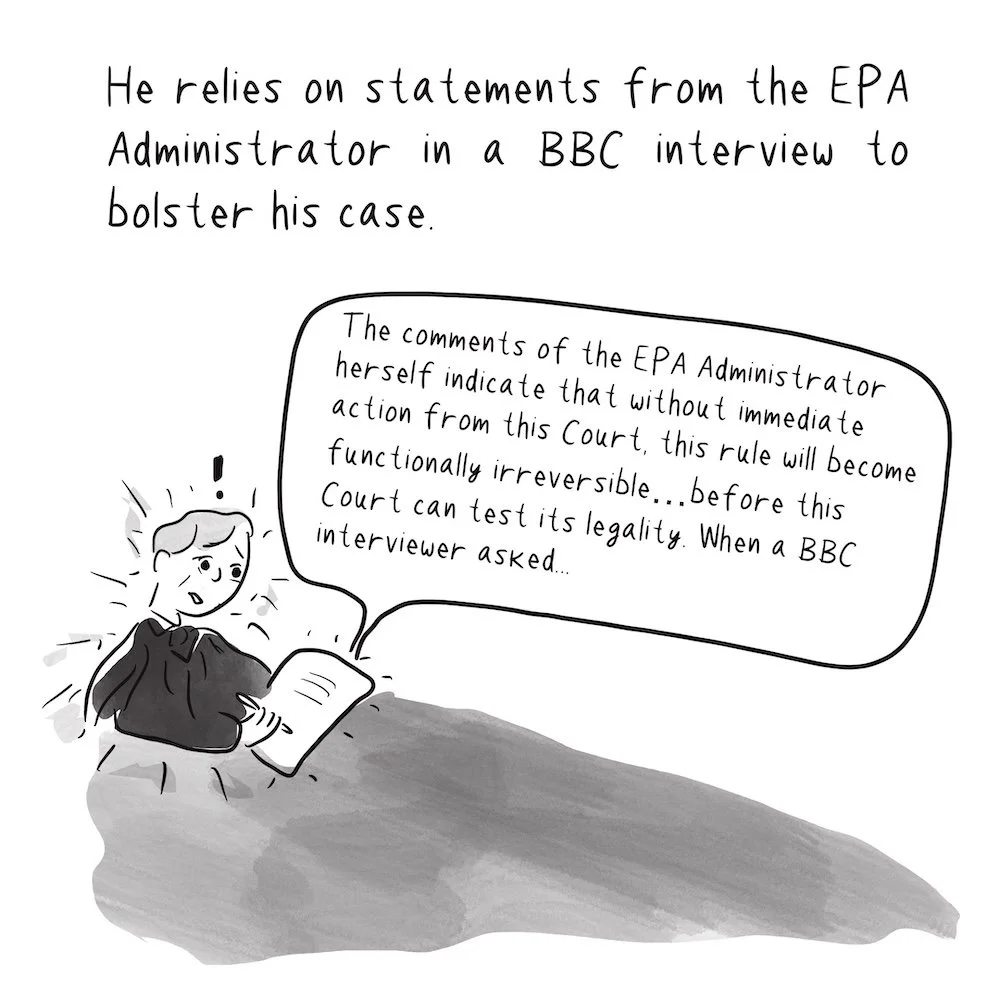
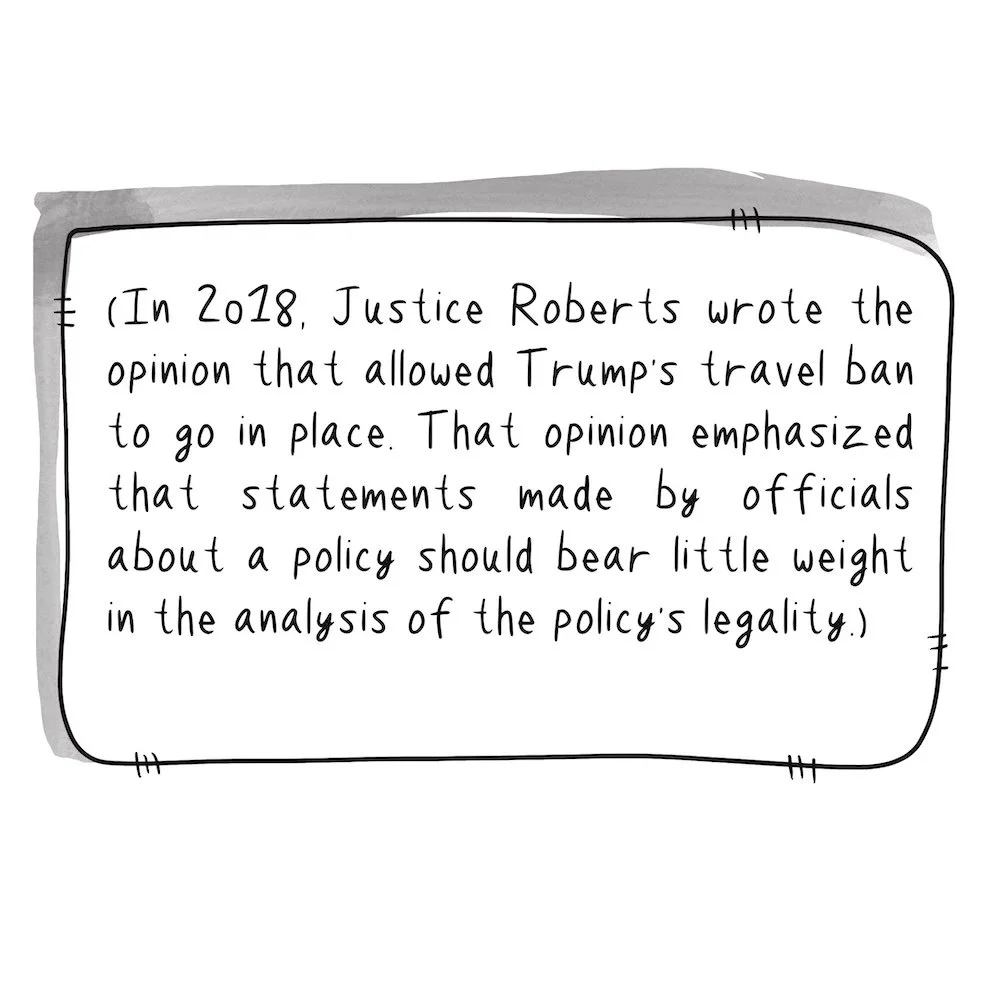
He relies on statements from the EPA Administrator in a BBC interview to bolster his case. Justice Roberts writes, “The comments of the EPA Administrator herself indicate that without immediate action from this Court, this rule will become functionally irreversible…before this Court can test its legality. When a BBC interviewed asked…” (In 2018, Justice Roberts wrote the opinion that allowed Trump’s travel ban to go in place. That opinion emphasized that statements made by officials about a policy should bear little weight in the analysis of the policy’s legality.)
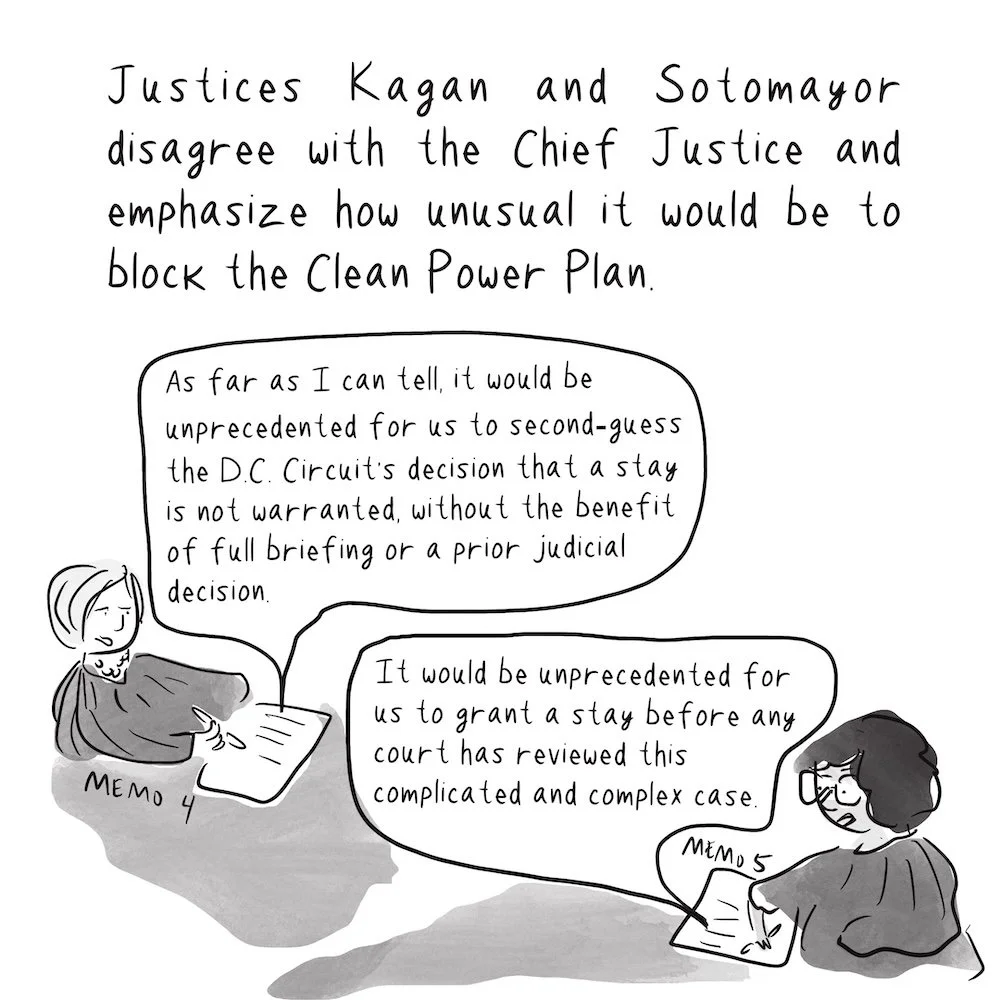
Justices Kagan and Sotomayor disagree with the Chief Justice and emphasize how unusual it would be to block the Clean Power Plan. Justice Kagan writes, “As far as I can tell, it would be unprecedented for us to second-guess the D.C. Circuit’s decision that a stay is not warranted, without the benefit of full briefing or a prior judicial decision.” Justice Sotomayor agrees: “It would be unprecedented for us to grant a stay before any court has reviewed this complicated and complex case.”
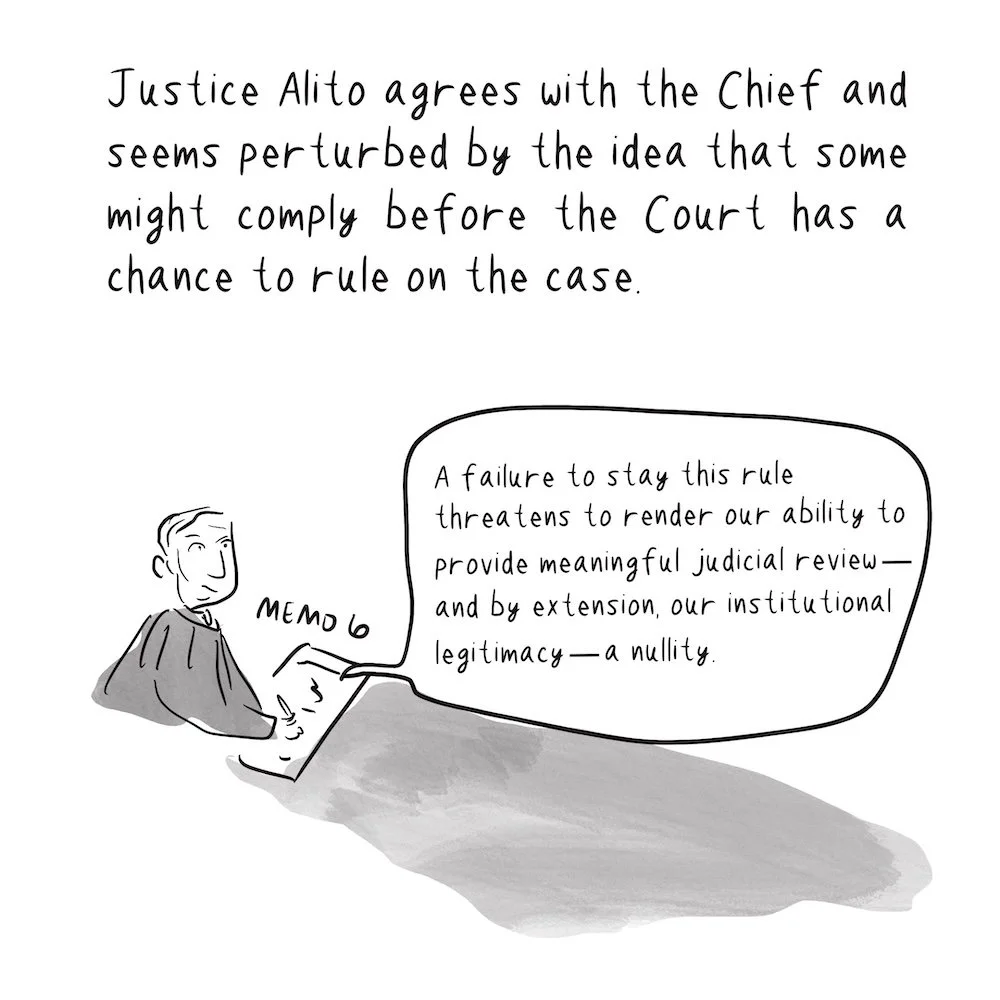
But their voices are not enough. Justice Alito agrees with the Chief and seems perturbed by the idea that some might comply before the Court has a chance to rule on the case: “A failure to stay this rule threatens to render our ability to provide meaningful judicial review—and by extension, our institutional legitimacy—a nullity.” (In 2021, after Texas passed an abortion law designed to make it hard for the Court to provide meaningful judicial review, Justice Alito signed onto the decision that allowed that law to go into effect.)
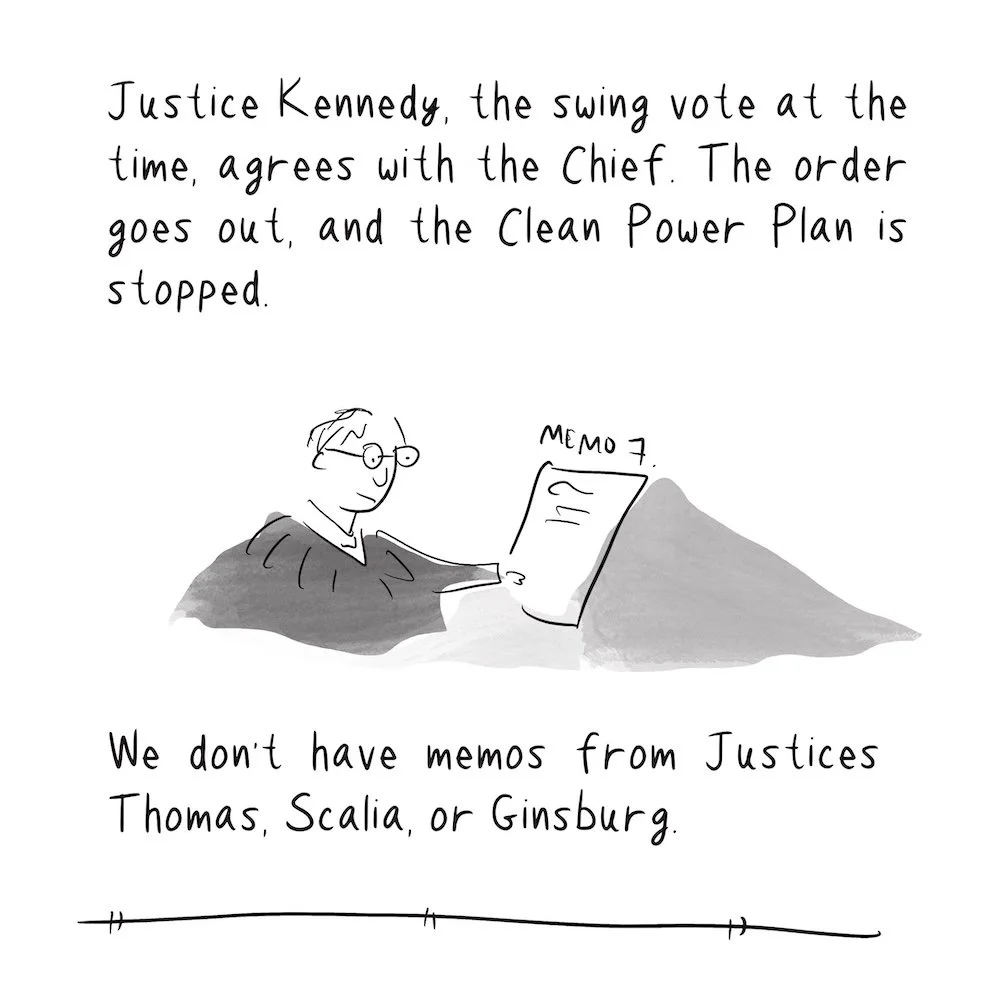
Justice Kennedy, the swing vote at the time, agrees with the Chief. The order goes out, and the Clean POwer Plan is stopped. We don’t have memos from Justices Thomas, Scalia, or Ginsburg.
When the Court issues lengthy opinions after full briefing and oral argument, the public has a chance to understand why monumental decisions were made. Here, the Court made an unprecedented move with cursory and secret deliberations. Since that time, especially in teh last year, shadow docket decisions have become a large part of the Supreme Court’s work.
If you’re interested in the full story, check out the New York Times reporting on this topic by Adam Liptak and Jodi Kantor. Somehow they got ahold of these documents, and they’re the authority on them. If you’re curious about the “shadow docket,” the best place to go is to Professor Steve Vladeck’s book about the phenomenon and his Substack called One First.