
The Day They Finished Hollowing Out the Voting Rights Act
Excerpts from a day at Court that seemed focused on race while suggesting the opposite
I’m a lawyer (Michigan Law alum) and artist, and I
simplify legal and technology concepts for lawyers, technologists, and academics with my human-made infographics.
run workshops for professionals that help build their creative brain muscles in a world of AI
provide analysis on the Supreme Court and rule of law using words and illustrations.
If you’d like me to run a workshop for your organization, translate your big idea, or break down the latest legal issues, I'd love to connect!
Wednesday, April 29, 2026 was always going to be a big day at the Supreme Court. On the docket was whether the courts can review Secretary Noem’s determination to end the temporary protected immigration (TPS) status of Haitians and Syrians in the U.S. If the Court agrees with the Government, hundreds of thousands of people with this immigration status could become deportable overnight to countries that the State Department still considers unsafe for US travelers.
Before oral argument could begin, the Court upstaged that case by announcing its opinion in Louisiana v. Callais, which guts what remained of the Voting Rights Act. This decision was expected. The project of undermining the Voting Rights Act has long been a focus of members of the Court’s conservative majority (Justice Roberts in particular), and the Court has been chipping away at it sequentially for the last decade.
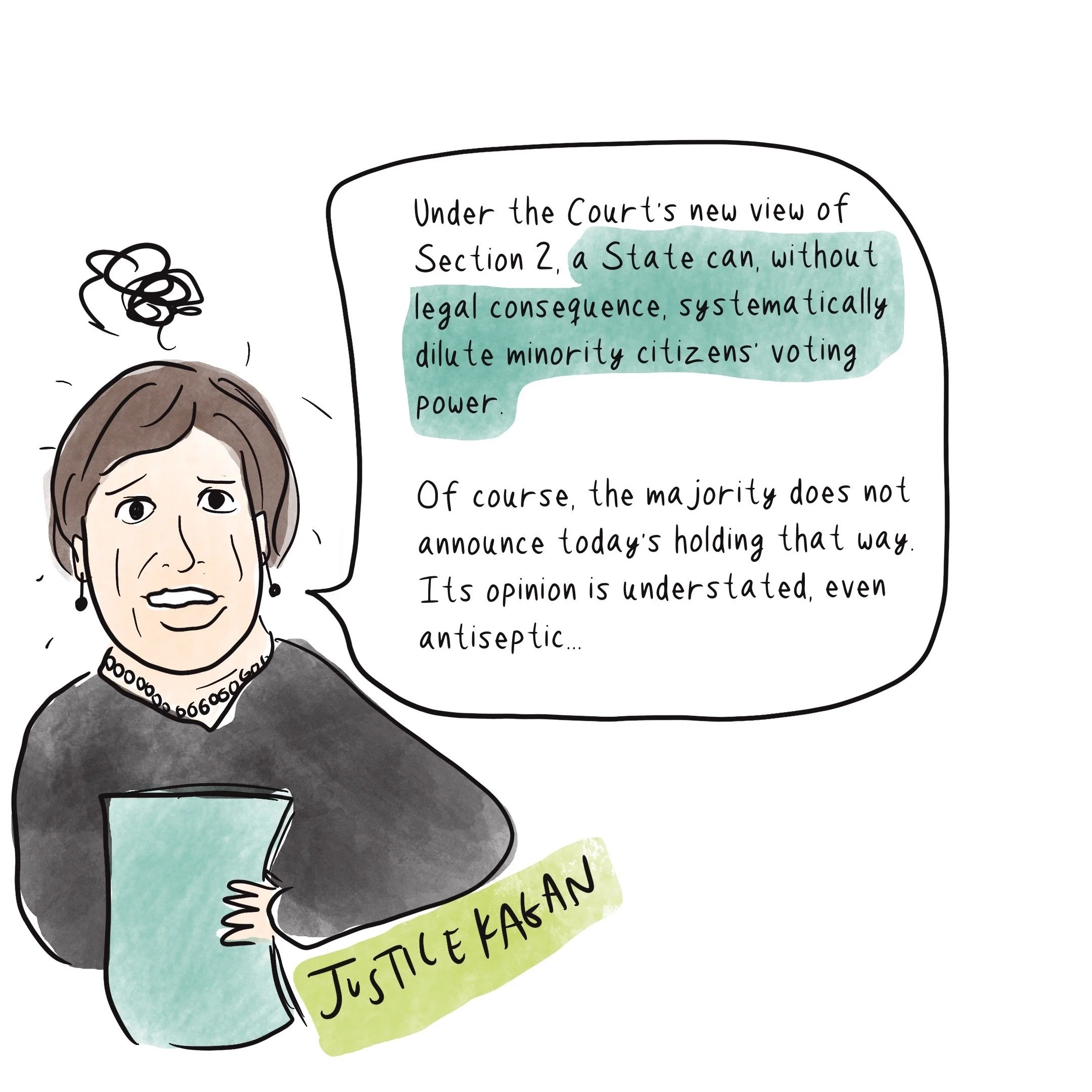
Justice Kagan read her dissent in Louisiana v. Callais from the bench:
Under the Court’s new view of Section 2, a State can, without legal consequence, systematically dilute minority citizens’ voting power. Of course, the majority does not announce today’s holding that way. Its opinion is understated, even antiseptic.
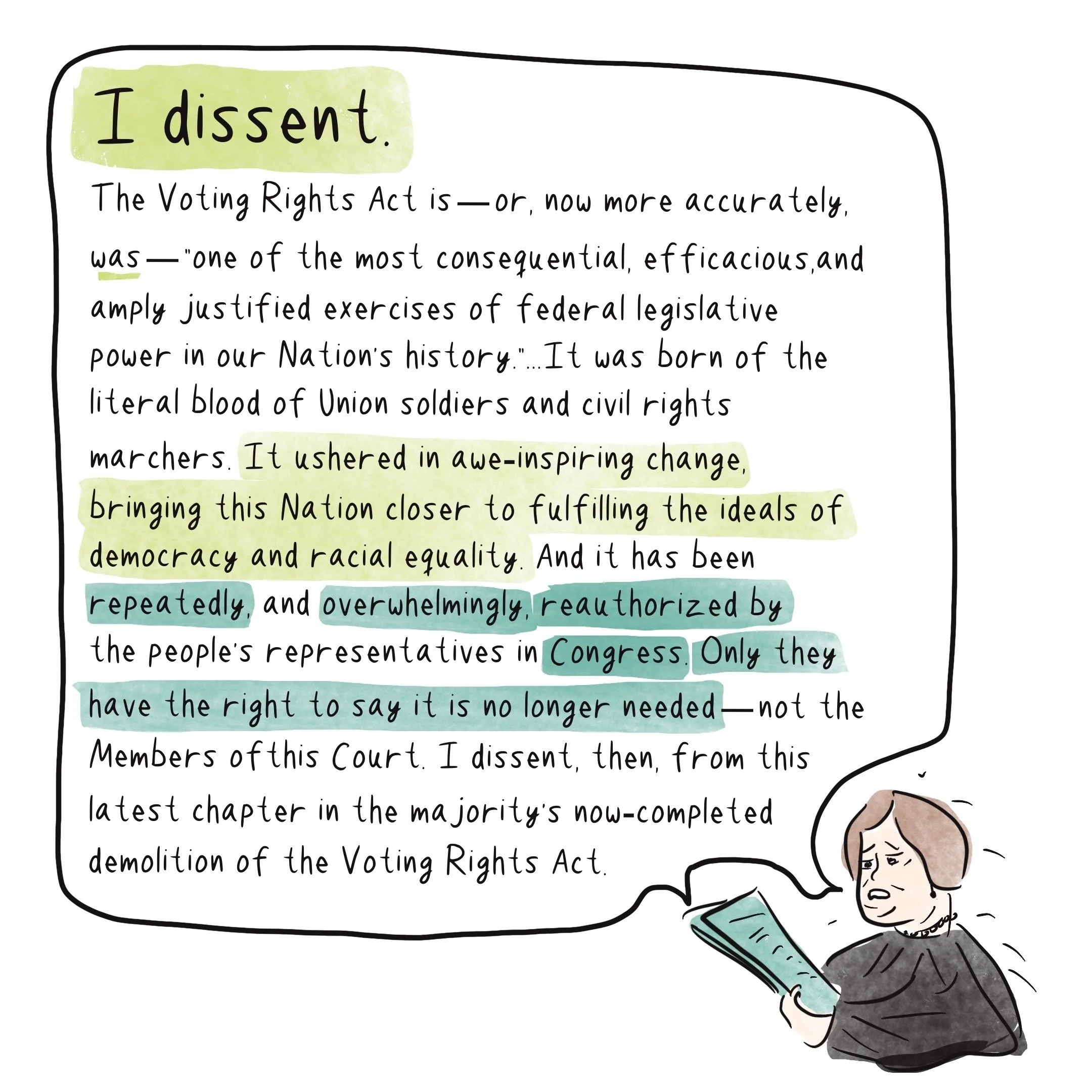
The last paragraph of her introduction explains it all:
I dissent. The Voting Rights Act is—or, now more accurately, was—“one of the most consequential, efficacious, and amply justified exercises of federal legislative power in our Nation’s history.” Shelby County, 570 U. S., at 562 (Ginsburg, J., dissenting). It was born of the literal blood of Union soldiers and civil rights marchers. It ushered in awe-inspiring change, bringing this Nation closer to fulfilling the ideals of democracy and racial equality. And it has been repeatedly, and overwhelmingly, reauthorized by the people’s representatives in Congress. Only they have the right to say it is no longer needed—not the Members of this Court. I dissent, then, from this latest chapter in the majority’s now-completed demolition of the Voting Rights Act.
Justice Alito authored the opinion in Louisiana v. Callais, which is written from the perspective that it’s never appropriate to pay attention to race. This view glosses over the fact that paying attention to race in order to address the voter suppression in our history and to support a multi-racial democracy are goals of the Voting Rights Act. And never mind that “ignoring” the race of Black and brown voters bolsters the power of white voters. Color-blindness is not neutral.
An hour or so later and well into oral argument for the TPS case (Mullin v. Doe), Justice Alito showed us his fixation on race in our legal system. As the attorney for Haitian TPS holders argued that the determination to terminate TPS status likely involved improper racial motivation, Justice Alito chimed in. He asked, “[b]ut isn't it the case that TPS was terminated for quite a list of countries. And I -- I -- I -- I can't seem to find the particular page of the transcript where the district court goes through them all. And, yes, none of those is a Nordic country. But -- and I don't like dividing up the people of the world arbitrarily into three racial groups, but you -- you say they're all non-white. And that's the -- that's the distinguishing characteristic?”
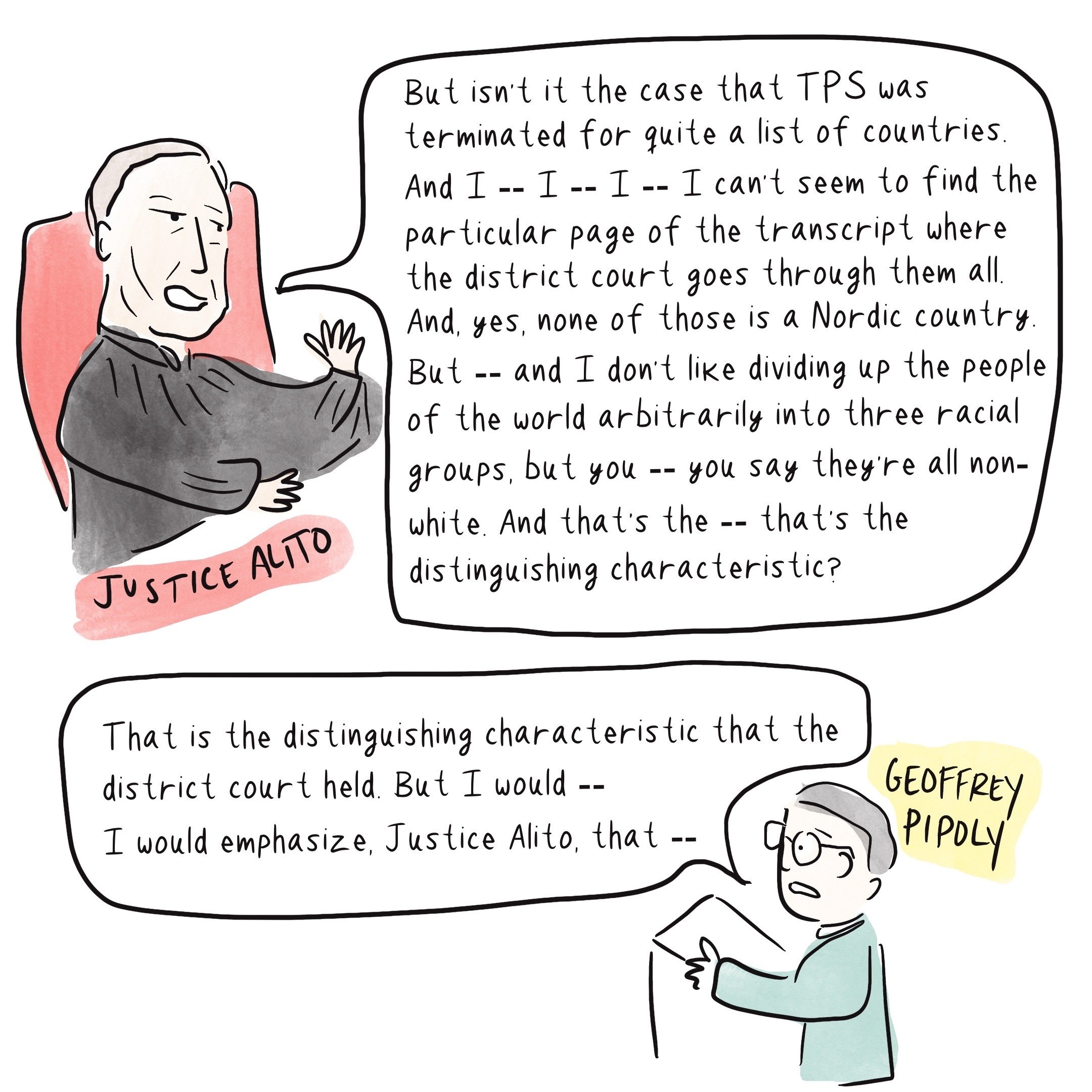
“That is the distinguishing characteristic that the district court held,” Geoffrey Pipoly, attorney representing TPS holders, replied.
Justice Alito continued: “But do you think that if -- if you put Syrians, Turks, Greeks, and other people who live around the Mediterranean in a lineup, do you think you could say those people are -- are -- that all of them, are they all non-white?”
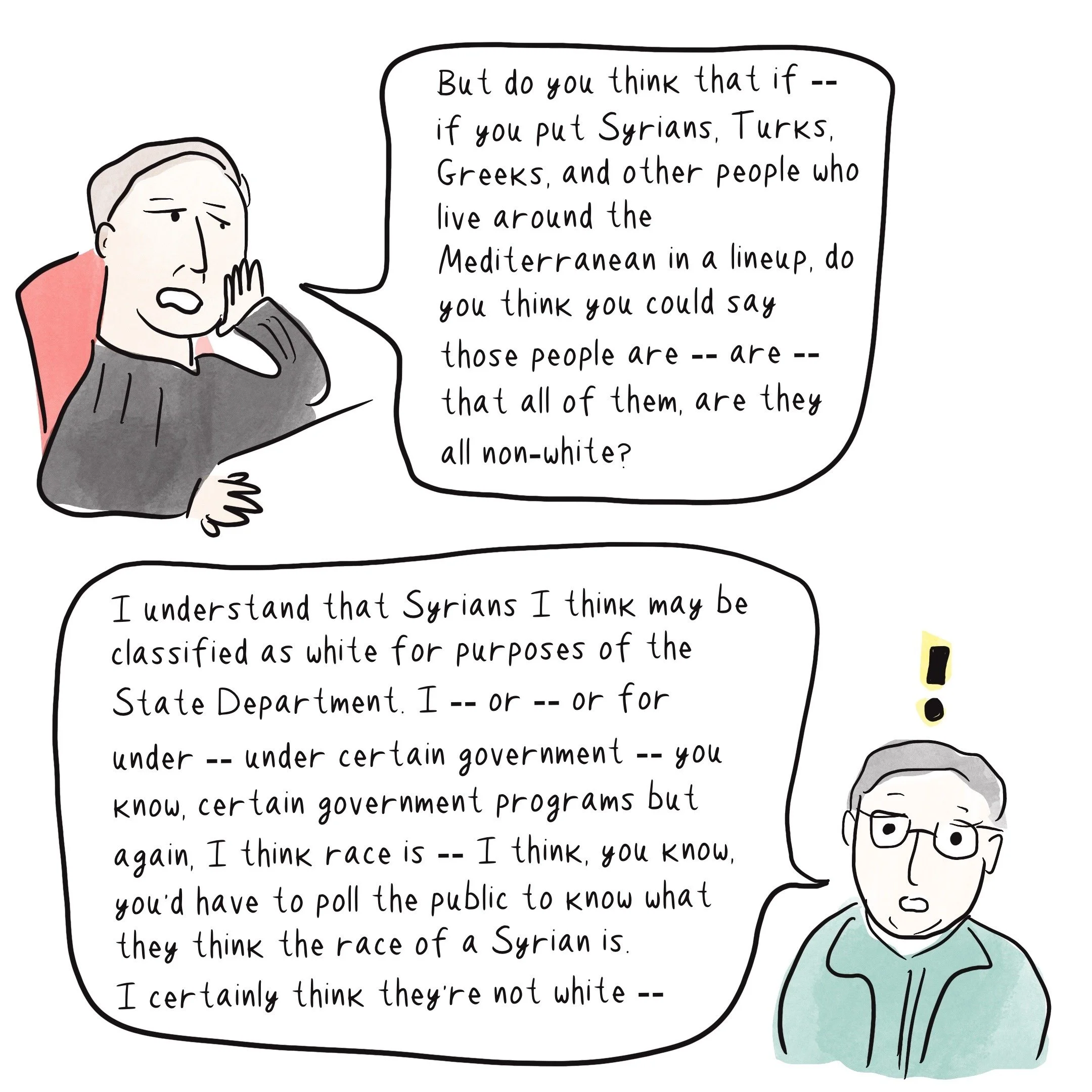
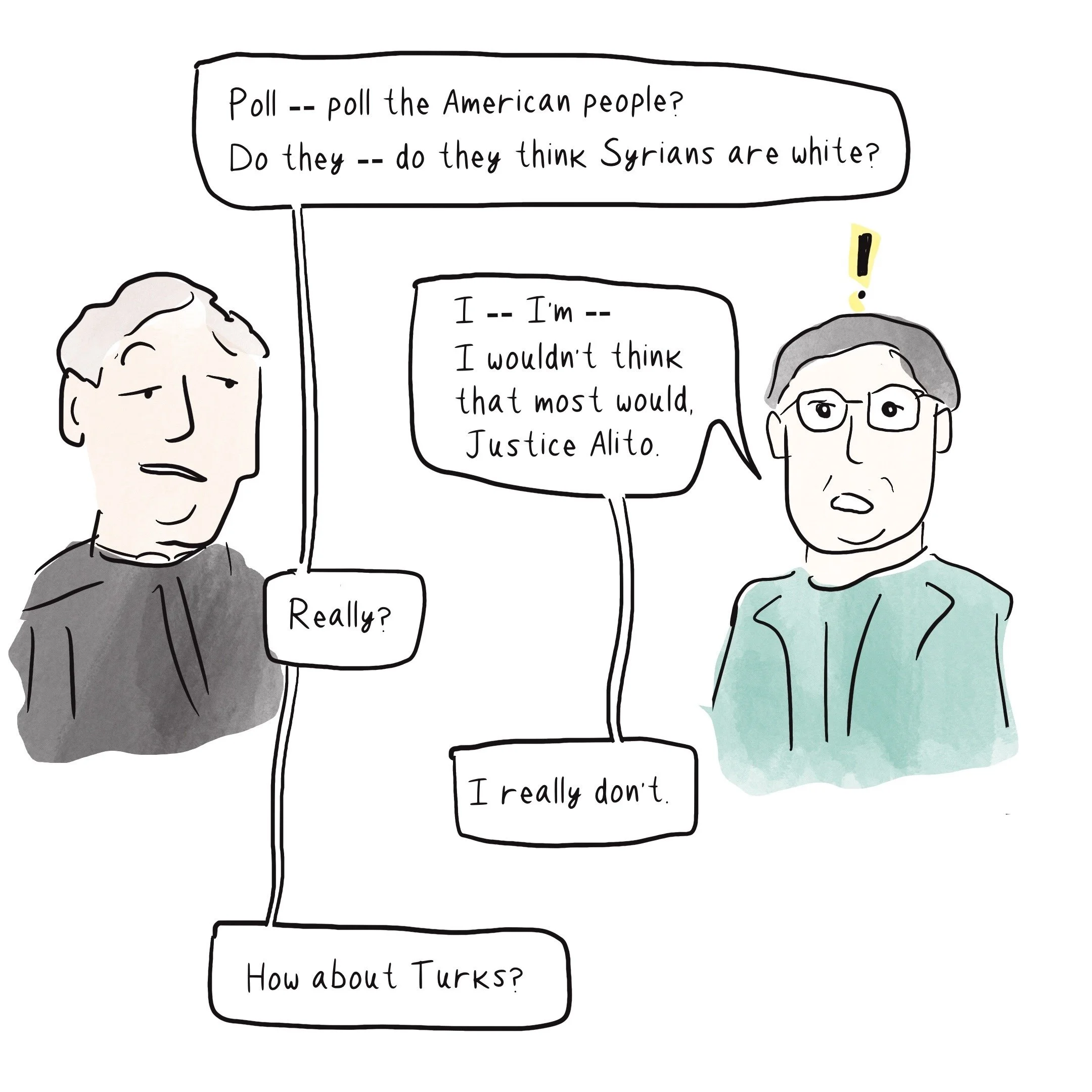
Geoffrey Pipoly replies again and the exchange continues awkwardly. Justice Alito begins asking about various ethnic backgrounds and whether they’re considered white. He ends with “How about Greeks? How about southern Italians?”
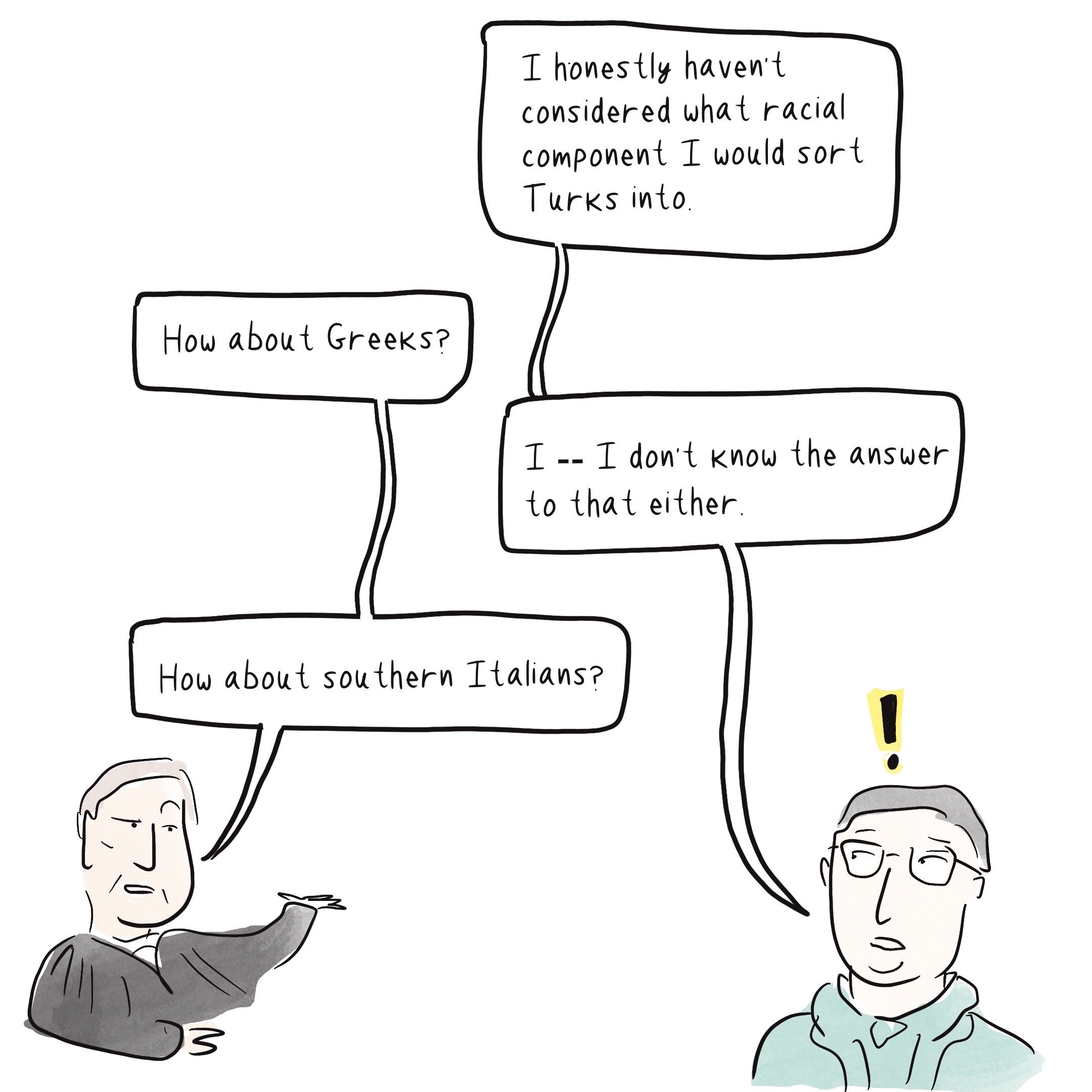
At this point, there was laughter in the room. Justice Alito’s ancestors were Italian.
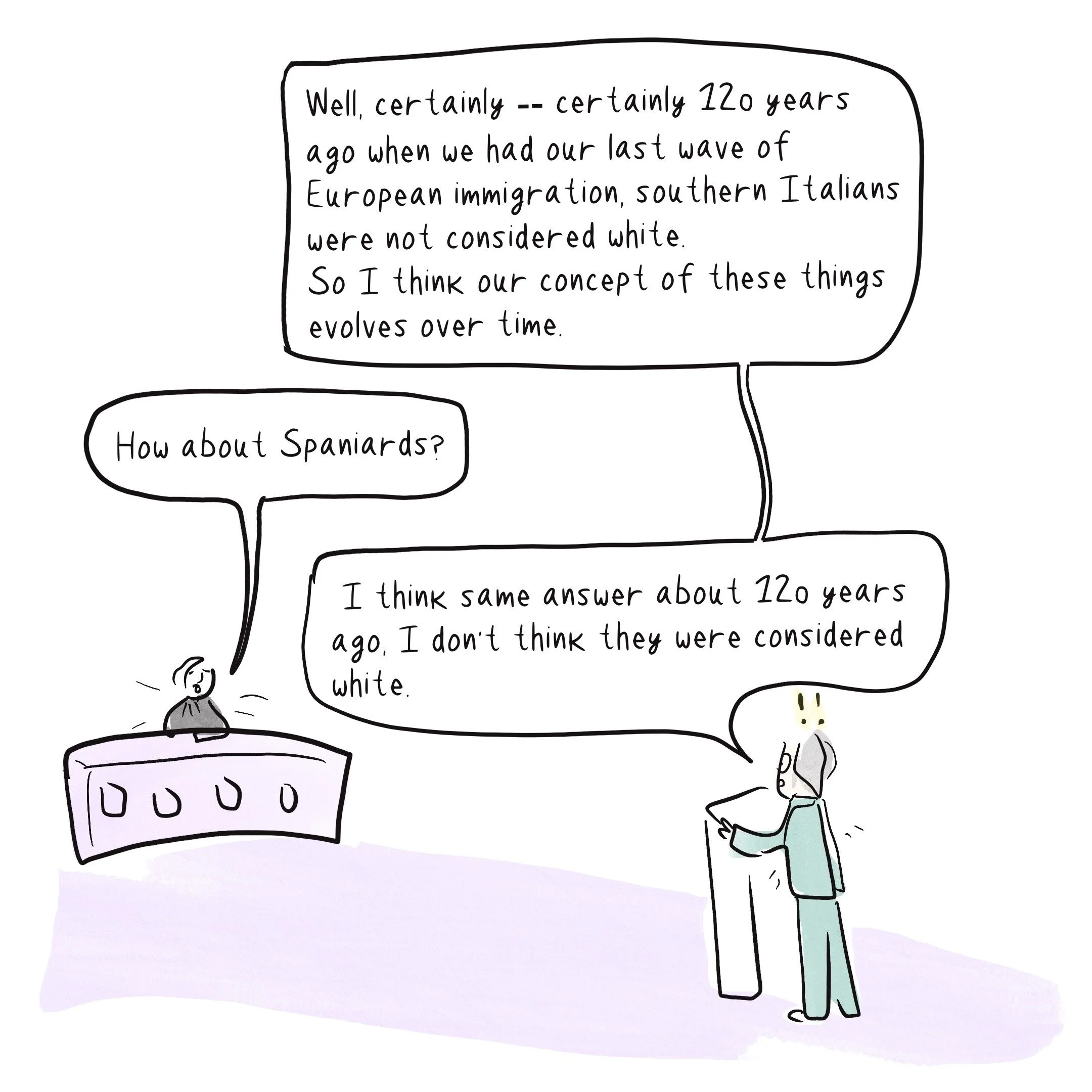
Mr. Pipoly attempts to respond, seeming to understand the gravity of the conversation: “Well -- well, certainly -- certainly, 120 years ago, when we had our last wave of European immigration, southern Italians were not considered white. So I think our concept of these things evolves over time.
Justice Alito is seemingly not done and asks, “How about Spaniards?” to which Mr. Pipoly replies “I think the same answer about 120 years ago, I don’t think they were considered white.”
Justice Alito is ready to make his closing argument at this point, ending the exchange with, “You have a really large -- you have a really broad definition of who's white and who's not white. As I said, I don't like dividing the people of the world into these groups.”
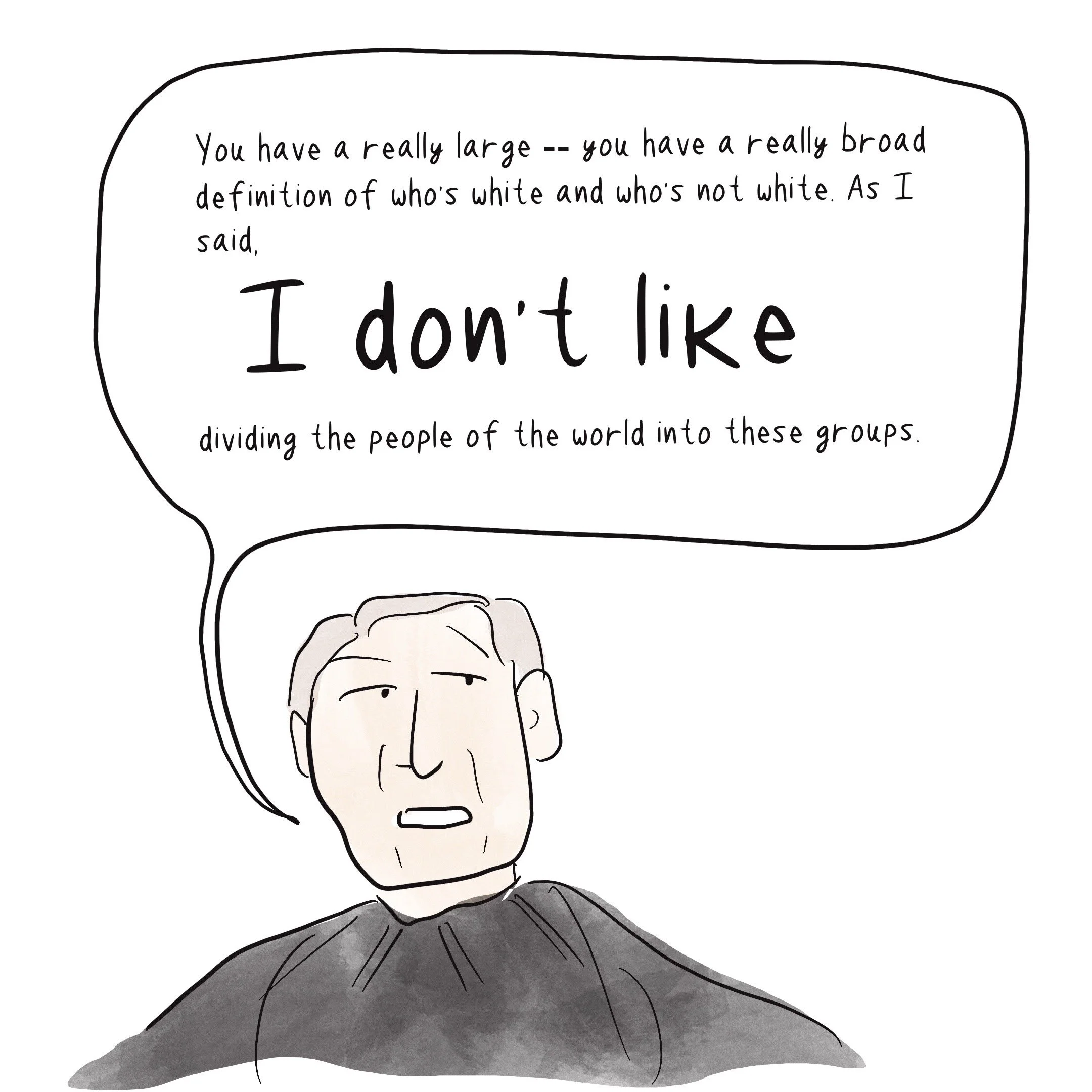
Congress, over the many decades of the Voting Rights Act, sought a multi-racial democracy in America by paying close attention to how states structure the way people vote. On Wednesday, the Supreme Court—in particular, Justice Alito—showed us once and for all that they “don’t like” that.
Behind the Scenes
I write this newsletter because I want to help break down what’s happening with the law right now. I like to think that a visual approach makes the concepts more accessible, so that more of us are interested in engaging. The challenge is, that there is a never ending list of topics I want to explain.
I chose to highlight this exchange—instead of breaking down the legal arguments in either the Voting Rights opinion (Callais) or the TPS case (Mullin v. Doe)—because of how uncomfortable it made me.
The oral arguments also included some discussion about the racial slurs used by the President and former Secretary Noem to refer to Haitians, which the Government brushed off as out of context and not relating to race. Only the Democratic-appointee justices seemed to care about this angle of the case, and the rest of the justices asked very few questions. Race and racism was very much part of the arguments of the day, yet cloaked in arguments that it wasn’t there. I suppose this is nothing new, but it felt glaring to me, and I wanted to point it out.