
The $1.776 billion dollar slush fund is back in the news. No matter what they say, Blanche and his team will not kill the fund in a way that commits them legally, but their political moves give the impression of using the legal system.
The 1776 Fund, in Documents
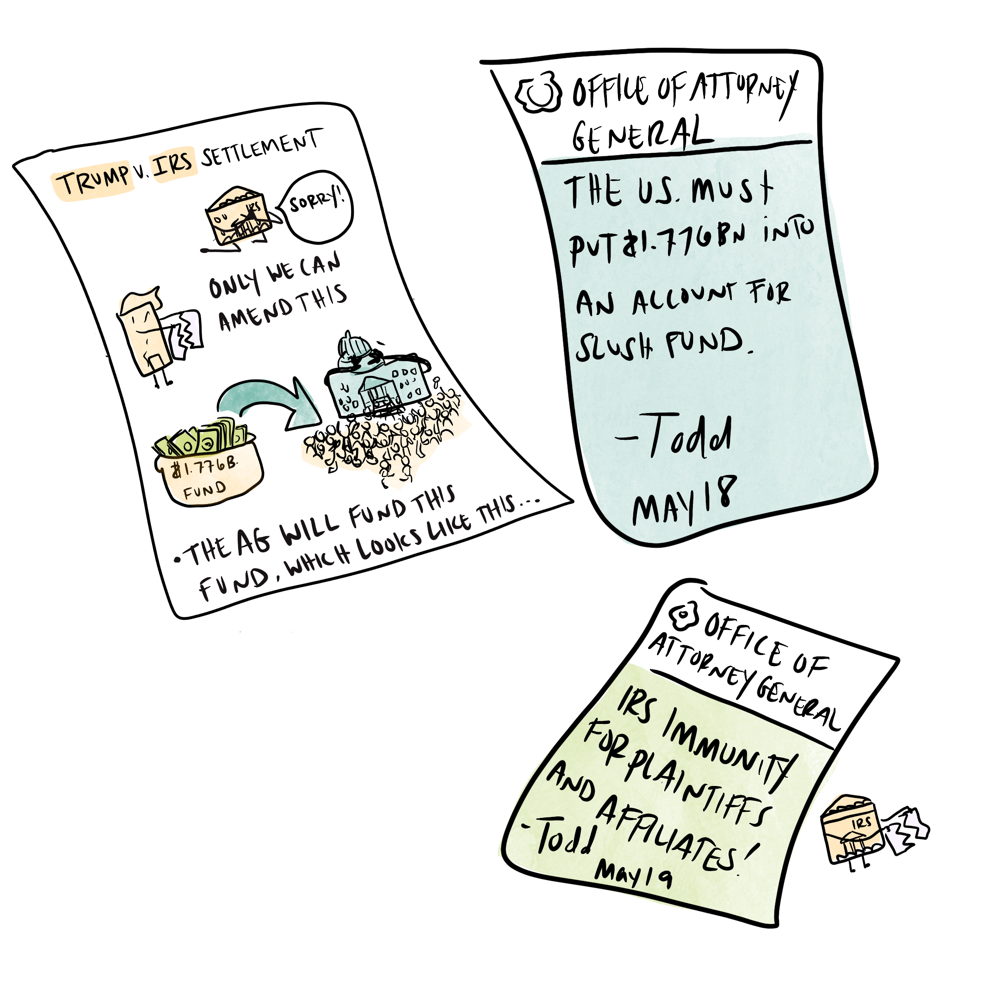
In May, Trump the individual and Trump’s IRS “settled” a lawsuit to establish a pot of $1.776 billion dollars to be doled out at their discretion to anyone they considered a victim of the government.
They did this by issuing three new documents, which appeared on the Justice Department’s website on May 18 and 19, 2026.
The actual “settlement” document signed by the two “parties.” It introduces the $1.776 billion dollar slush fund and how it will work. It asks the Attorney General to “establish funding” for the pot of money, and only allows the parties to the agreement to modify it.
An “order” signed by acting Attorney General Todd Blanche outlining how to get money into the pot (“establishing funding”).
Another document signed by Todd Blanche, the following day, like an afterthought, giving broad IRS immunity to Trump the individual and any affiliates.
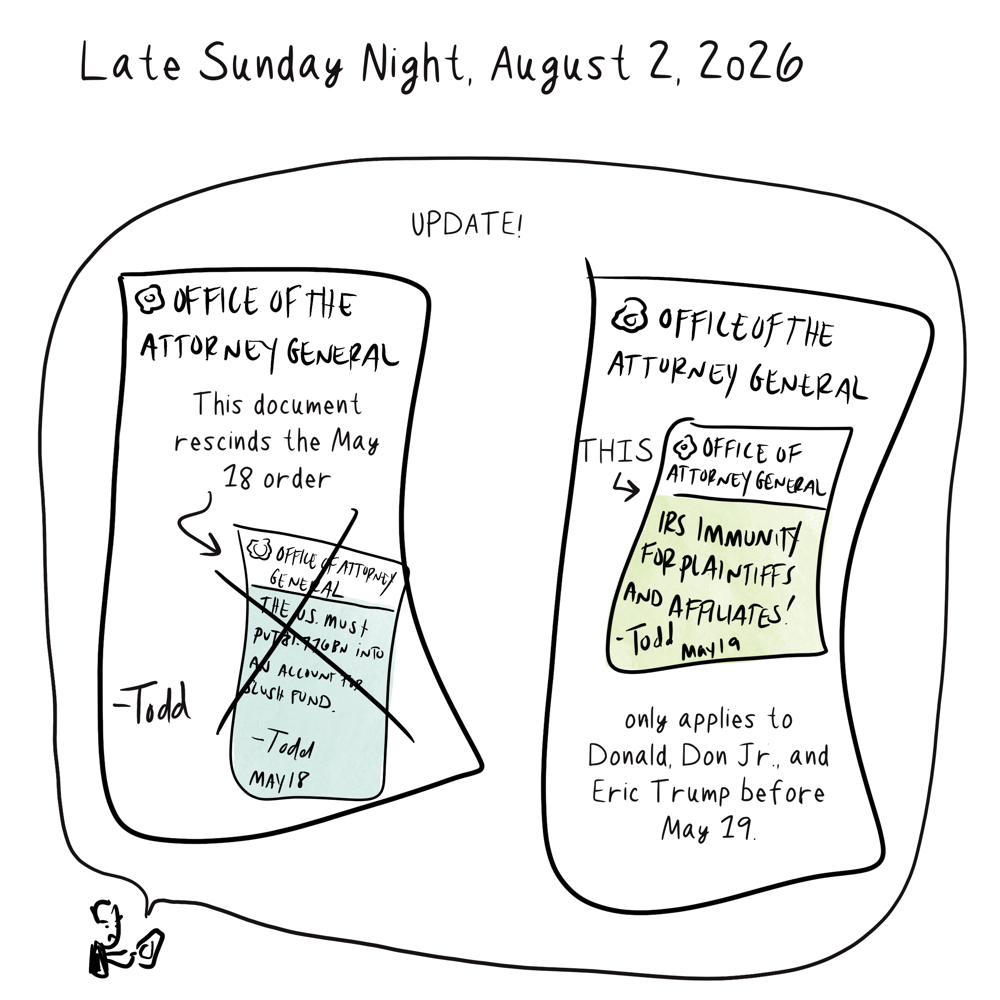
Last Sunday night, Attorney General nominee Todd Blanche—in a bid that won two Republican votes to move along his confirmation—shared two screenshots on X of another document that is now on the Department of Justice website.
The document seems meant to mollify the senators who were refusing to vote for him. It includes two parts:
An “order,” signed by Acting Attorney General Todd Blanche that purports to rescind the document he signed on May 18 detailing how money needed to get into the pot.
A second page that reads like a policy document, is not signed, and says that, actually, the IRS immunity only applies to Donald, Don, Jr., Eric Trump, and the Trump Organization.
Whether these documents actually do the thing they say they do is the question. What is the authority for them? What is not said? And what would be binding Blanche to the words in these documents?
To do things using the law, there has to be a legal structure to do the thing. When someone “wins on a technicality,” it’s because the structure to do the thing wasn’t followed or the thing doesn’t fit into the structure in the correct way. With the exception of recent Supreme Court opinions, the law is not just pulled out of a hat.
Politics is the venue for making things up, and that’s the tension that we’ve seen with Blanche and the 1776 fund all summer.
No One Will Declare the Fund is Forever Dead Under Penalty of Perjury
In one of the many lawsuits that were started to challenge the fund, a federal judge ordered Blanche and others to officially declare that the fund was dead and would never be resurrected in any form.
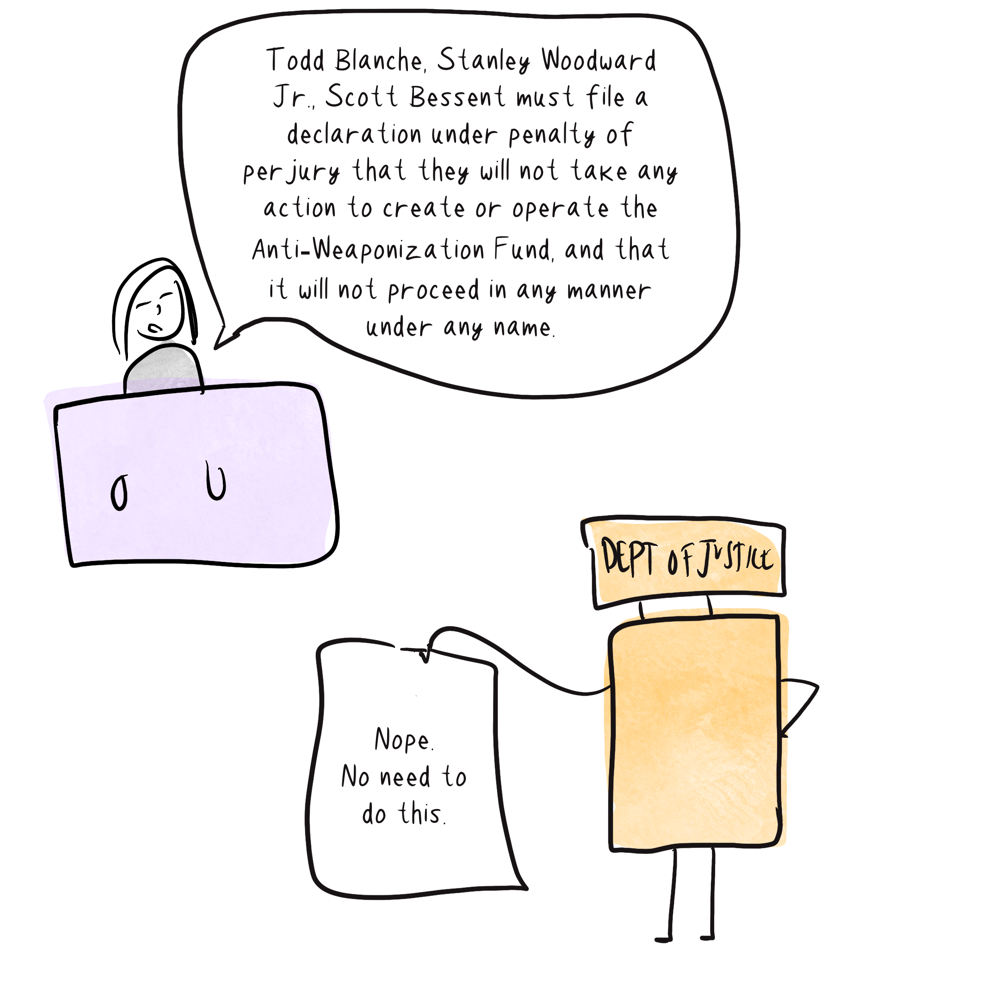
In this lawsuit and in other venues, they refuse to do this. Assurances have been made, but none under penalty of perjury.
Trump Lawyers Sanctioned For Using Court to Give Impression of Legitimacy
Second, Trump’s lawyers in the Trump v. IRS case have been sanctioned for using the federal court system to engineer this “settlement.” Here’s what has happened since May 18th.
On the day the “settlement” was announced, Judge Williams of the Southern District of Florida agreed to close the case because the parties said they had settled outside of court, and it seemed there was nothing the court could do about it.
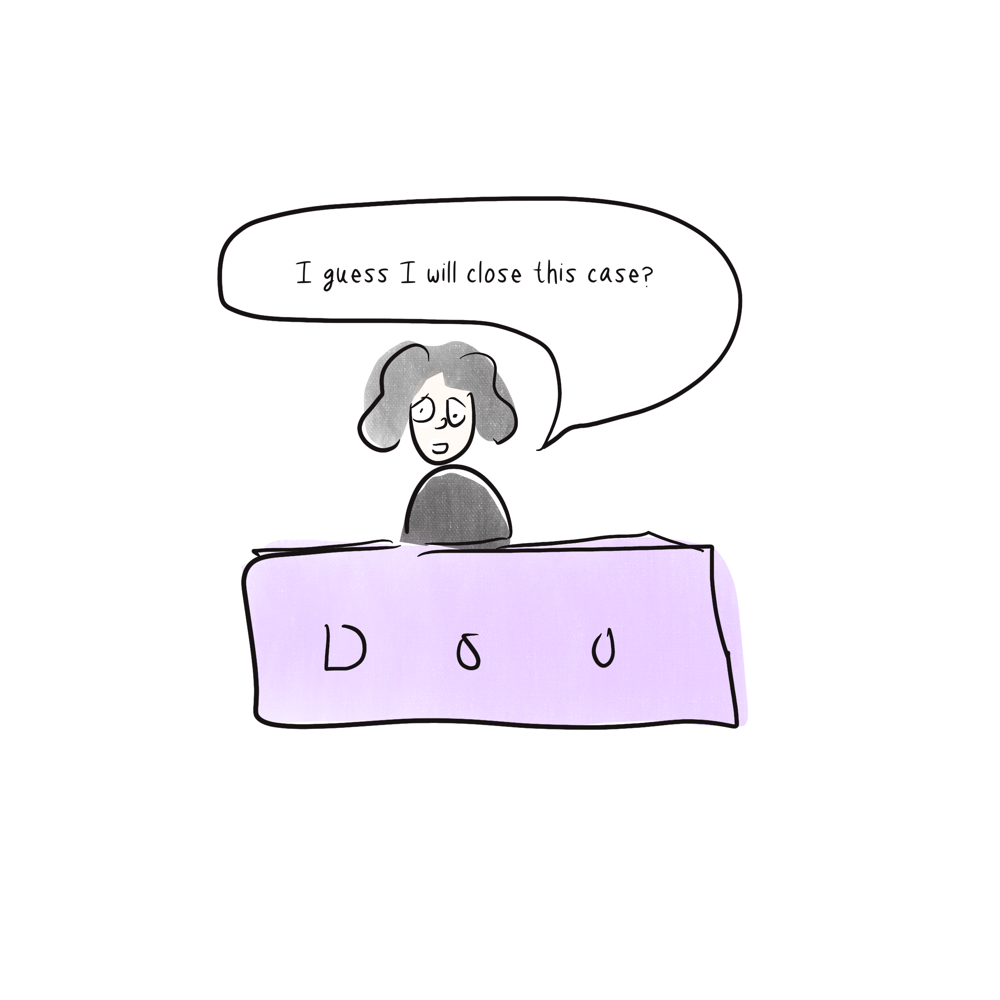
Next, a group of retired federal judges formally urged Judge Williams to reopen the case so she could look into whether the parties had messed with the court in bringing and “settling” this case.
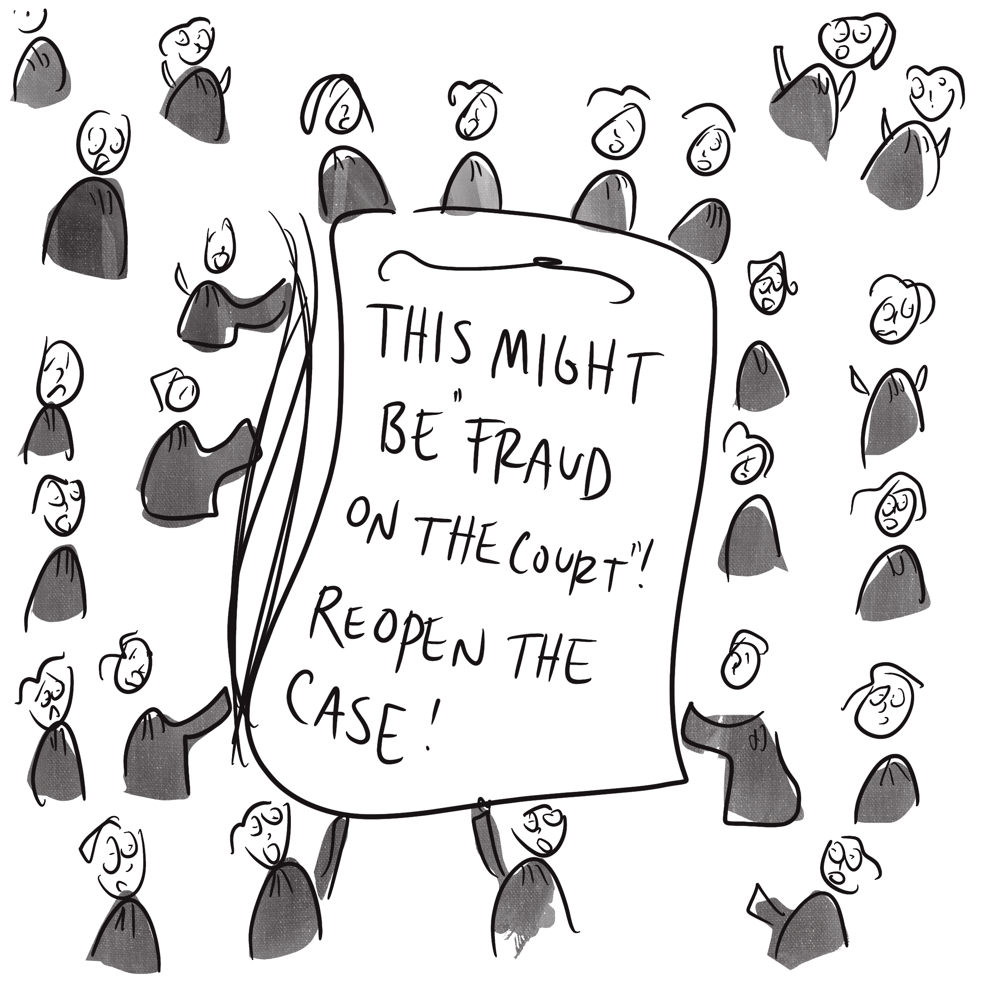
She heeded their warnings and quickly required Trump the individual and Trump’s IRS to show how they are adverse to each other.
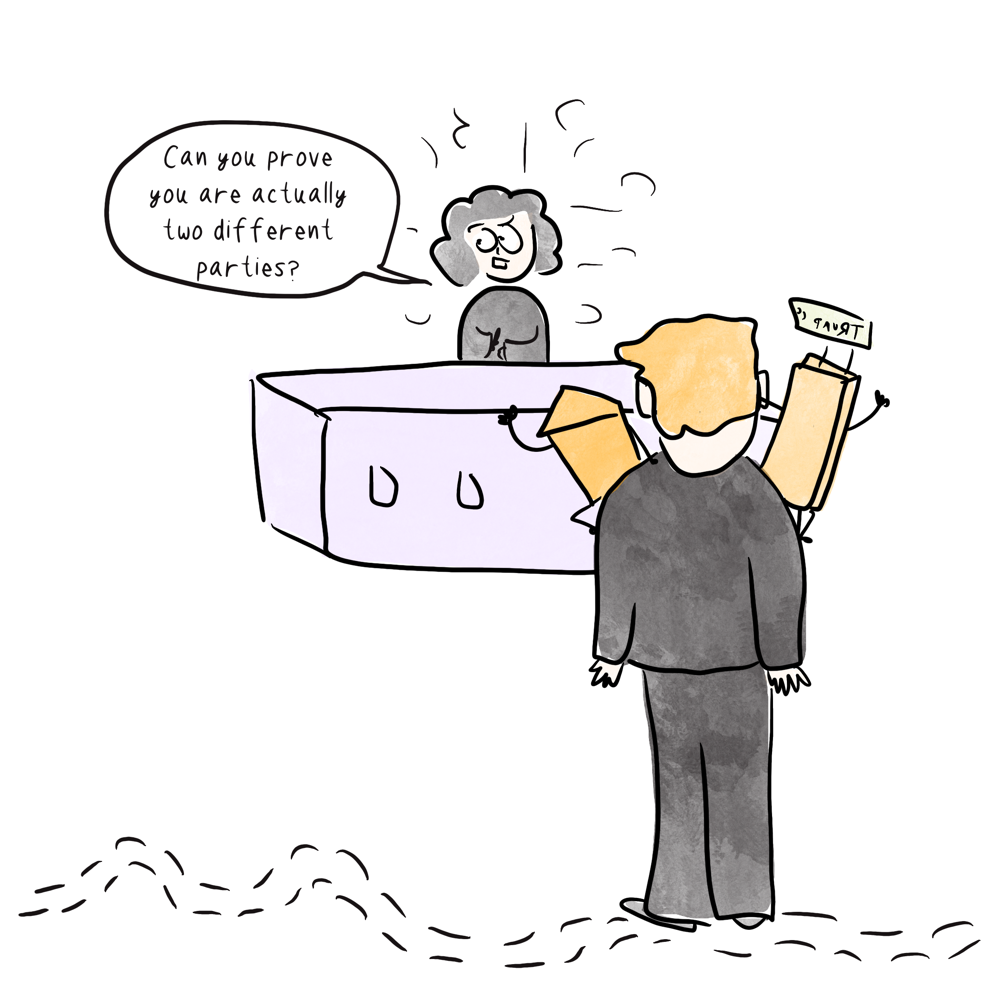
One of the most basic requirements of a lawsuit is that there are two independent sides, with different goals and no power over each other. If they’re all the same side, they can’t be in court.
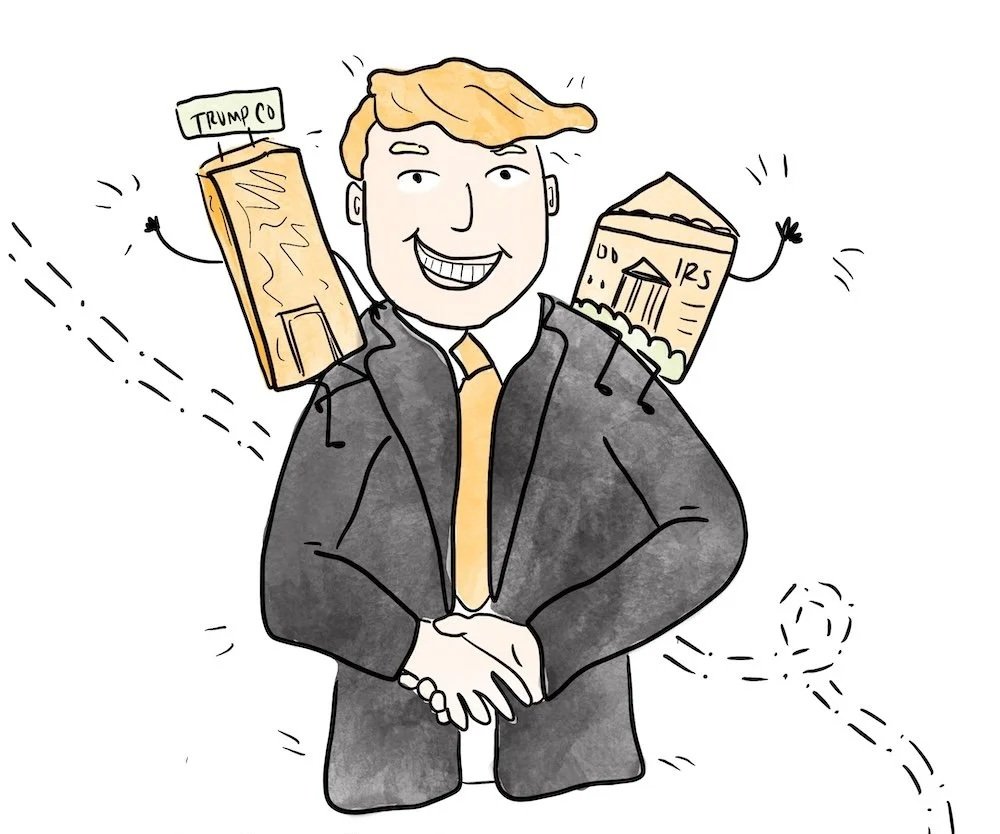
Why would you need a judge to solve your “disagreement” with yourself?
Judge Williams answers this question, actually. Because it might make something look more legitimate than it actually is.
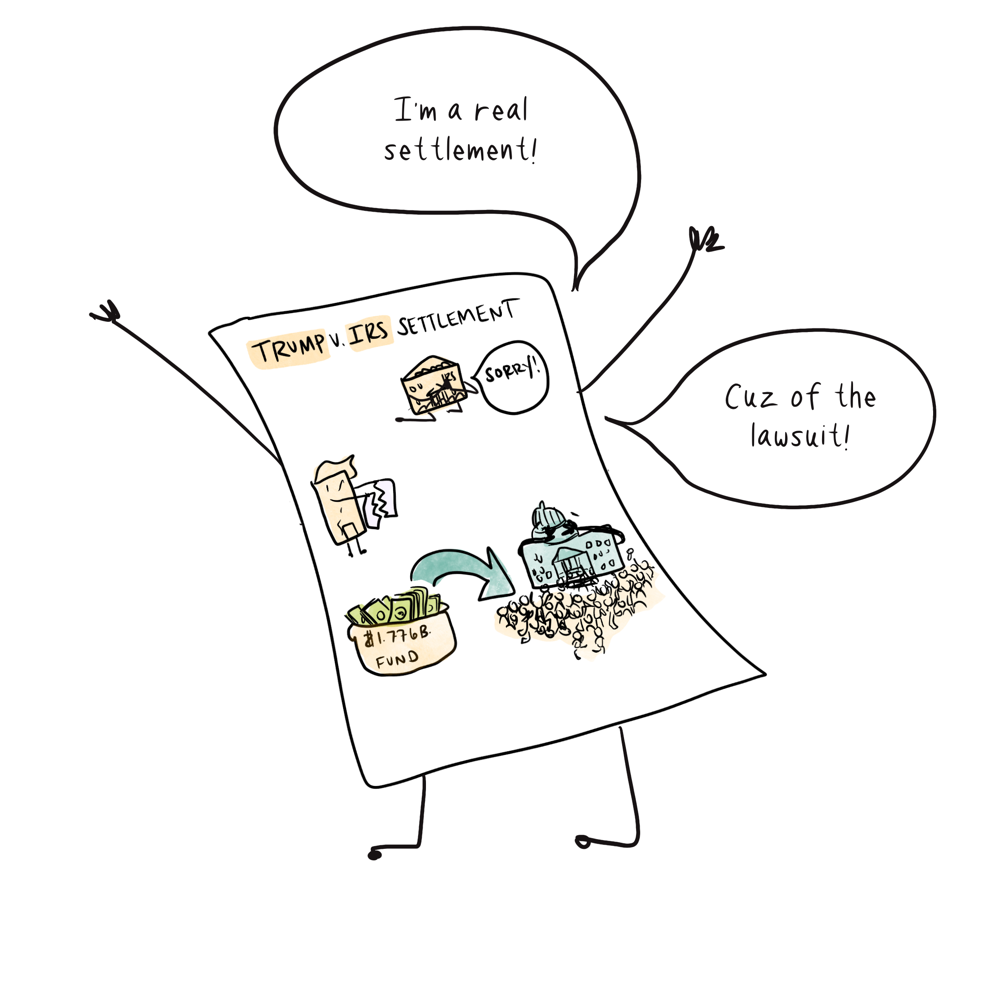
On July 13, Judge Williams concluded what was obvious all along: Trump the individual and the Trump’s IRS are on the same side.3
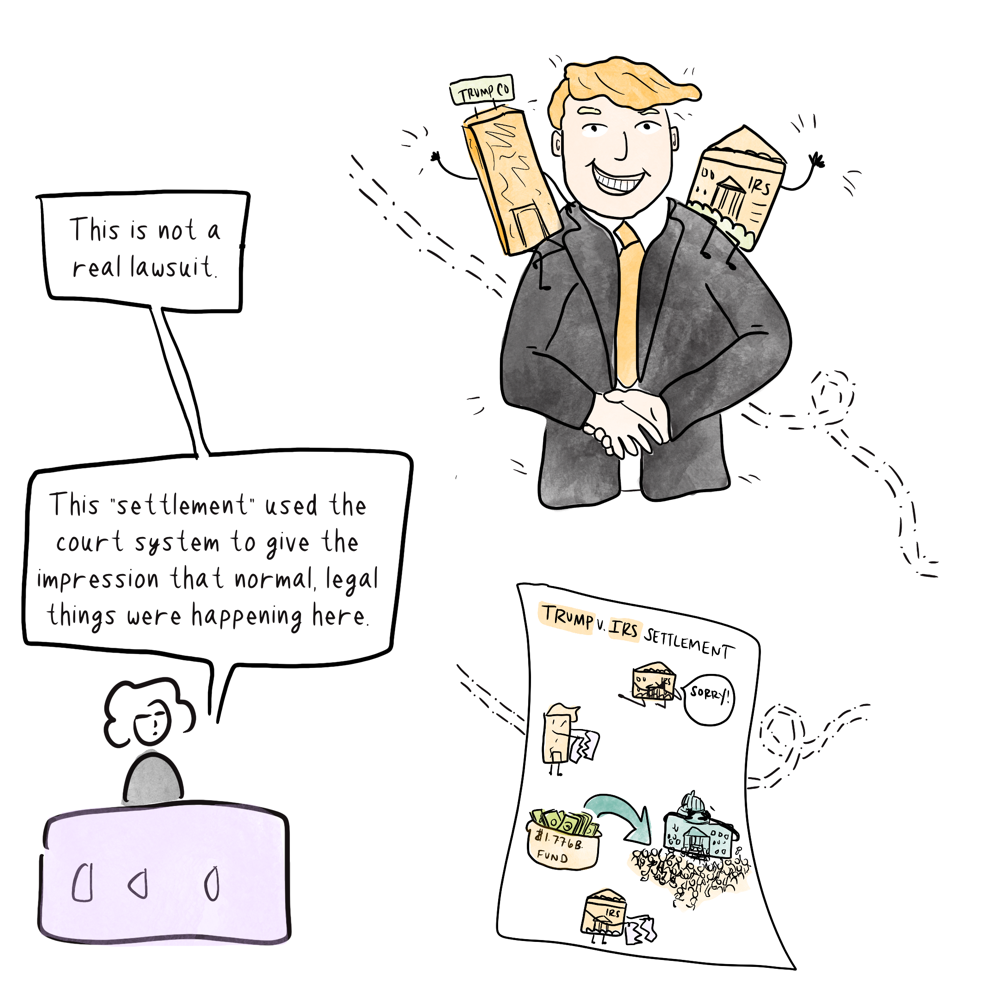
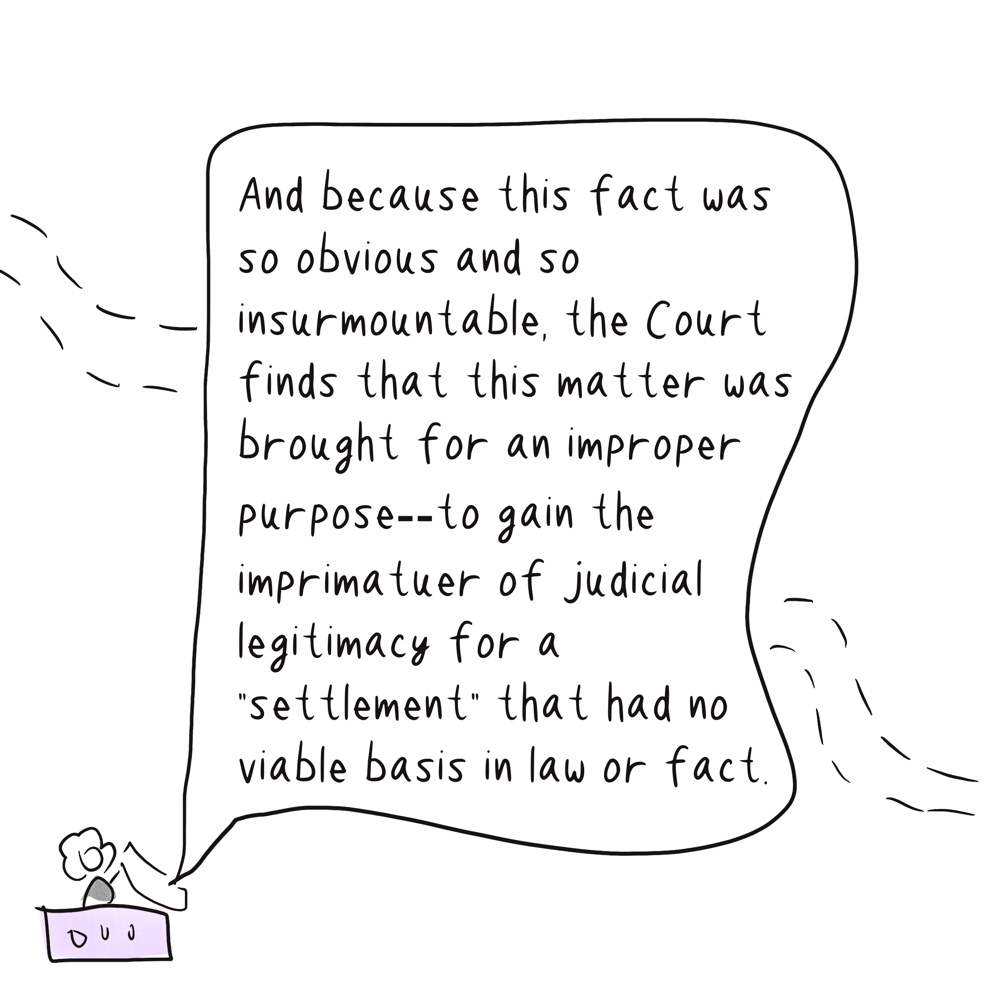
Judge Williams issued sanctions for some of the attorneys on the case and barred all the parties from referencing the “settlement agreement” as evidence of an actual settlement in any official proceeding going forward.4 Messing with the court to make something look legitimate has consequences, and those consequences may be why the 1776 fund is only being “rescinded” with documents posted to X.
It seems that the acting5 Attorney General (the nation’s chief legal officer, in case we’ve forgotten) is doing what he can to give the impression that he’s getting rid of the 1776 fund while legally keeping the door open to revive it later. And maybe he truly intends to get rid of it, but his words and where he is placing them seem very carefully chosen and located.
For legal developments to be meaningful, the must be grounded in something. If they are not, then they are just politics, which, of course, is what this is.
P.S. I wrote about this fund when it first came out. You can read it here if you want:
Can the President Settle a Lawsuit With Himself?
Notes:
(Whenever I read the words “plaintiff” or “defendant” I try to replace that work with an image in my head of the relevant party. The side that started it and the side having to say “no way!’ But in this case, I can’t do that, because they are the same.)
”And because this fact was so obvious and so insurmountable, the Court finds that this matter was brought for an improper purpose—to gain the imprimatur of judicial legitimacy for a “settlement” that had no viable basis in law or fact.” (Page 38 of July 13 Order, which I highlighted for you here)
“The Parties are prohibited from referring to the purported “settlement agreement,” or using, offering, admitting, or citing any of its provisions in any judicial, administrative, regulatory, arbitration, or any other official proceeding as evidence of a “settlement” reached in this matter.” (Page 47 of July 13 Order)
As of when I am writing this, it doesn’t look like the vote has happened, though it seems it will?
I’m a lawyer (Michigan Law alum) and artist, and I
simplify legal and technology concepts for lawyers, technologists, and academics with my human-made infographics.
run workshops for professionals that help build their creative brain muscles in a world of AI
provide analysis on the Supreme Court and rule of law using words and illustrations.
If you’d like me to run a workshop for your organization, translate your big idea, or break down the latest legal issues, I'd love to connect!