
If you’ve almost dozed off in a courtroom or mid-way through a legal document, you’re not alone. Increasingly, however, federal district court judges’ writings are less in the weeds. They’re addressing the basics: the idea that the rule of law matters and that judicial orders must be followed.
Minnesota’s federal district courts are currently inundated with habeas petitions from individuals who are asking the court to review whether their detention by ICE is lawful. Many of these petitions have been granted, with the court ordering the individual’s release. Repeatedly, the Government has ignored entirely1 or only somewhat followed these court orders, requiring the court to be more specific with release orders and seek the most effective way for the Government to comply.
I keep wondering how many judges in the last year have had to say or write words they never thought would be necessary. Based on just the few examples below, I suspect it’s a lot.
I bet they never thought they’d have to order the Government to not release someone from detention in the bitter cold without a jacket or a way to get home.
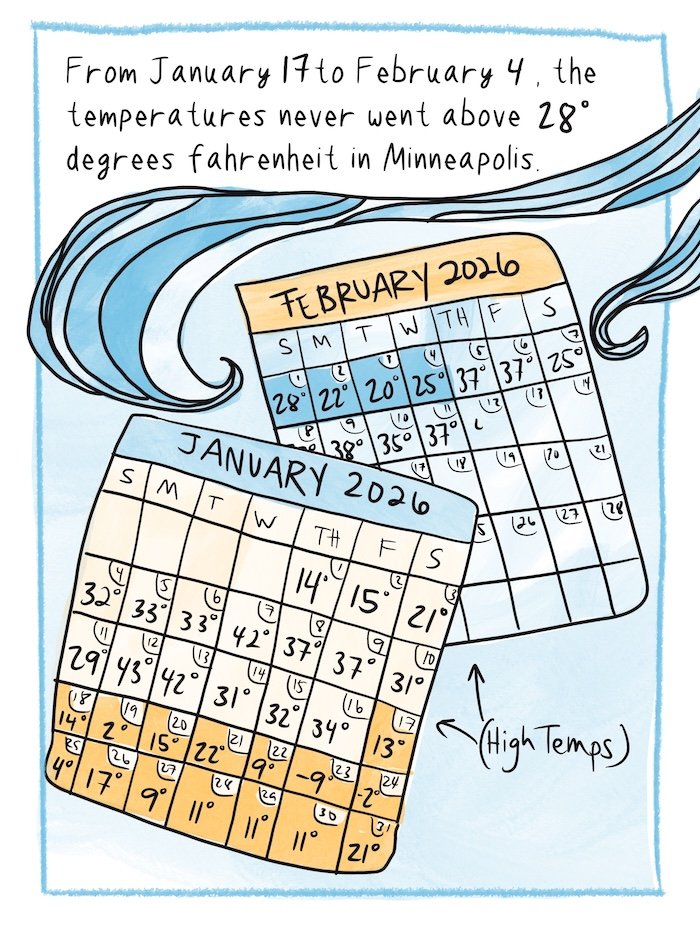
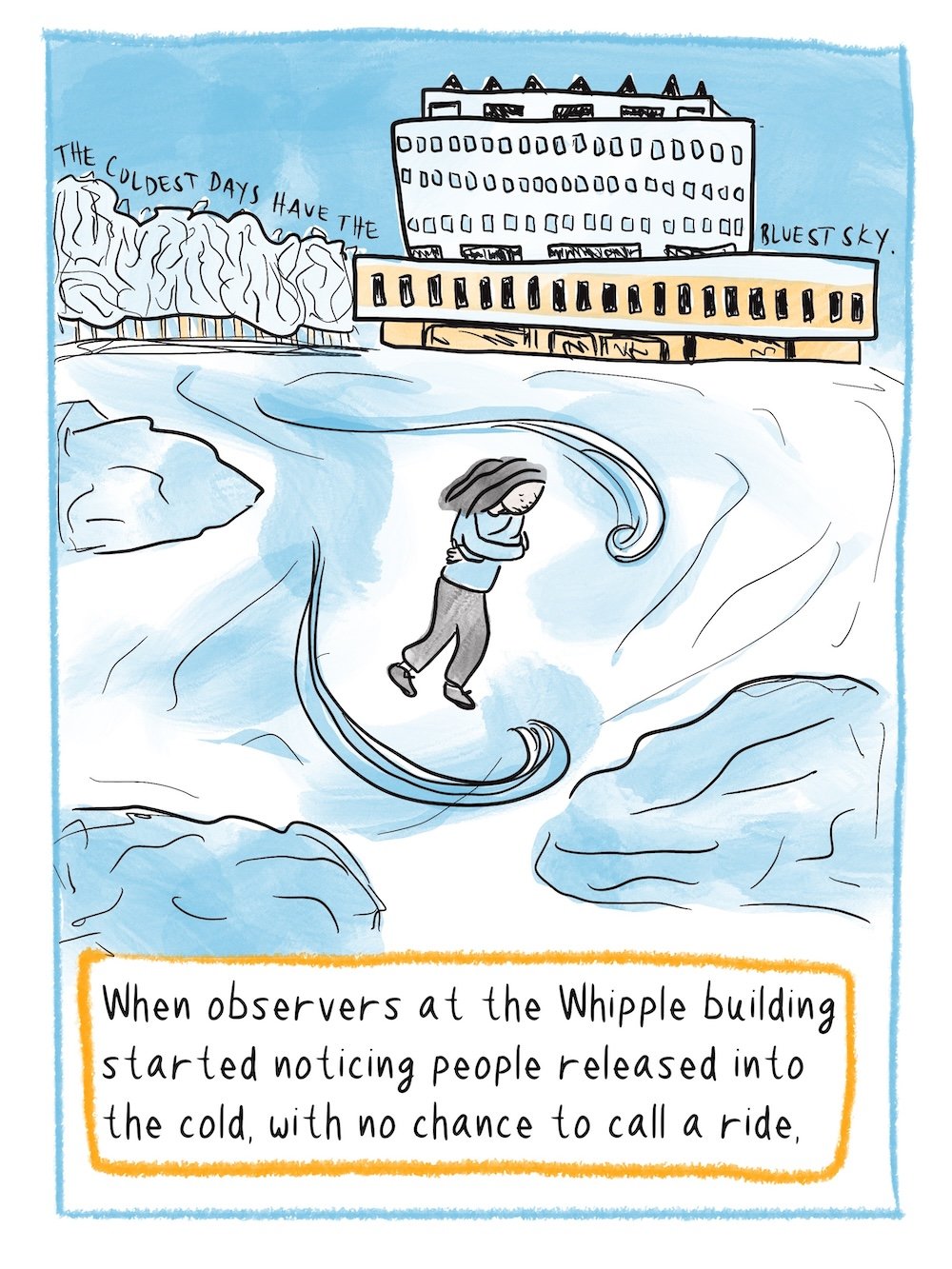
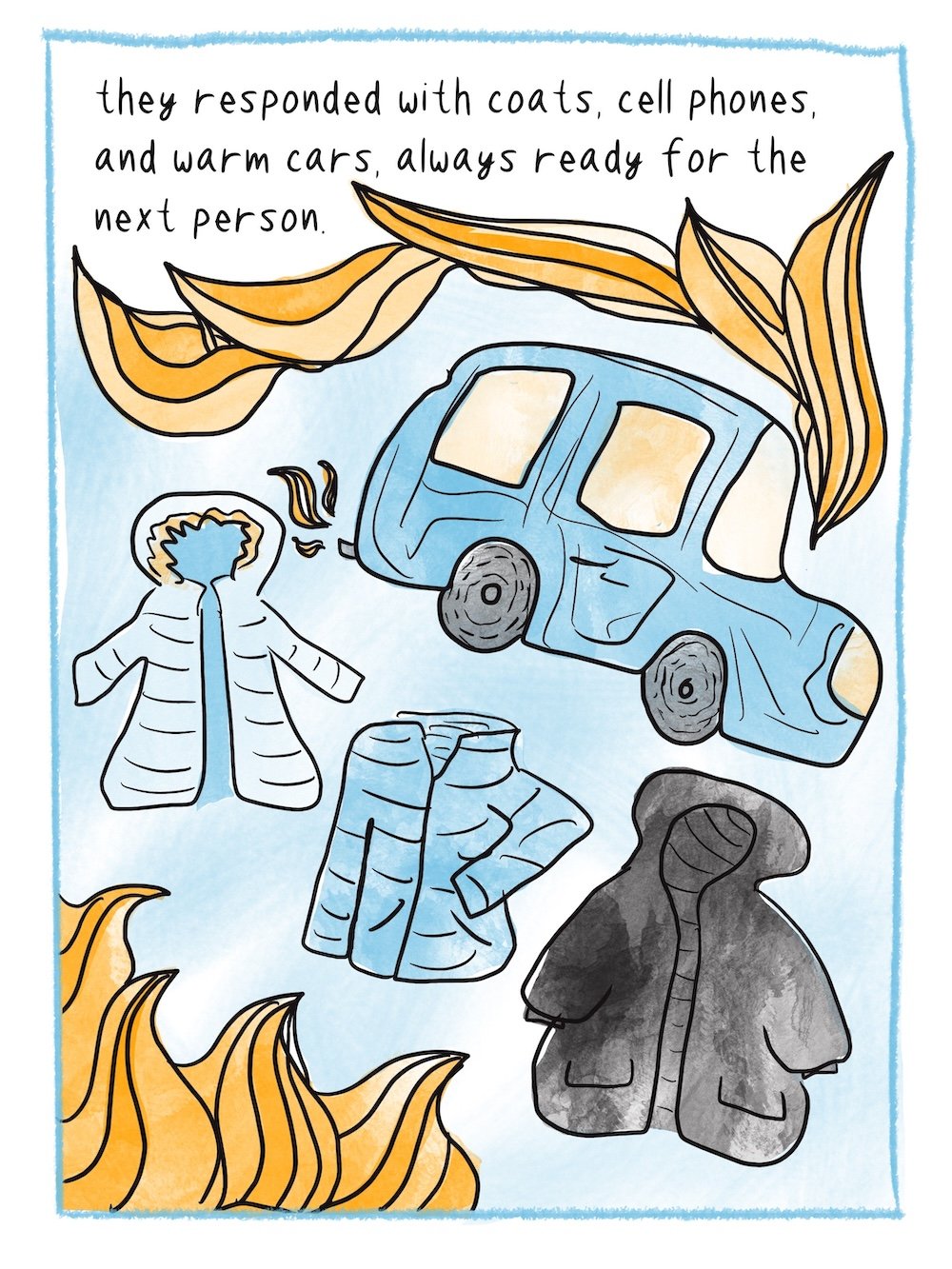
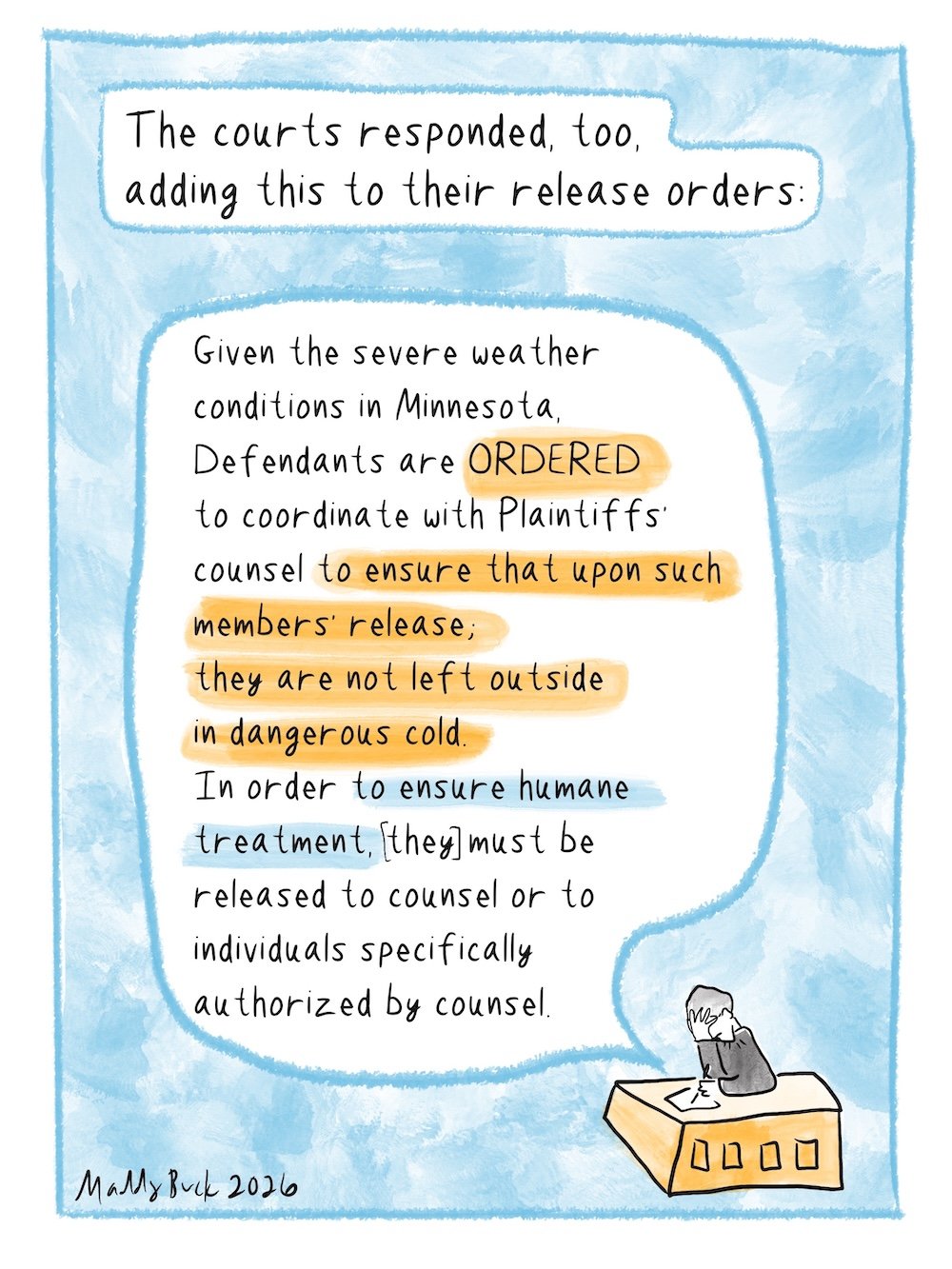
From January 17 to February 4, the temperatures never went above 28 degrees in Minneapolis. When observers at the Whipple building started noticing people released into the cold, with no chance to call a ride, they responded with coats, cell phones, and warm cars, always ready for the next person. The courts responded, too, adding this to their release orders: “Given the severe weather conditions in MN, Defendants are ORDERED to coordinate with Plaintiffs’ counsel to ensure that upon such members’ release; they are not left outside in dangerous cold. In order to ensure humane treatment, [they] must be released to counsel or to individuals specifically authorized by counsel.”
I bet they never thought they’d have to hold a Government attorney in contempt for failing to comply with a judicial order.
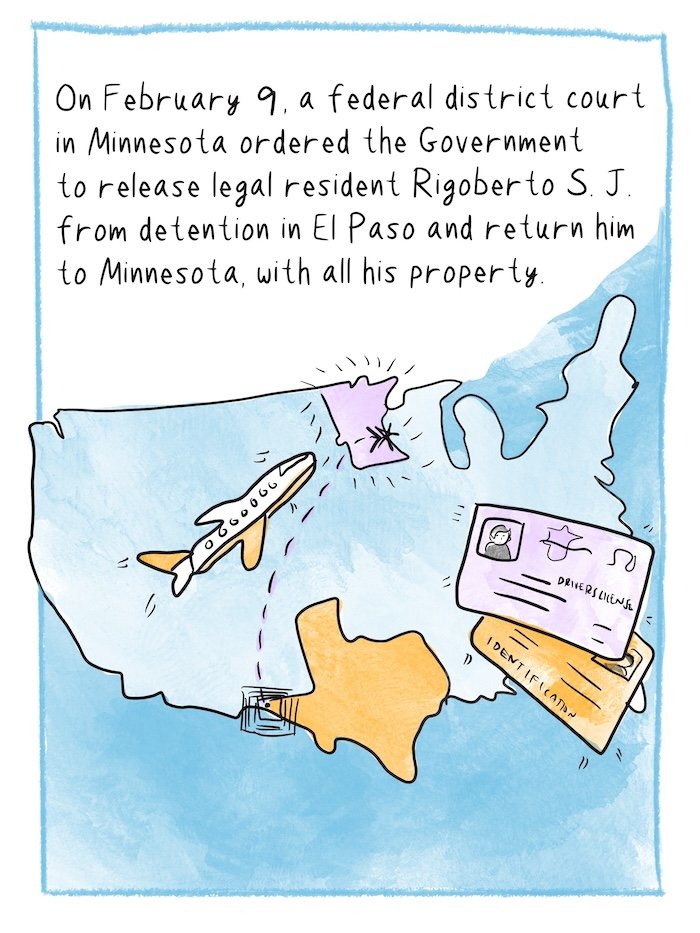
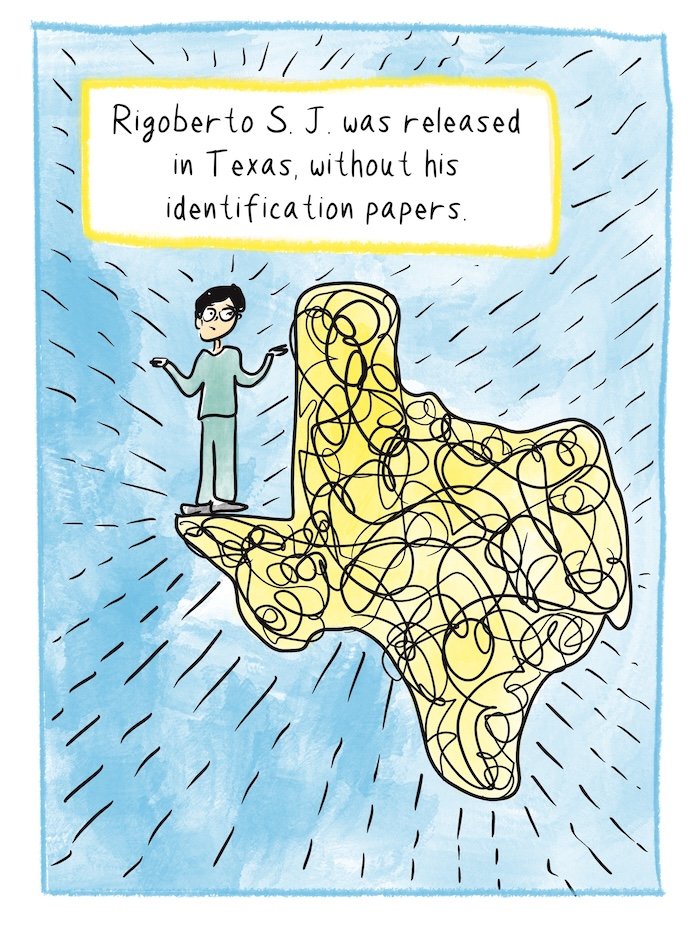
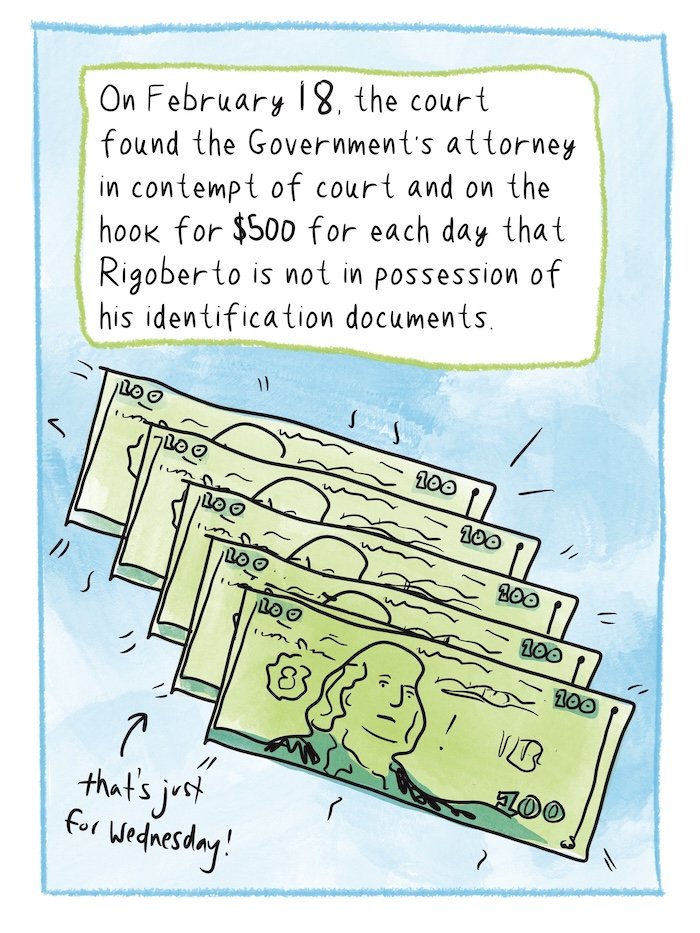
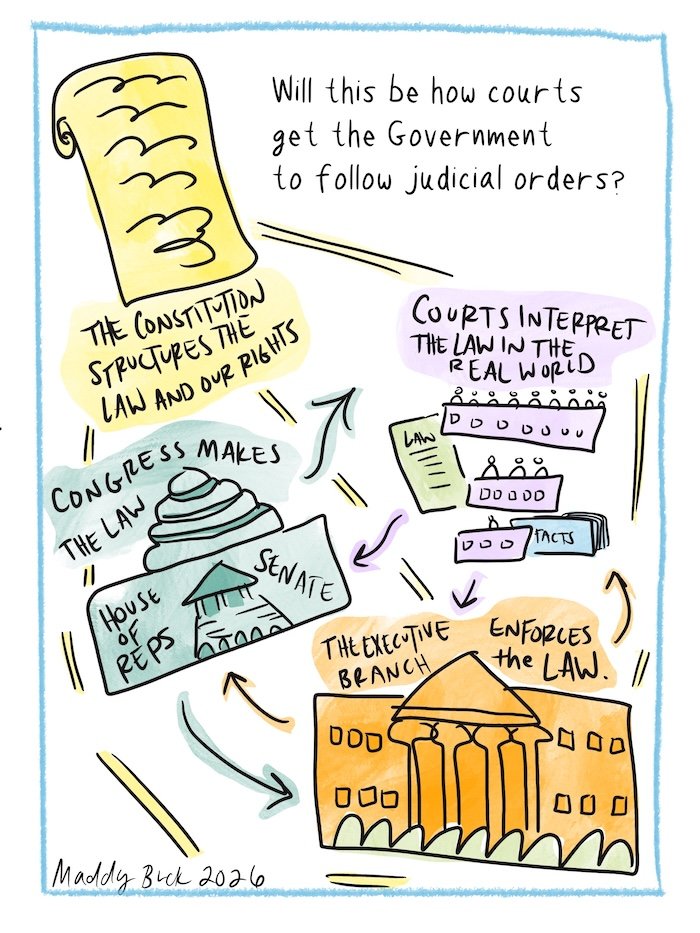
On February 9, a federal district court in Minnesota ordered the Government to release legal resident Rigoberto S.J. from detention in El Paso and return him to Minnesota, with all his property. Rigoberto S.J. was released in Texas, without his identification papers. On February 18, the court found the Government’s attorney in contempt of court and on the hook for $500 for each day that Rigoberto is not in possession of his identification papers. Will this be how courts get the Government to follow judicial orders?
I bet they never thought they’d have to remind the Government that a court order is not optional.
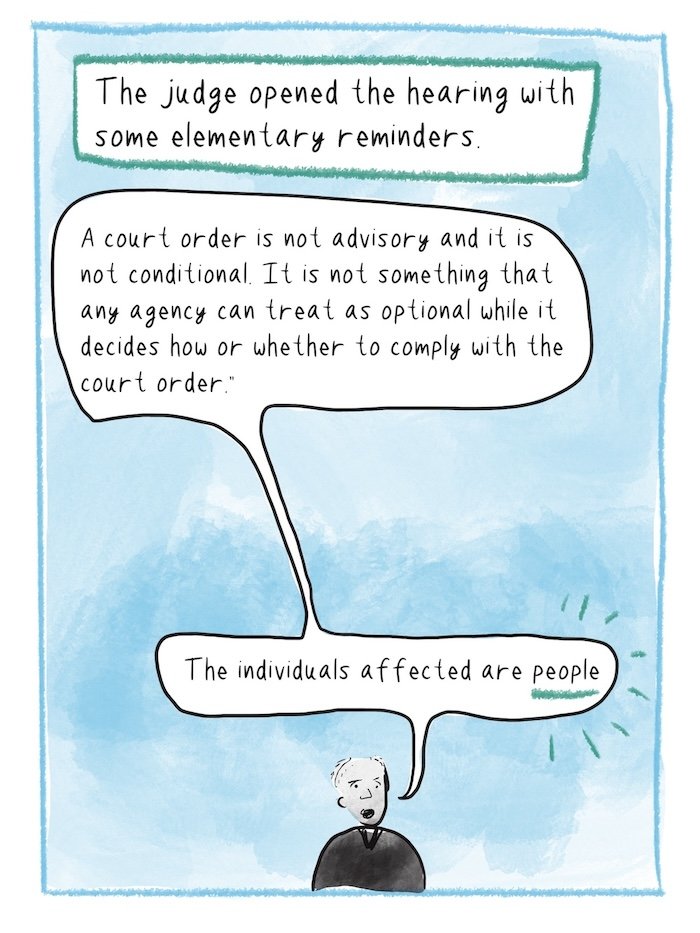
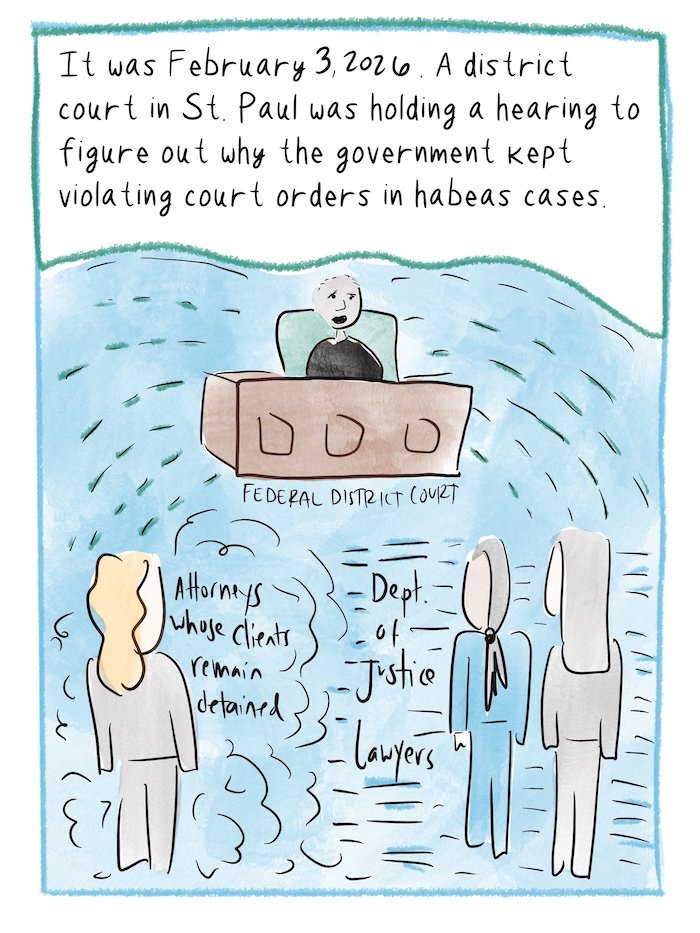
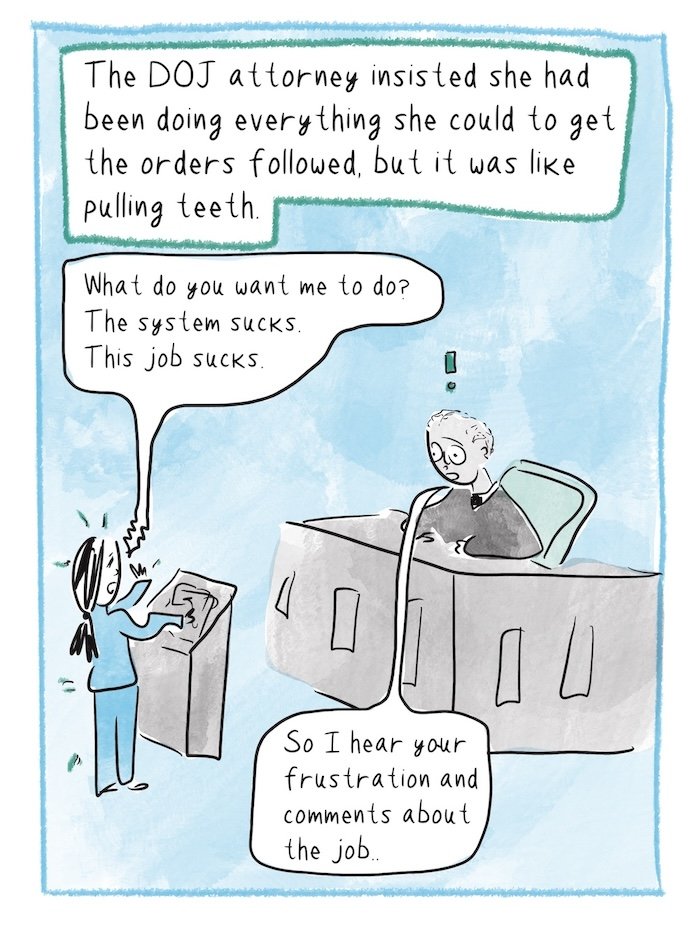
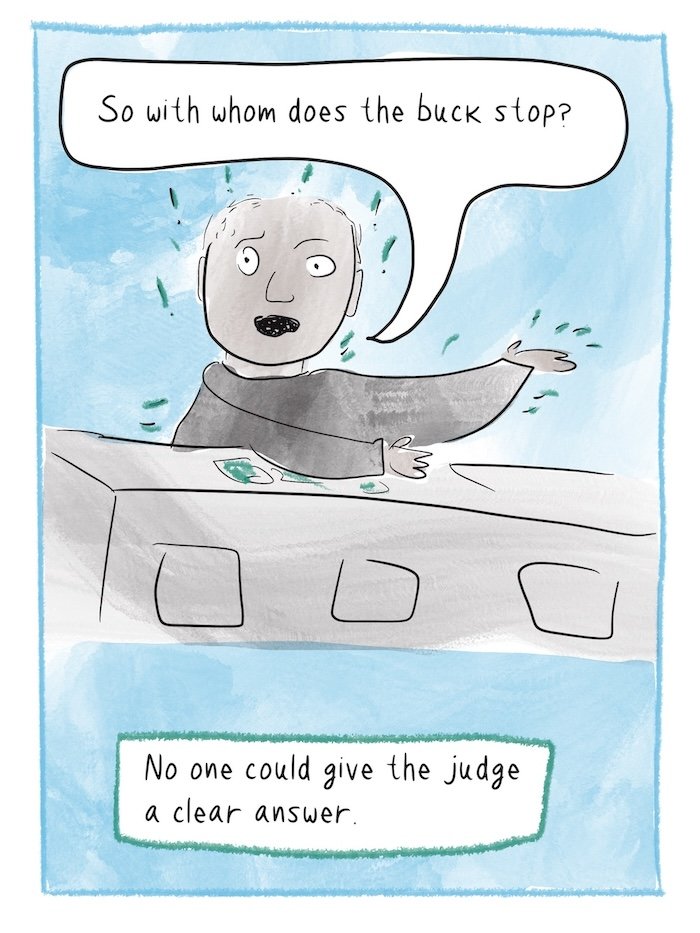
The judge opened the hearing with some elementary reminders. “A court order is not advisory and it is not conditional. It is not something that any agency can treat as optional while it decides how or whether to comply with the court order….The individuals affected are people.” It was February 3, 2026. A district court i nSt. Paul was holding a hearing to figure out why teh government kept violating court orders in habeas cases. The DOJ attorney insisted she had been doign everything shecould to get the orders followed, but it was like pulling teeth. “What do you want me to do?” she asked. “The system sucks. This job sucks.'“ The judge replied, “So I hear your frustration and comments about the job…” and later asked, “So with whom does the buck stop?” No one could give the judge a clear answer.
The rule of law is the foundation for the legal system. In these cases, the executive branch of the Government is ignoring the rule of law, and the judicial branch is pulling its hair out trying to maintain it. This isn’t just some abstract legal concept. As Judge Blackwell said in that hearing earlier this month, “[t]he individuals affected are people.” He’s right. But it’s not just the people detained by ICE who are affected; it’s all Americans who depend on a reliable system of laws.
What will the judges have to say next?
Thanks for reading!
Notes
I wrote a few weeks ago about how Judge Schiltz, Chief US District Judge, District of Minnesota, compiled a list of nearly 100 violations of Minnesota District Court orders that the Government had violated in the first 28 days of January, 2026. You can read that order here.
The third comic in this post discusses a hearing held in St. Paul in early February to discuss the Government’s noncompliance in habeas cases. In that hearing, Judge Blackwell described having to issue multiple orders just to find out if someone had been released. He also points out that the orders have become increasingly detailed as they learn the ways that they aren’t fully followed (released in the wrong location, in bitter cold, with no resources, without identification, etc.)
I’ve seen this language in a number of orders releasing someone who was unlawfully detained by ICE in Minnesota, but in this case I was looking at this.
The docket for this case, Soto Jimenez v. Bondi, is available here.
Transcript from the hearing can be found here, as of 2/19/2026. I recommend reading the whole thing to understand the exasperation of the judge and the DOJ attorneys who are trying to get DHS to comply.
I’m a lawyer (Michigan Law alum) and artist, and I
simplify legal and technology concepts for lawyers, technologists, and academics with my human-made infographics.
run workshops for professionals that help build their creative brain muscles in a world of AI
provide analysis on the Supreme Court and rule of law using words and illustrations.
If you’d like me to run a workshop for your organization, translate your big idea, or break down the latest legal issues, I'd love to connect!