
Did you know that the size of the U.S. Supreme Court has changed over the years? The Constitution doesn’t lay out how many justices there should be on the Supreme Court, so Congress decides the size of the Supreme Court and the federal judiciary. And, since 1789, Congress has changed the size of the Supreme Court seven times (1801, 1802, 1807, 1863, 1866, 1869).
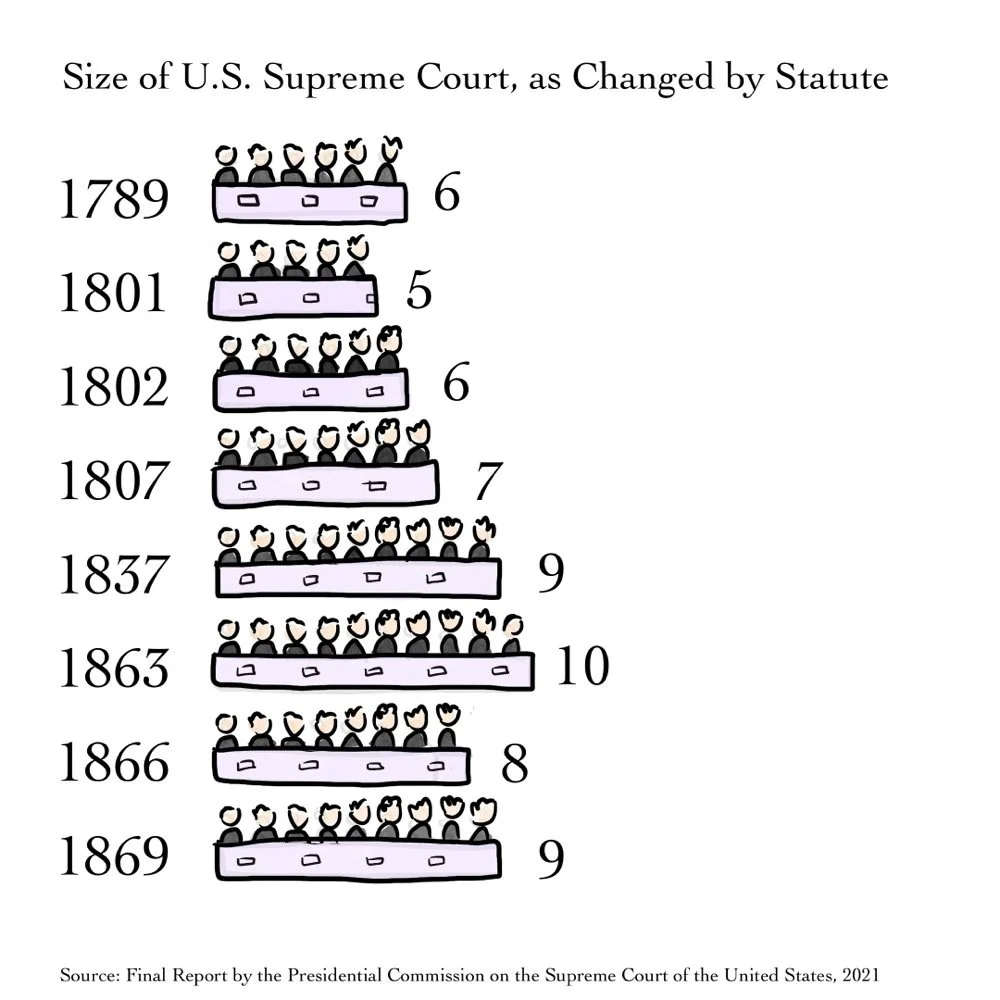
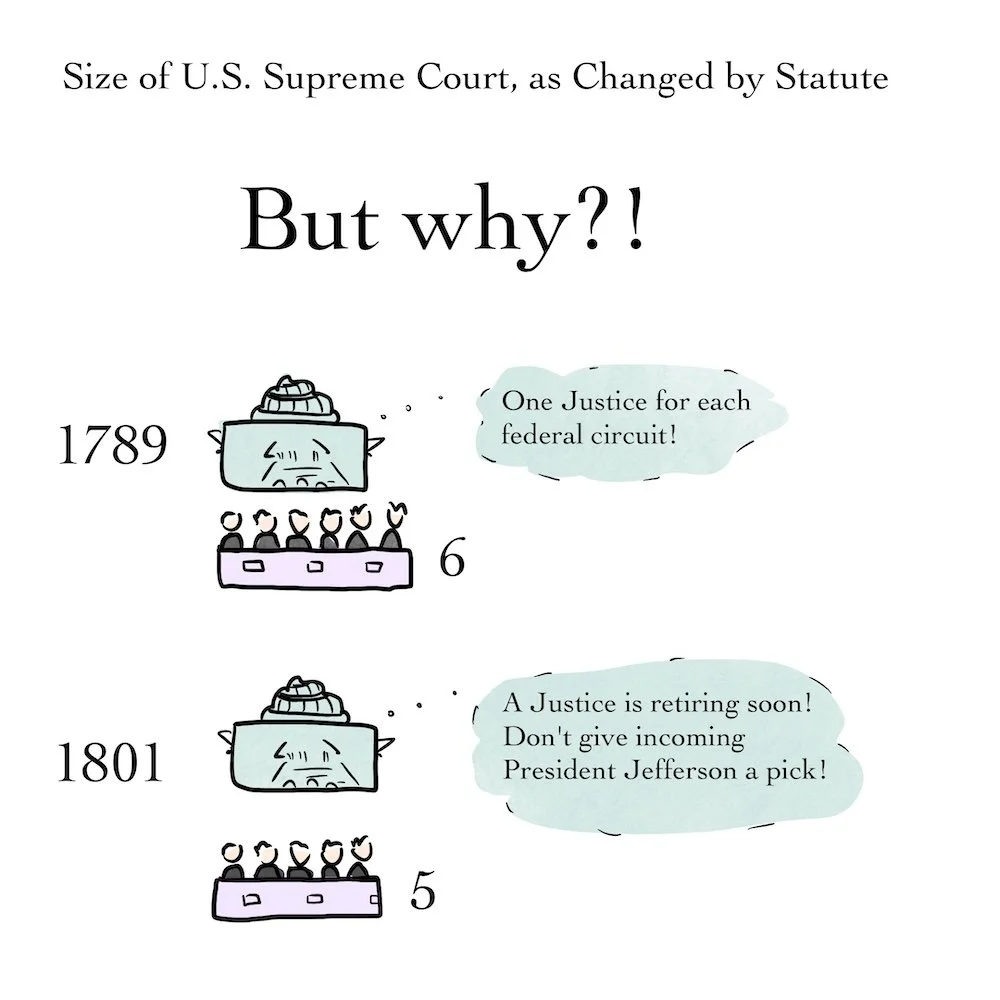
The reasons behind those adjustments seem to be a mix of political and practical. Sometimes, the number of Justices was linked to the number of regional circuits (the broad geographical groupings of lower federal courts), so expanding the number of circuits corresponded with adding a matching number of Justices. (Currently, we have nine Justices and twelve regional circuits, so that principle has gotten out of alignment.) Inevitably, there was a political component to these adjustments.
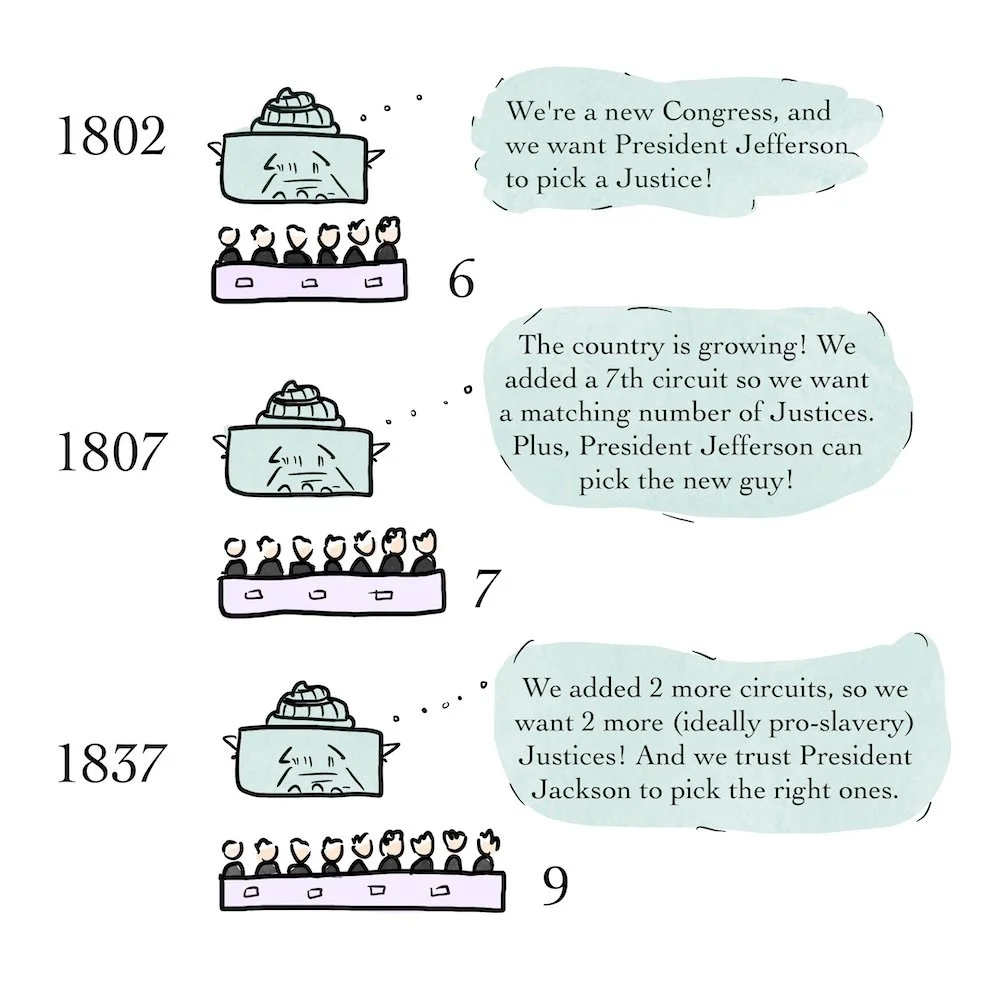
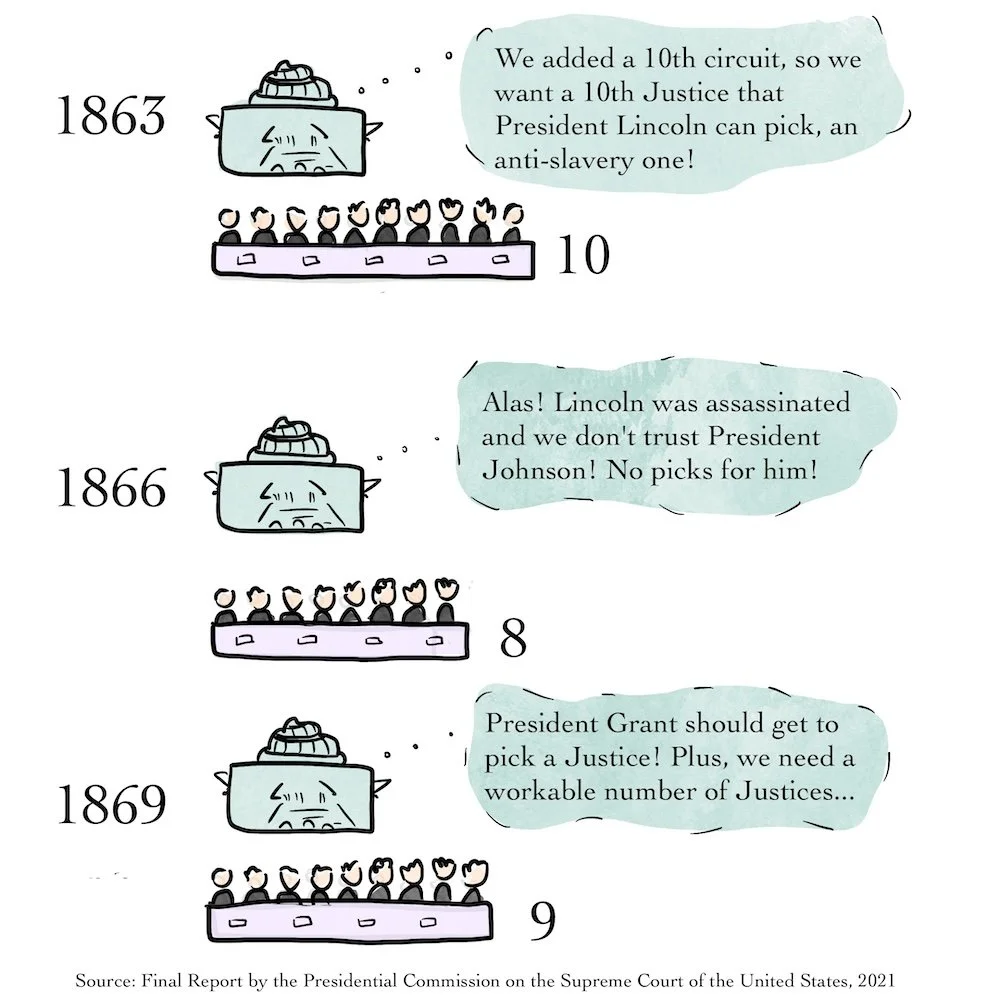
As Professor Leah Litman put it recently, “If you want the people you elect to be able to govern, then you need to reform the Supreme Court. So Supreme Court reform has to be part of the conversation if you want democracy to happen.” Congress has the authority to regulate the Court, and changing its size is one of the things it can clearly do.
Resources
Final Report by the Presidential Commission on the Supreme Court of the United States, 2021. (This is the report created during the Biden presidency, which doesn’t come out with any recommendations but lays out the history and context of the Supreme Court, past reforms, and potential reforms. It’s chock full of information for anyone super curious.)
Strict Scrutiny, “The Blueprint for Better Court Reform” panel with Rep. Jamie Raskin, Jamelle Bouie, and Janai Nelson. (This is a really interesting conversation, though with some snark.)
Strict Scrutiny Conversation on Expanding the Court. (This is a less snarky conversation about how Supreme Court expansion should be part of broader reforms, such as expanding the entire judiciary to keep up with demands on the judiciary’s resources, etc. If you feel like more of an institutionalist and have a knee-jerk reaction to Court reform, this might be worth listening to.)
I wrote about term limits as a form of court reform a few months ago. Many suggest combining term limits with court expansion (and other forms of reform).
Thanks for joining me here at Rule of Draw. I believe that communicating complex ideas in a playful and visual way makes it easier to see the law’s impact on our lives so that we can take action.
I’m a lawyer (Michigan Law alum) and artist and I
simplify legal and technology concepts for lawyers, technologists, and academics with my human-made infographics.
run workshops for professionals that help build their creative brain muscles in a world of AI. (The first one was awesome, btw!)
provide analysis on the Supreme Court and rule of law using words and illustrations.
If you’d like me to run a workshop for your organization, translate your big idea, or break down the latest legal issues, I’d love to connect!
-Maddy Buck | www.maddybuck.com