
Authors Sue Open AI And Their Filings Read Like a Book
I’m a lawyer (Michigan Law alum) and artist and I
simplify legal and technology concepts for lawyers, technologists, and academics with my human-made infographics.
run workshops for professionals that help build their creative brain muscles in a world of AI
provide analysis on the Supreme Court and rule of law using words and illustrations.
If you’d like me to run a workshop for your organization, translate your big idea, or break down the latest legal issues, I'd love to connect!
I’m reading legal briefs like a book. Why? Well, because they have big implications for people who want to retain the value in their creations. And they’re DRAMATIC.
A bunch of newspapers and authors are suing OpenAI and Microsoft for taking, as in not paying anyone for, the creators’ written work and using it to develop AI models. The AI companies claim this is totally fine, it’s a fair way to copy someone’s work, it’s “fair use.” (“Fair use” is a legal concept that I can get into another day, but it’s enough to know that it’s not settled what it means in this context because there are over 100 lawsuits where creators are fighting with AI companies about it, in various phases of litigation.)
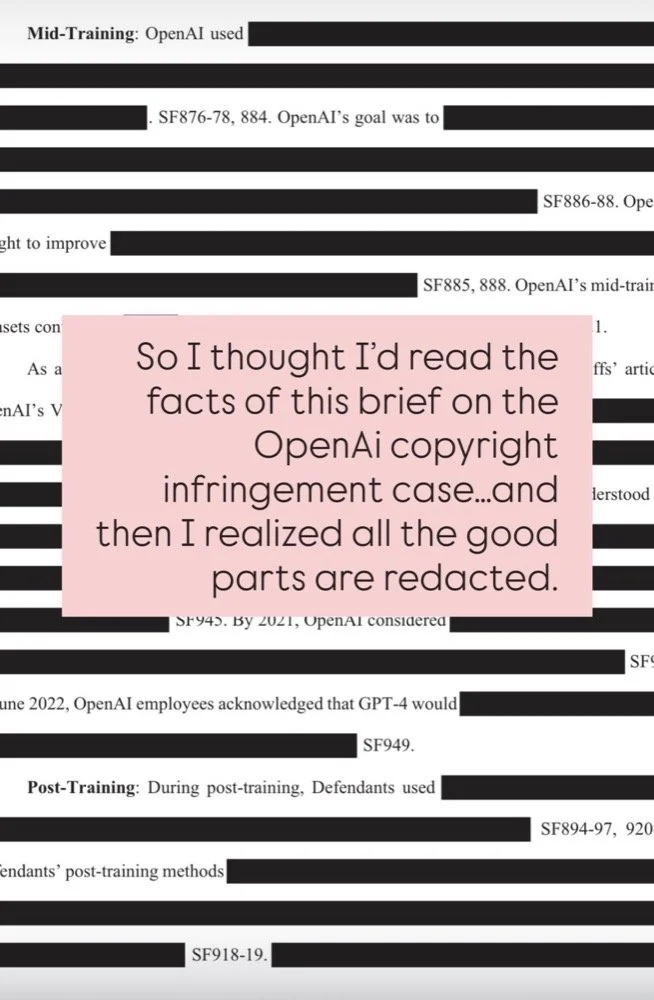
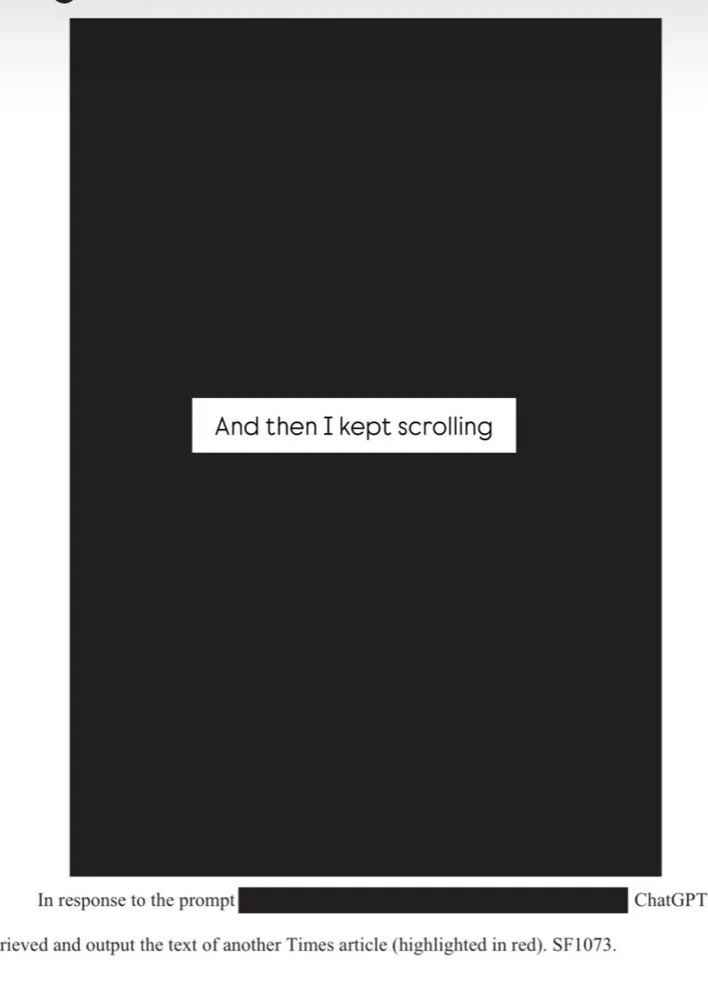
So I’m reading the facts in this case, which is formally dubbed In Re OpenAI, Inc., Copyright Infringement Litigation. This has been a multi-week project because when I first attempted to do this, the briefs were heavily redacted. All the good parts were behind black boxes.
And then I kept scrolling
and it turned
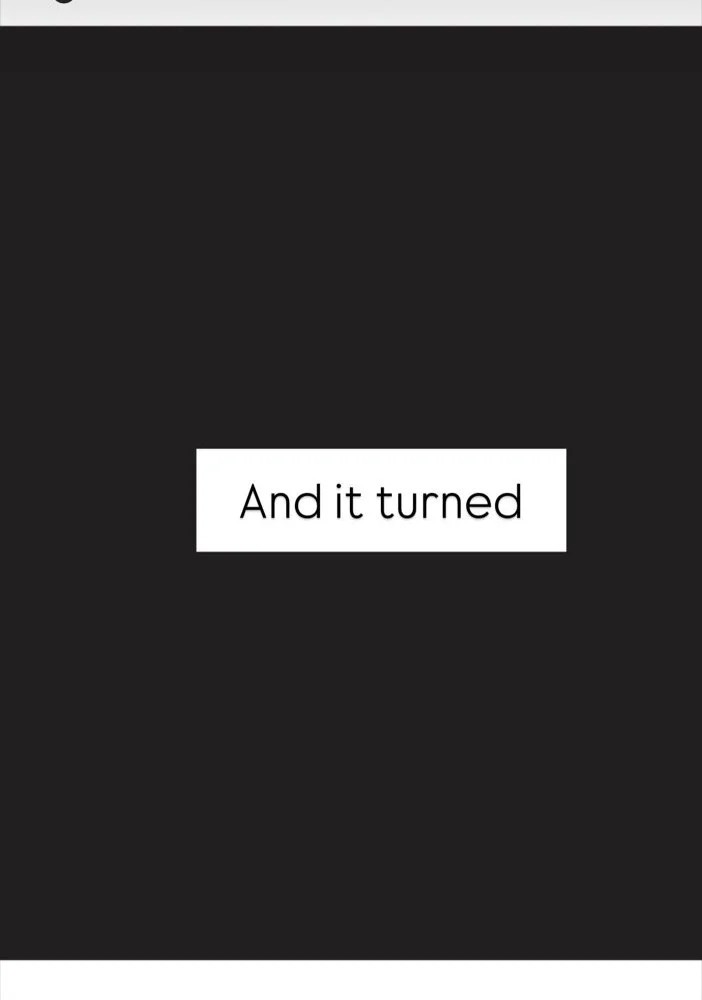
into
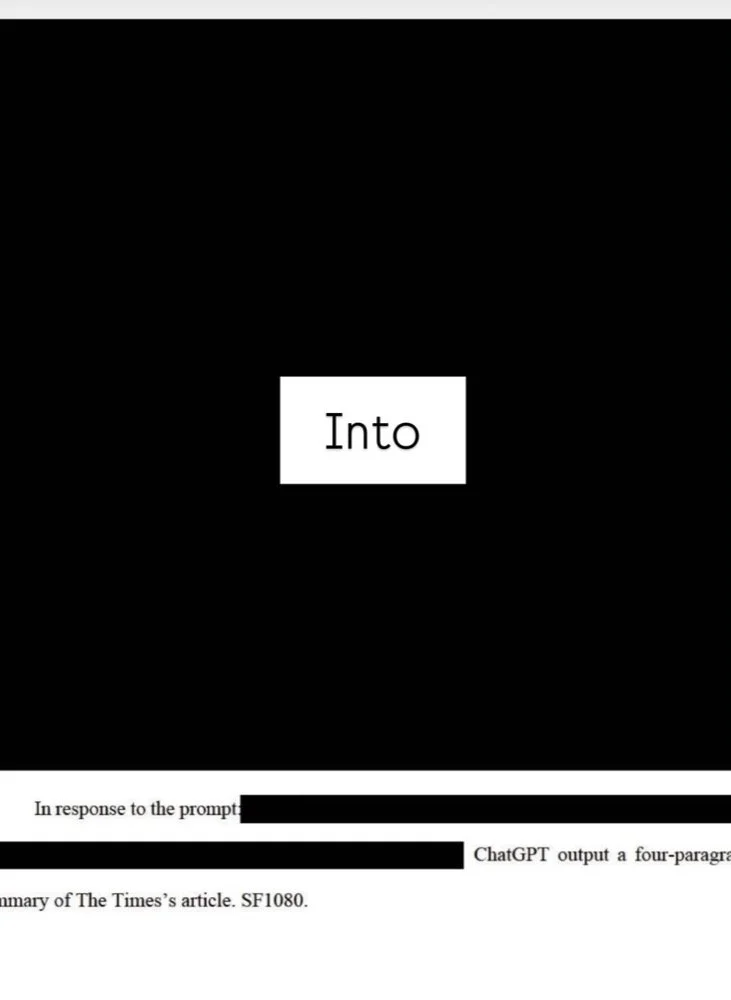
abstract
art.
I’m calling it abstract redactionism.
In Re OpenAI, Inc., Copyright Infringement Litigation
Anyway, the author and newspaper plaintiffs have now filed updated, less-redacted versions of some of the briefs, and I’m reading them like a page-turner. Or, should I say, I’m gobbling them up?
If you can handle citations after every single sentence, reading the facts section is a great way to learn about Open AI, what generative AI is, and how large language models were trained because they’re written for a non-technical audience, a judge.
It’s also fascinating to see the unvarnished words coming from inside OpenAI. For example, OpenAI co-founder Greg Brockman wrote in his journal that he
“was deeply motivated by the gazillions.”
And another employee, when discussing how to write a public report about the process of taking pirated books to train their model, wrote
“I was just worried about optics -i.e. ‘openai uses copyrighted data from sketchy Russian website’ showing up on HN would be unfortunate.”
I’m only part-way through the “undisputed material facts,” but I understand there will be more revealing quotes.
If you’d like to read along with me, you can find the document here:
Author Plaintiffs’ Statement of Undisputed Material Facts in Support of Motion for Partial Summary Judgment - In Re: OpenAI, Inc., Copyright Infringement Litigation